painting, plein-air, oil-paint
#
painting
#
impressionism
#
plein-air
#
oil-paint
#
landscape
#
impressionist landscape
#
oil painting
#
cityscape
#
genre-painting
Copyright: Public Domain: Artvee
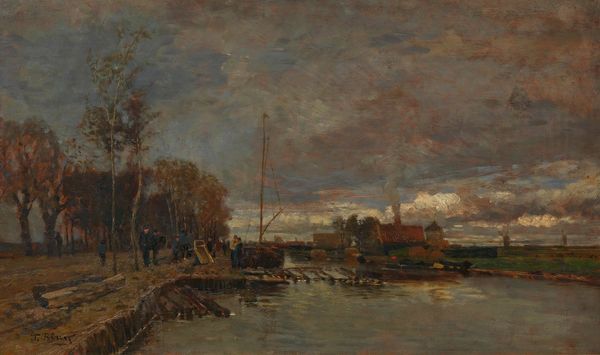
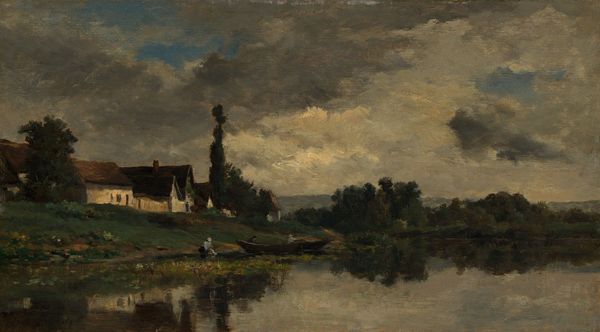
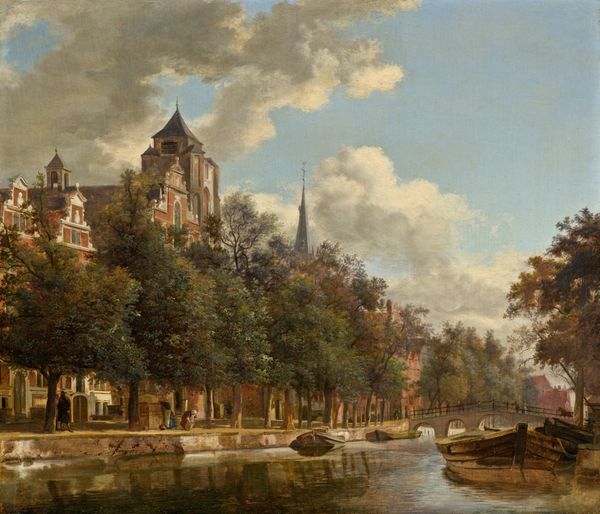
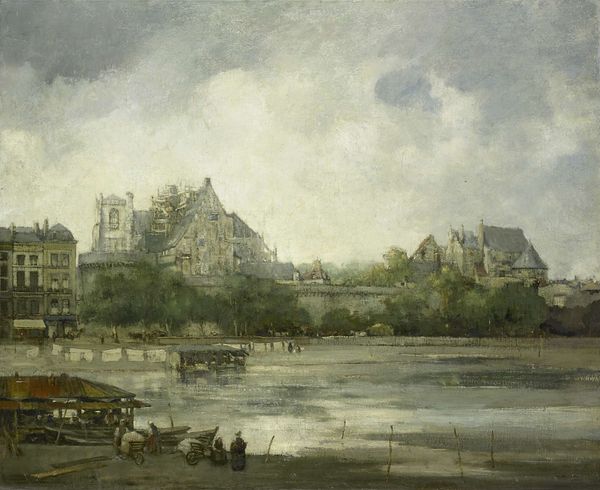
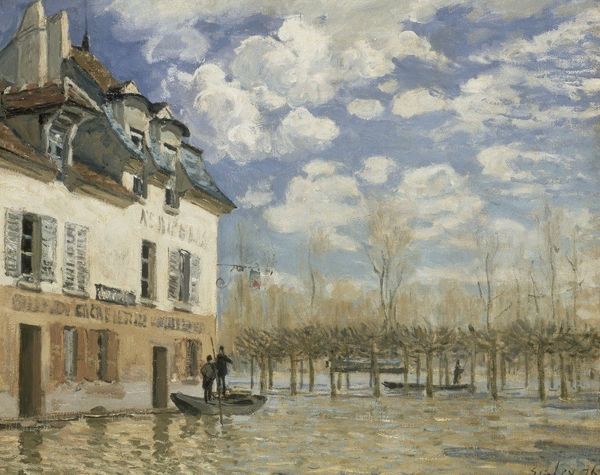
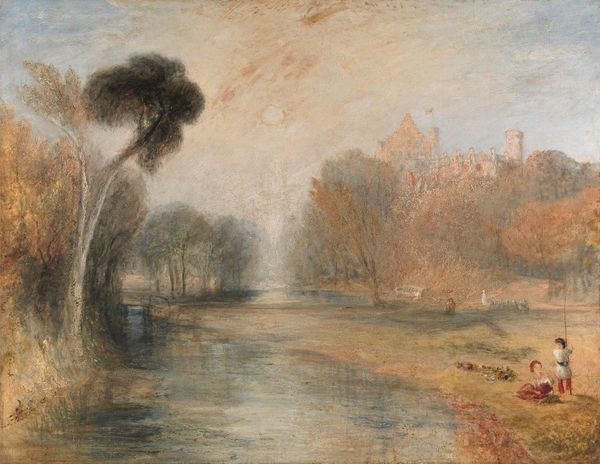
Editor: So, this is Tina Blau’s "A Scene in Dordrecht," an oil painting. It looks like a cityscape, perhaps done en plein air. I am really drawn to the use of light. How would you interpret this work? Curator: This painting is really interesting when you consider Blau's place as a woman artist in the late 19th century. Dordrecht, a Dutch city, becomes a stage. What kind of social narrative do you think she's constructing, presenting this very ordinary, working scene? Editor: I didn’t think about it like that, I was too focused on her interesting use of the orange foliage! Maybe she is attempting to portray everyday life through the eyes of a woman artist? Highlighting the activities that take place within cityscapes? Curator: Exactly! By painting a genre scene – daily life – she's participating in a visual discourse. Is she passively recording life, or actively interpreting her surrounding society, subtly underscoring its politics? Who had the right to depict urban space, and from whose perspective? Think of impressionism’s emergence as not merely a style, but a conscious departure from academic art endorsed by the establishment. Editor: That's a helpful consideration of historical and social contexts. It shows Blau did more than simply depict a pleasing waterside scene. Curator: Right. The very act of a woman painting en plein air, claiming public space, had political undertones. So the muted tones and loose brushstrokes become part of that broader discussion on art and agency. Editor: I’m walking away realizing there’s always a social commentary behind any artwork. I’ll never see landscapes in the same way. Curator: Agreed! Art always reflects, or even shapes the world.
Comments
No comments
Be the first to comment and join the conversation on the ultimate creative platform.
 Collect
 React
React Comment
More like this