About this artwork
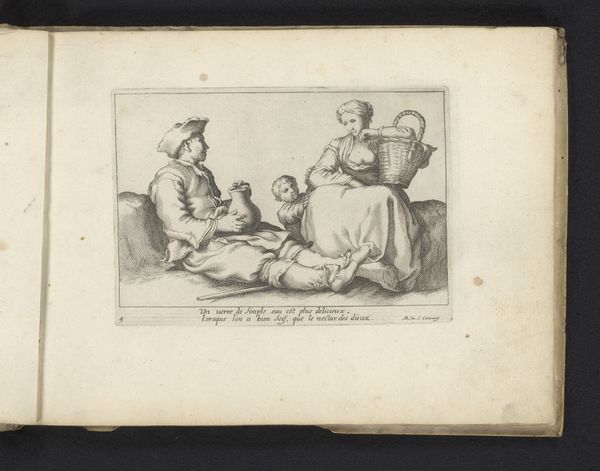
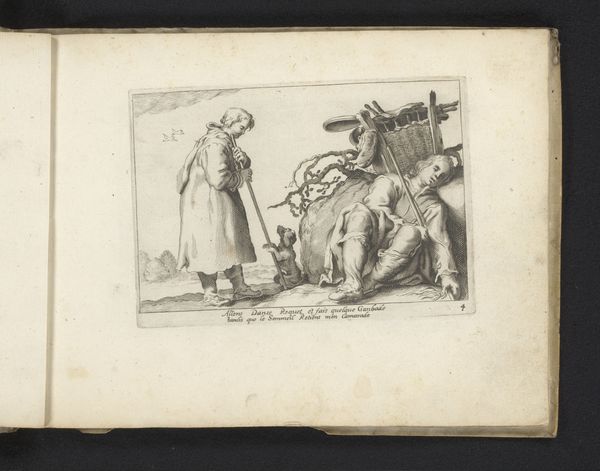
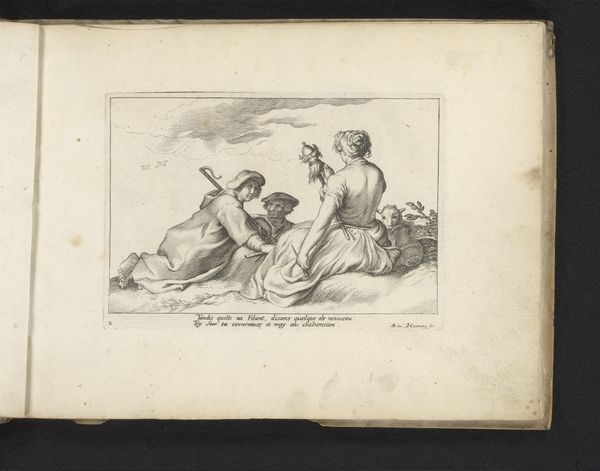
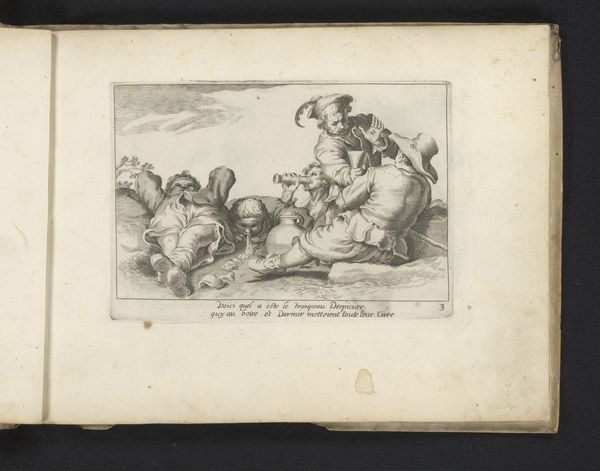
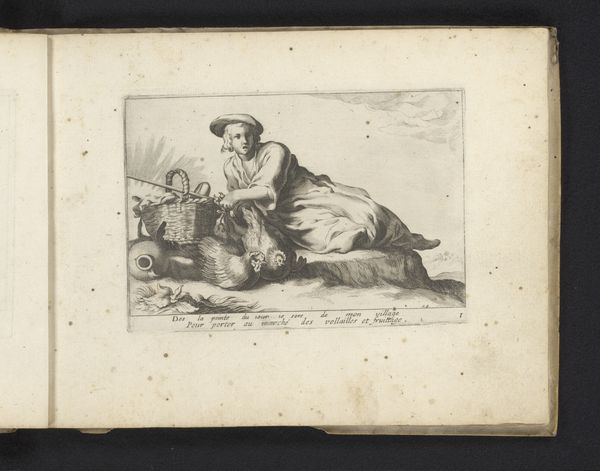
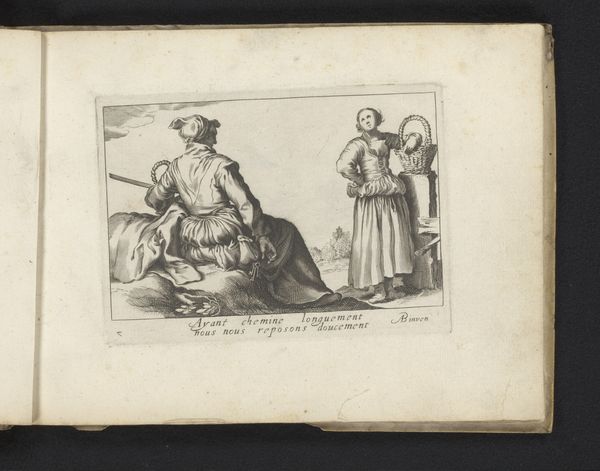
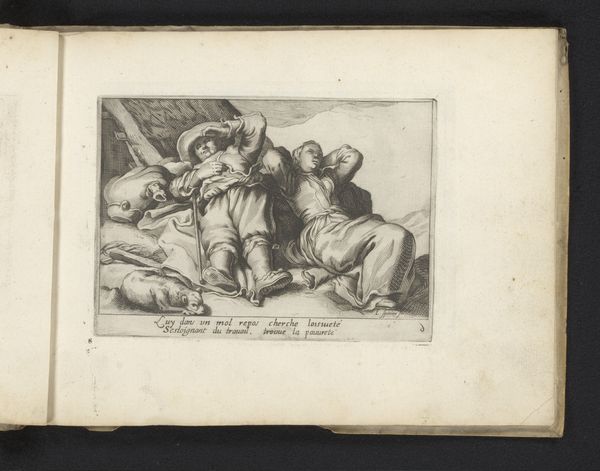
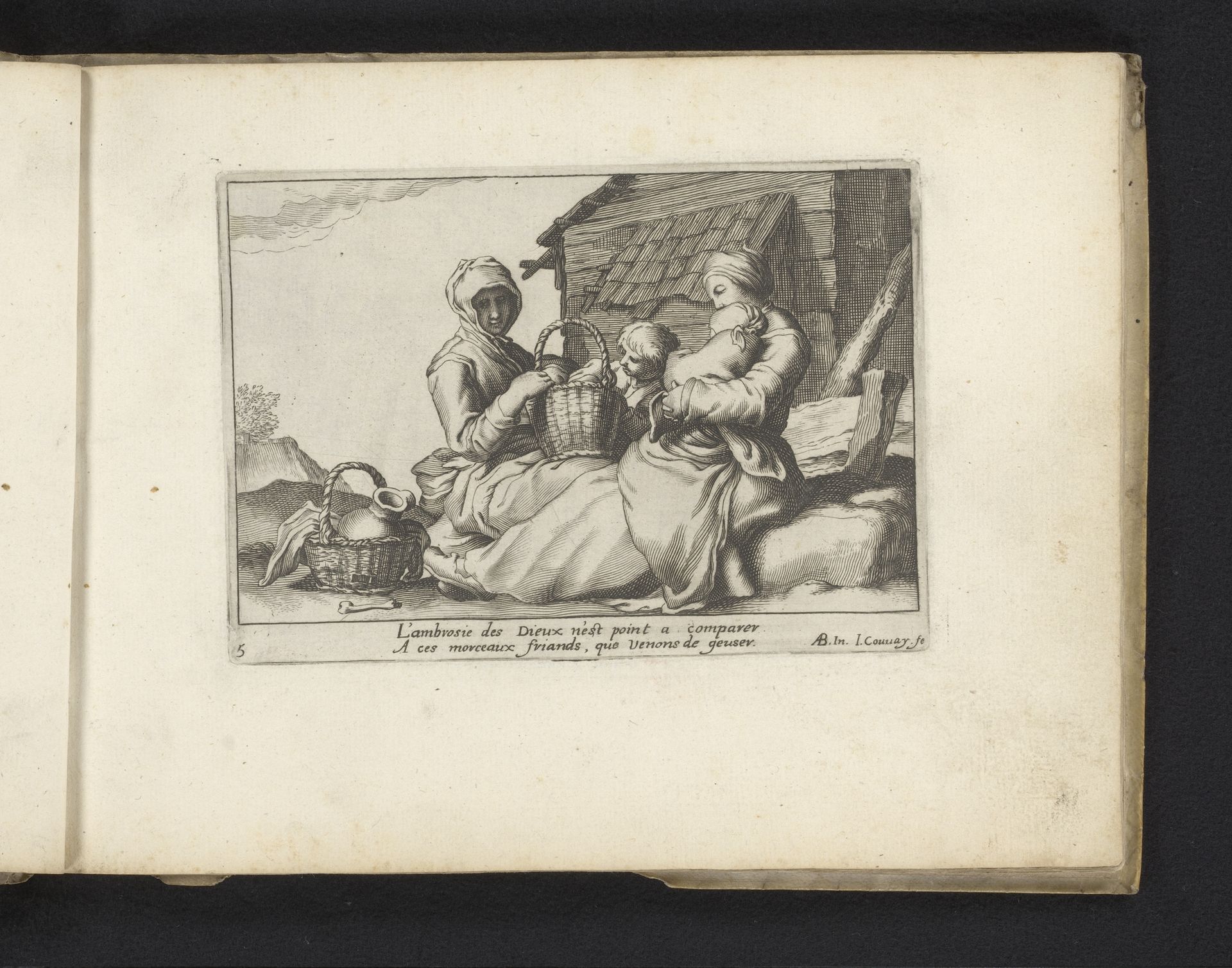
Curator: What a scene. A moment suspended in monochrome. I’m struck by the quiet tenderness. Editor: Indeed. Let’s orient our listeners. This is an etching attributed to Jean Couvay, likely made sometime between 1632 and 1675. The Rijksmuseum refers to it as "Two women and two children resting and eating in the open air." Curator: Resting indeed. I find myself contemplating what life was like for ordinary families in that era. This artwork offers a fascinating snapshot of that, doesn't it? Not grand battles or regal portraits, but women, children, sustenance. Very basic human experiences. Editor: Absolutely. Consider the cultural context. Genre paintings, depicting scenes of everyday life, were gaining popularity during this period, especially in the Dutch Golden Age. There was a burgeoning merchant class with a growing appetite for art that reflected their own world. Curator: It's compelling how a seemingly simple scene can be so richly layered. You see the toil in those etched lines—the baskets suggesting work—and the vulnerability of the children, juxtaposed with the stoic posture of the women. Editor: It is baroque after all. And in terms of composition, note how the artist uses light and shadow. Even without color, he's created depth and a sense of intimate space, wouldn’t you agree? Curator: It is a great piece for the museum. What I initially perceived as simple, thanks to this brief examination, now holds greater depth and complexity. This artwork reminds us that history isn't just about famous figures, but the untold stories of ordinary lives. Editor: Exactly! A picture may indeed be worth a thousand words; it simply awaits for an engaged viewer to start interpreting and understanding them, bringing the artwork to life.
Twee vrouwen en twee kinderen rusten en eten in de open lucht
1632 - 1675

Jean Couvay
1600 - 1663Location
RijksmuseumArtwork details
- Medium
- print, etching
- Dimensions
- height 109 mm, width 156 mm
- Location
- Rijksmuseum
- Copyright
- Rijks Museum: Open Domain
Tags
Comments
Share your thoughts
About this artwork
Curator: What a scene. A moment suspended in monochrome. I’m struck by the quiet tenderness. Editor: Indeed. Let’s orient our listeners. This is an etching attributed to Jean Couvay, likely made sometime between 1632 and 1675. The Rijksmuseum refers to it as "Two women and two children resting and eating in the open air." Curator: Resting indeed. I find myself contemplating what life was like for ordinary families in that era. This artwork offers a fascinating snapshot of that, doesn't it? Not grand battles or regal portraits, but women, children, sustenance. Very basic human experiences. Editor: Absolutely. Consider the cultural context. Genre paintings, depicting scenes of everyday life, were gaining popularity during this period, especially in the Dutch Golden Age. There was a burgeoning merchant class with a growing appetite for art that reflected their own world. Curator: It's compelling how a seemingly simple scene can be so richly layered. You see the toil in those etched lines—the baskets suggesting work—and the vulnerability of the children, juxtaposed with the stoic posture of the women. Editor: It is baroque after all. And in terms of composition, note how the artist uses light and shadow. Even without color, he's created depth and a sense of intimate space, wouldn’t you agree? Curator: It is a great piece for the museum. What I initially perceived as simple, thanks to this brief examination, now holds greater depth and complexity. This artwork reminds us that history isn't just about famous figures, but the untold stories of ordinary lives. Editor: Exactly! A picture may indeed be worth a thousand words; it simply awaits for an engaged viewer to start interpreting and understanding them, bringing the artwork to life.
Comments
Share your thoughts