About this artwork
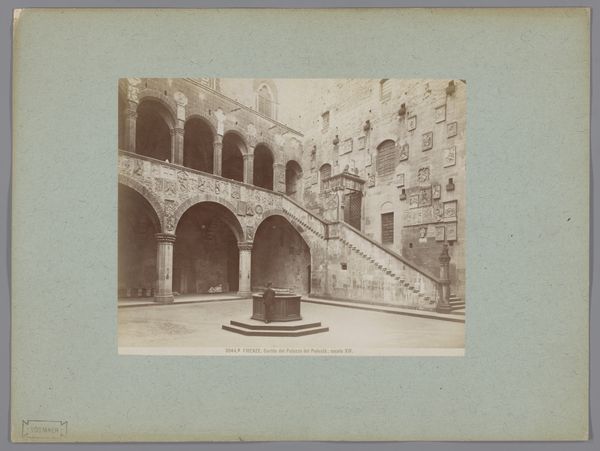
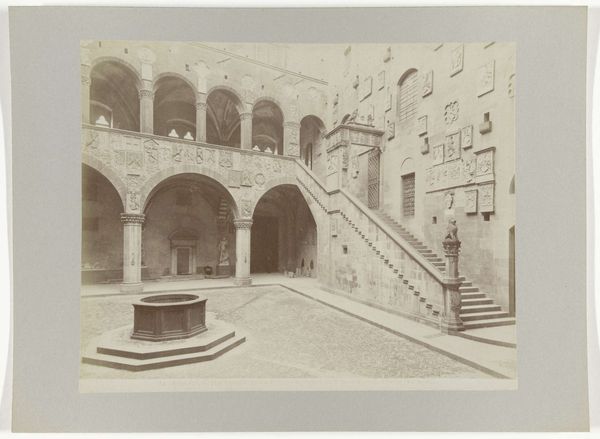
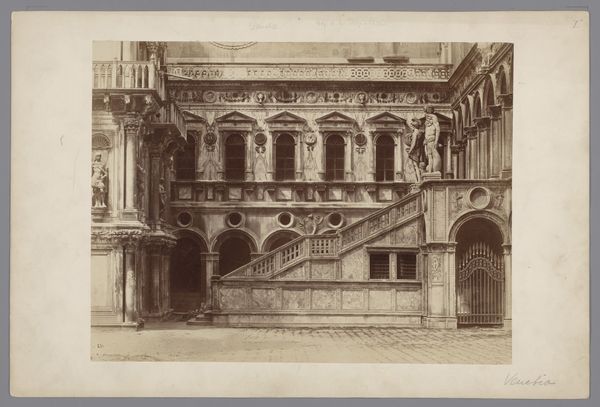
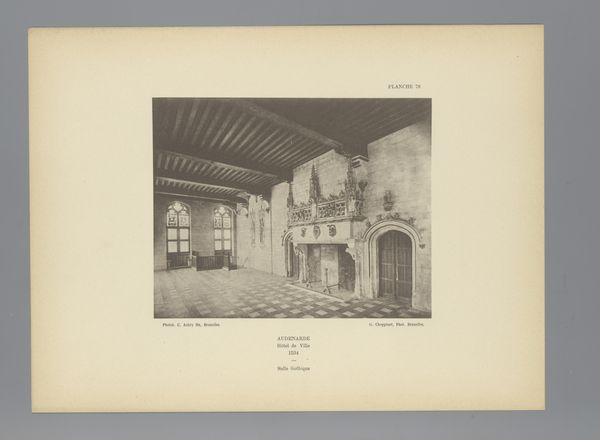
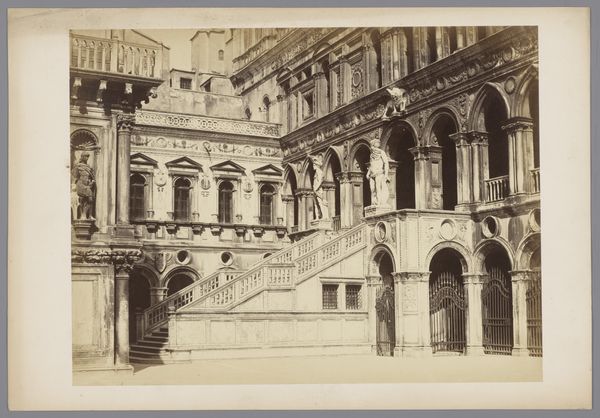
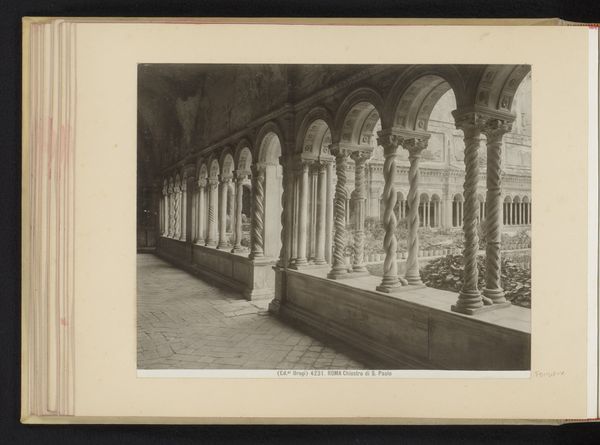
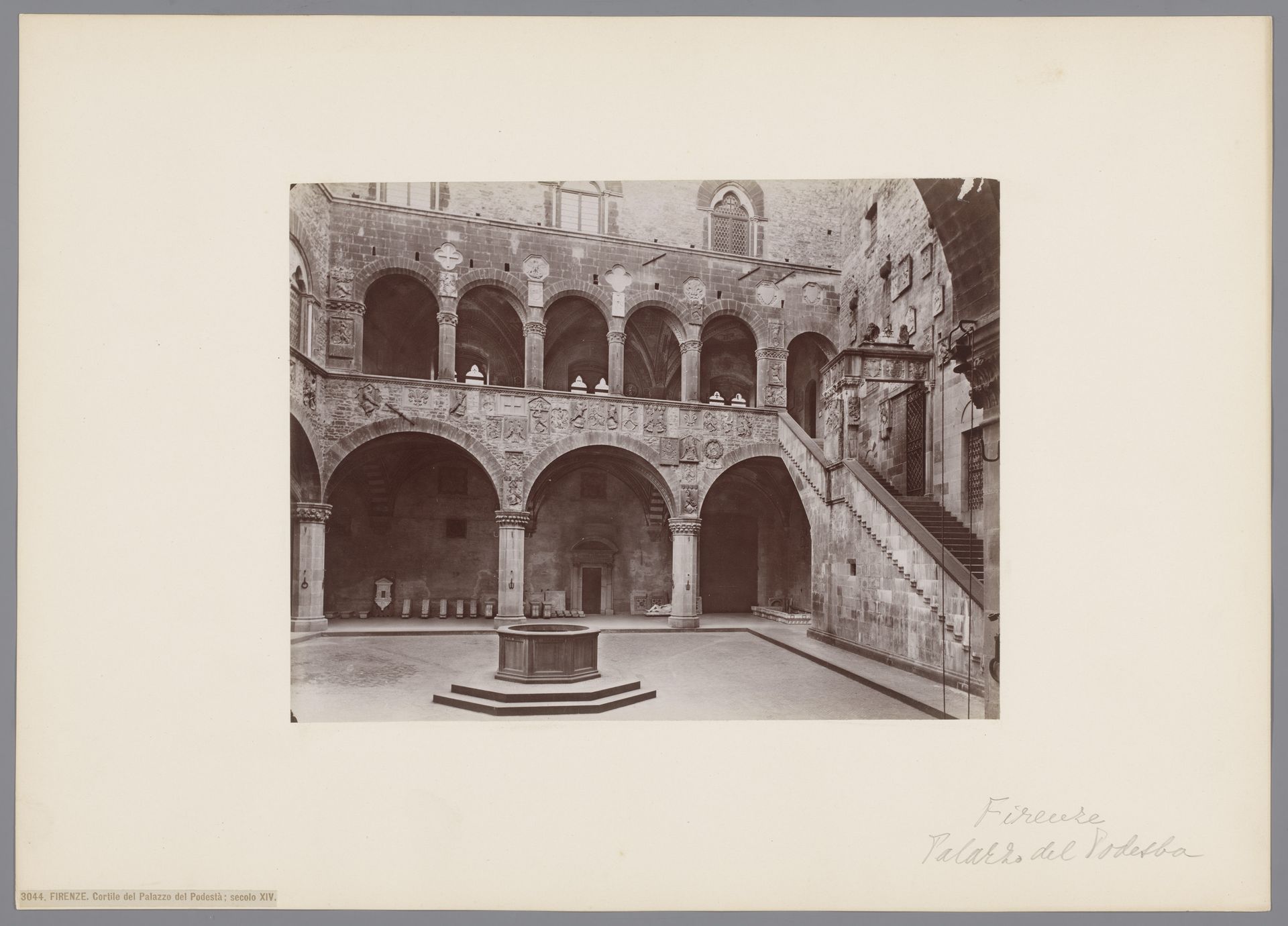
Giacomo Brogi captured the Palazzo del Podestà in Florence with this photograph, sometime in the late 19th century. The sepia tones and symmetrical composition immediately evoke a sense of classical order and Renaissance ideals. The courtyard is structured around a central well, acting as a focal point in the composition. The surrounding arcades, with their rhythmic repetition of arches and columns, create a sense of depth and perspective, drawing the eye inward. Light and shadow play across the textured stone surfaces, enhancing the architectural details and decorative elements. Brogi’s photograph invites us to consider the Palazzo not just as a physical space, but also as a cultural signifier. The building’s architecture, with its emphasis on balance and harmony, reflects the values of the Renaissance and the humanistic ideals that shaped Florentine society. This image functions as a record of the past and an invitation to contemplate how architecture shapes collective memory and cultural identity.
Binnenplaats van het Palazzo del Podestà te Florence, Italië
1864 - 1881

Artwork details
- Medium
- print, photography
- Dimensions
- height 317 mm, width 446 mm
- Copyright
- Rijks Museum: Open Domain
Tags
Comments
Share your thoughts
About this artwork
Giacomo Brogi captured the Palazzo del Podestà in Florence with this photograph, sometime in the late 19th century. The sepia tones and symmetrical composition immediately evoke a sense of classical order and Renaissance ideals. The courtyard is structured around a central well, acting as a focal point in the composition. The surrounding arcades, with their rhythmic repetition of arches and columns, create a sense of depth and perspective, drawing the eye inward. Light and shadow play across the textured stone surfaces, enhancing the architectural details and decorative elements. Brogi’s photograph invites us to consider the Palazzo not just as a physical space, but also as a cultural signifier. The building’s architecture, with its emphasis on balance and harmony, reflects the values of the Renaissance and the humanistic ideals that shaped Florentine society. This image functions as a record of the past and an invitation to contemplate how architecture shapes collective memory and cultural identity.
Comments
Share your thoughts