print, photography
#
aged paper
#
homemade paper
#
script typography
# print
#
hand drawn type
#
photography
#
personal sketchbook
#
hand-drawn typeface
#
fading type
#
thick font
#
cityscape
#
watercolour bleed
#
realism
#
historical font
Dimensions: height 184 mm, width 120 mm, thickness 25 mm
Copyright: Rijks Museum: Open Domain
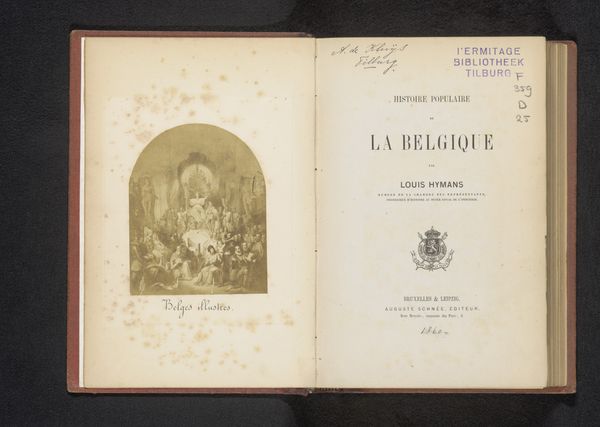
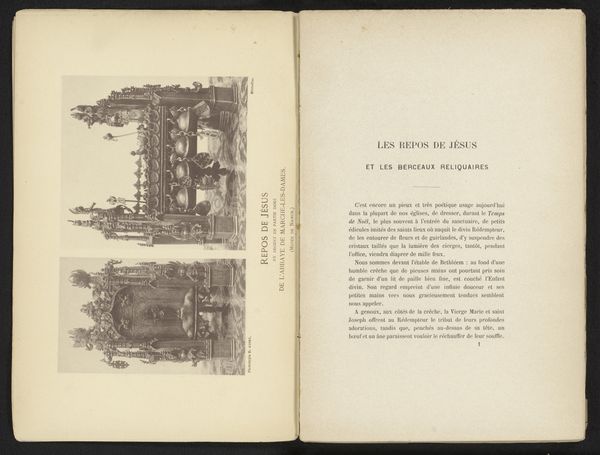
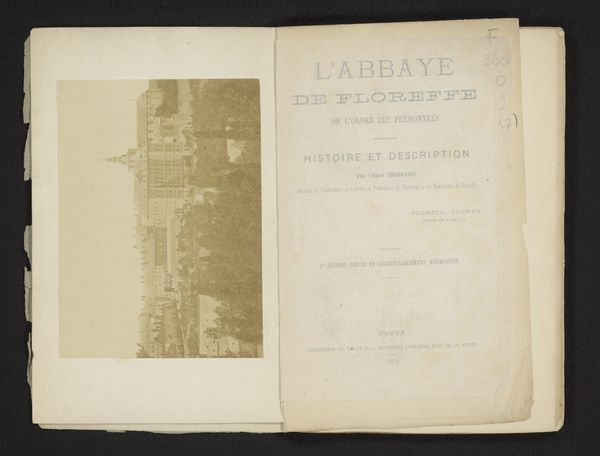
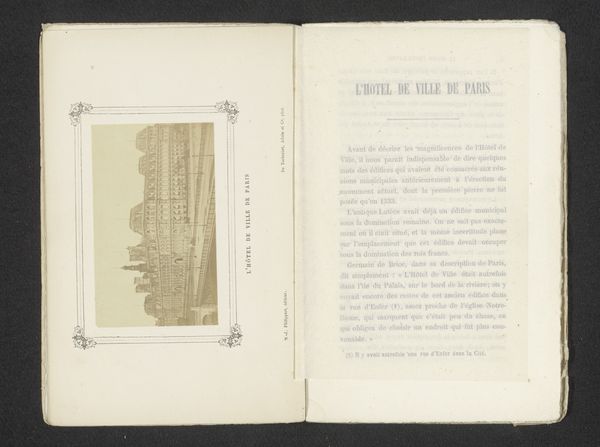
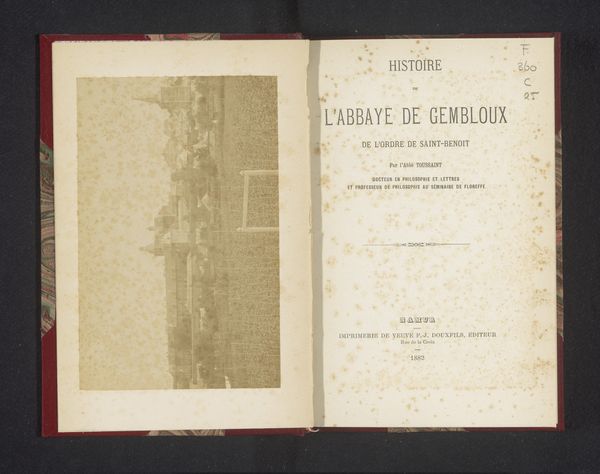
Editor: So, this is "Le Havre guide du touriste au Havre et dans ses environs" from 1860 by J. Morlent. It’s a city guide, illustrated with photographs and text. I’m struck by how the guide presents tourism –almost like a snapshot of a particular cultural moment. What can we unpack from it? Curator: Indeed. It is interesting to think of it as an artifact rooted in its historical moment and place. Mid-19th century tourism was an emerging phenomenon, largely reserved for the upper classes. How might this guide reflect the power dynamics inherent in such a context? Who was invited to see and experience Le Havre, and whose perspectives are silenced? Editor: That's a good point. The guide seems focused on presenting a very particular, possibly idealized, view of the city. It's making me consider ideas around representation. What was it about Le Havre that they chose to showcase, and how does it differ from lived reality for ordinary residents at that time? Curator: Precisely. Consider, for example, the subjects of the included photographs: grand architecture versus the living conditions of working-class individuals. Which narratives gain prominence, and what’s intentionally omitted? Even the guide’s emphasis on 'tourism' invites scrutiny into issues of labour and wealth. What does the local economy rely on to draw tourists in the first place, and how does the city change to accommodate wealthy outsiders? Editor: So, it’s less about the sights themselves and more about the power structures they represent. Thanks! It's helpful to remember how art like this embodies social inequalities. Curator: And hopefully this exercise urges you to consider those implications in all art. I found myself considering whose voices were left unheard from that moment in time.
Comments
No comments
Be the first to comment and join the conversation on the ultimate creative platform.
 Collect
 React
React Comment
More like this