

1650 - 1652
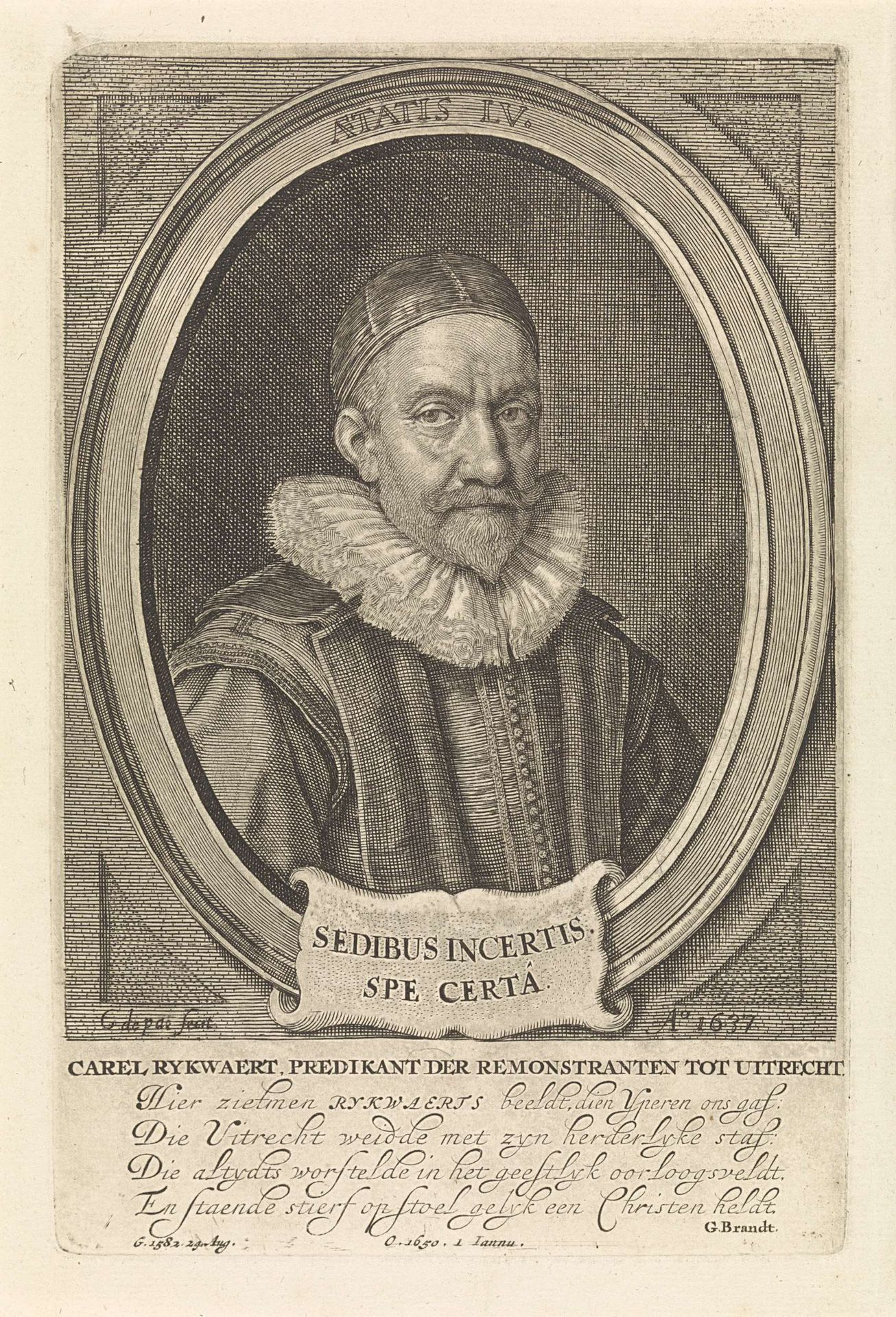
Portret van Carel Rijkwaert

Crispijn van de (II) Passe
1597 - 1670Location
RijksmuseumListen to curator's interpretation
Curatorial notes
Editor: So, this is a portrait of Carel Rijkwaert by Crispijn van de Passe II, made between 1650 and 1652. It’s a striking image; the detail in the face is incredible. What strikes you most about it? Curator: Well, immediately, I’m drawn to consider Rijkwaert's identity as a Remonstrant preacher during a period of intense religious and political conflict in the Netherlands. Consider what it meant to be part of a minority religious group challenging the established Calvinist church. This portrait isn’t just a likeness; it’s a statement. Editor: A statement? How so? Curator: Look at the text beneath the portrait: "Sedibus Incertis, Spe Certa" – "Uncertain Dwellings, Certain Hope." This hints at the precarious position of the Remonstrants, who faced persecution and exile. The portrait becomes a form of resistance, a visual assertion of their faith and identity despite societal pressures. It prompts questions about the agency of marginalized groups in shaping their own narratives. What do you make of his clothing? Does it convey status, humility, or something else? Editor: I see. The relatively simple clothing, perhaps signifying humility, contrasts with the clear intelligence in his eyes. Maybe it is communicating that his authority came from intellectual and spiritual conviction rather than worldly power? Curator: Exactly. And consider the historical context of portraiture itself. Who had access to these images, and what did they signify in terms of social standing and cultural capital? Commissioning and circulating his portrait allowed Rijkwaert to assert a certain level of influence. This brings forward wider issues about the circulation of portraits during periods of conflict and transformation. What are your overall impressions? Editor: I see the portrait as something much more complex; more than just a simple depiction of a person. Thanks; it's made me rethink how I perceive these works and question the narratives behind them. Curator: Absolutely. Art invites us to challenge assumptions and consider the complexities of history through a multitude of perspectives.