c. 1886
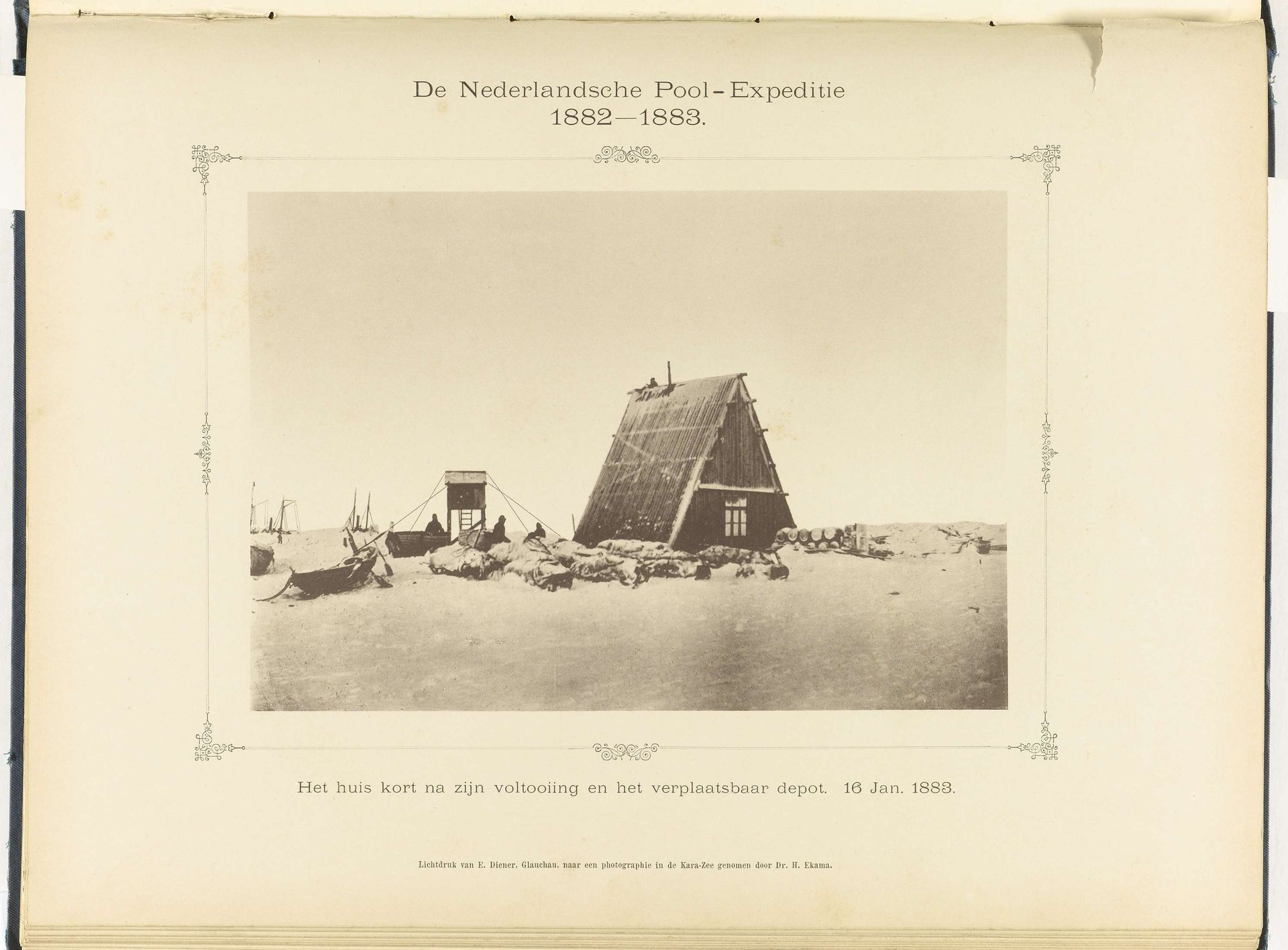
Het huis kort na zijn voltooiing en het verplaatsbaar depot. 16 januari 1883

Listen to curator's interpretation
Curatorial notes
Curator: Here we have a compelling albumen print from circa 1886 titled "Het huis kort na zijn voltooiing en het verplaatsbaar depot. 16 januari 1883" or "The house shortly after its completion and the removable depot, January 16, 1883", part of H. Ekama's photographic documentation. The landscape almost swallows the image itself. What are your first impressions? Editor: Isolation. That's the immediate feeling I get. The structure, almost primal in its starkness, against the backdrop of that unforgiving arctic terrain. There is vulnerability and precarity that jumps out at me. Curator: That reading resonates. This was during the Dutch Polar Expedition, and the image embodies the precariousness of human endeavor in the face of nature's indifference. Notice how the triangular form of the building mimics and perhaps even challenges the infinite horizon. The sharp angle points towards notions of aspiration and fragility against the skies. Editor: Absolutely, the structure serves as a monument of early colonial scientific expedition. The photograph begs the question, 'for whom?' It has this very "settler" arrogance that is at the core of understanding our current relationship to environment and climate change. We often think about climate change as new or without context. Curator: It’s also fascinating how photography itself becomes a tool of claiming and knowing. An object pulled away from what exists as a symbol to represent and to exert a colonial type of control. I think it makes this piece so much more charged and heavy in this frame. The symbolism suggests how these seemingly 'neutral' acts of documentation are deeply intertwined with ambition and power dynamics. Editor: You nailed it. The "neutral" colonial gaze of that period had no such thing as an objective stance. There is only history to see that is laced and layered with meaning, whether intentional or not. Images from this era really do help expose those undercurrents of gender, class, and race embedded deeply in the history of colonialism and capitalism. Curator: Ultimately, this photograph serves not just as a record, but as a lens to understanding the complexities of that moment. I suppose seeing the emotional cost is always where the magic of interpretation lives, wouldn’t you agree? Editor: I concur completely. Thinking through this with you has transformed my perspective and amplified what I first assumed in this experience. Thank you for highlighting its nuances and complexities.