ceramic, porcelain, sculpture
#
ceramic
#
porcelain
#
figuration
#
sculpture
#
genre-painting
#
decorative-art
#
miniature
#
rococo
Dimensions: Height: 7 1/2 in. (19.1 cm)
Copyright: Public Domain
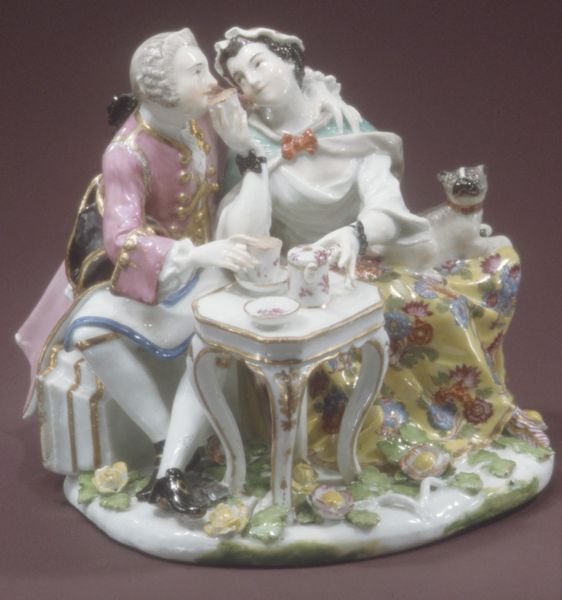
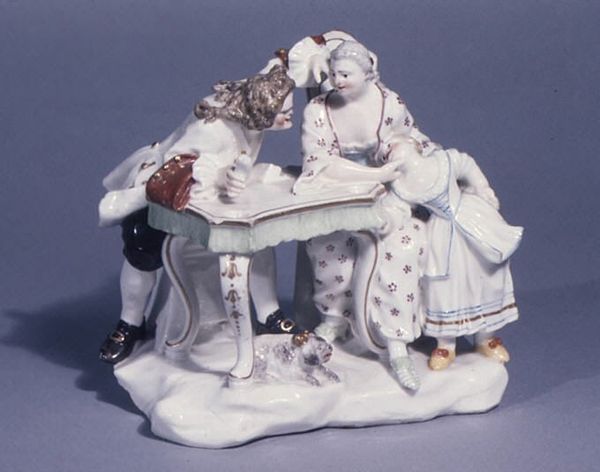
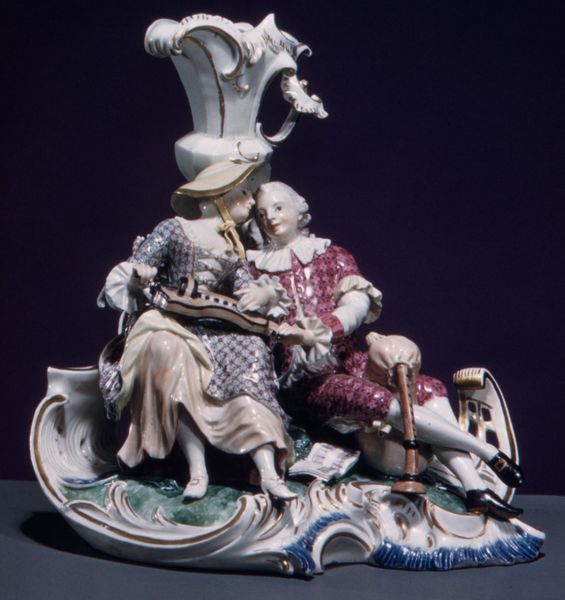
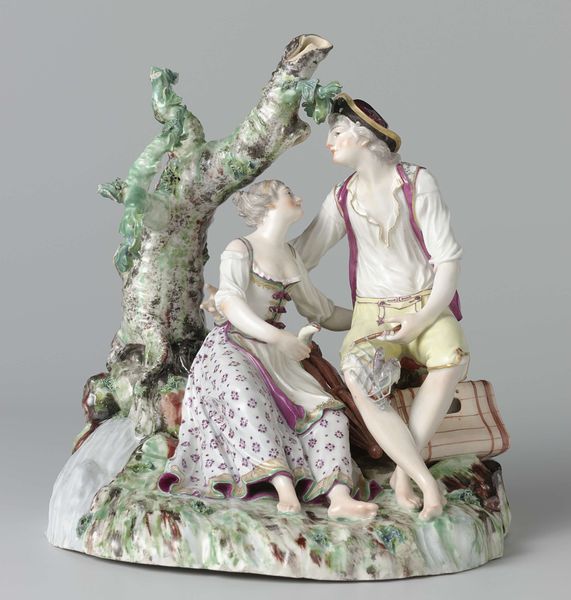
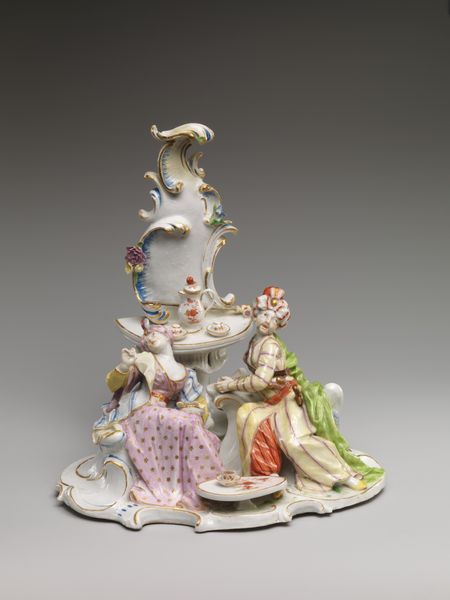
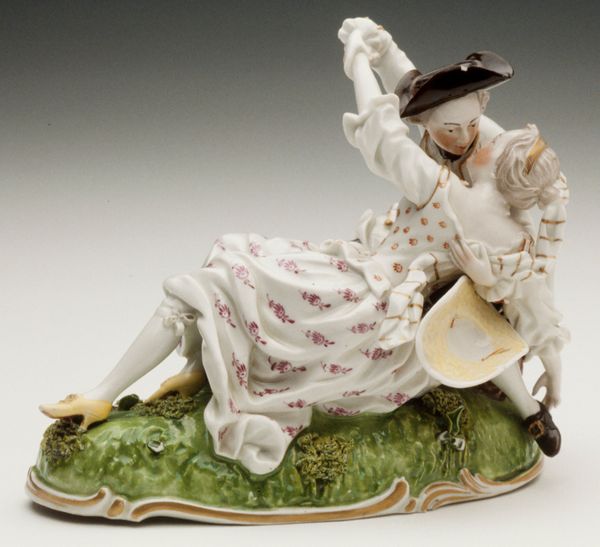
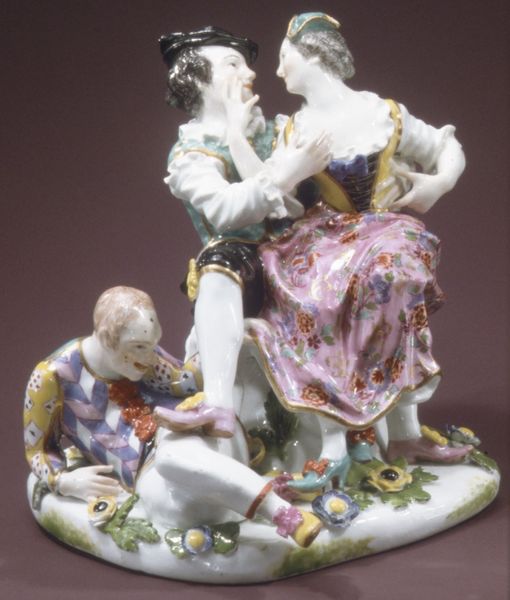
Editor: Here we have "Lovers at a Sewing Table," a porcelain sculpture made by Meissen Manufactory sometime between 1740 and 1750. There's a romantic, almost secretive mood, created by the intimate positioning of the figures. What do you see in this piece, from your perspective? Curator: What strikes me is how this miniature sculpture serves as a potent signifier of class and gender roles within 18th-century aristocratic society. The amorous encounter is framed within the domestic sphere, the woman seated at her sewing table. How does this domesticity serve to both empower and confine women during this era, and what kind of statements might the piece be making, however subtly, on class structure? Editor: That’s an interesting angle. I hadn't considered the sewing table as a symbol of confinement. So you're suggesting this seemingly charming scene might have a more complex message about women's limited sphere of influence at the time? Curator: Exactly! Consider the performative aspect of this “genre painting.” Who was it made for, and what kind of conversations was it expected to ignite? We must confront issues of privilege. Can we also analyze this “lover’s” gesture as an exercise of patriarchal dominion, albeit an almost caricatured one? Is his ‘whisper’ coercive, not seductive? Editor: I see what you mean. It adds layers to the sculpture, challenging the initial impression of a sweet, innocent rendezvous. I never really considered art like this having something political to say, as in resistance. Curator: I want to stress here, we cannot, in good faith, consider this sculpture ‘resistant,’ in say, the same manner we’d view art borne out of radical and queer movements of the later 20th century. And yet, close attention and radical observation teaches us that the domestic interior can itself be an active stage in a constant contest for representation and self-expression. So perhaps even frivolity, can offer some clue of selfhood being performed. Editor: This definitely provides me with a richer understanding. It reveals how social commentary can subtly weave itself into what might first seem purely decorative. Curator: Precisely. This Meissen sculpture then becomes a lens through which we might reconsider the socio-political texture of its time. The conversation, as with history itself, is ongoing.
Comments
No comments
Be the first to comment and join the conversation on the ultimate creative platform.
 Collect
 React
React Comment
More like this