About this artwork
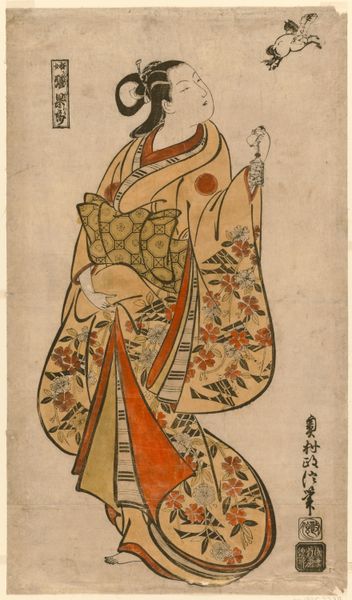
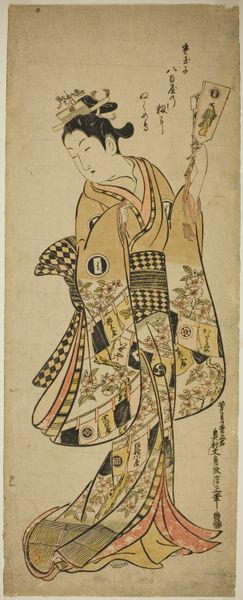
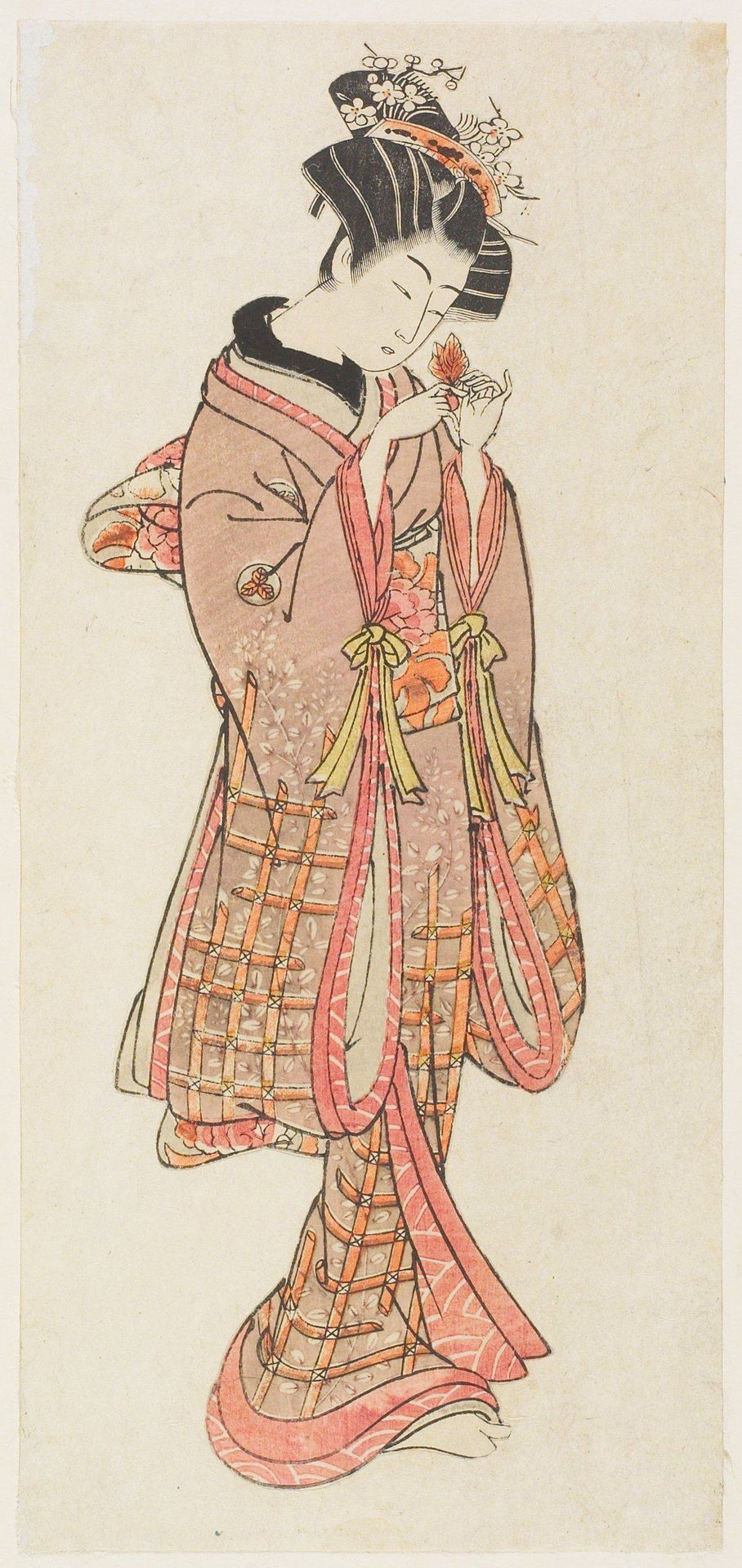
Kitao Shigemasa created this woodblock print of a young woman examining a ground cherry. This fruit, known for its bright, lantern-like husk, symbolizes transience and delicate beauty in Japanese culture, often associated with summer festivals and fleeting moments. Notice how the woman delicately holds the ground cherry, her gaze intent. We see echoes of this motif in Renaissance paintings, where figures contemplate a flower or fruit, symbolizing mortality and the ephemeral nature of life. Think of Botticelli’s Venus, adorned with flowers, a celebration of beauty tinged with the awareness of its impermanence. The ground cherry, like those flowers, becomes a memento mori, a reminder of our mortality. This image stirs something primal within us. We are reminded of the cycle of life and death, a poignant recognition that links us across centuries and cultures. The woman's contemplative pose invites us to pause and reflect on our own fleeting existence.
Young Woman Examining a Ground Cherry
c. late 18th century


Artwork details
- Medium
- print, ink
- Dimensions
- 10 3/4 x 4 15/16 in. (27.3 x 12.5 cm) (image, sheet)
- Location
- Minneapolis Institute of Art
- Copyright
- Public Domain
Tags
Comments
Share your thoughts
About this artwork
Kitao Shigemasa created this woodblock print of a young woman examining a ground cherry. This fruit, known for its bright, lantern-like husk, symbolizes transience and delicate beauty in Japanese culture, often associated with summer festivals and fleeting moments. Notice how the woman delicately holds the ground cherry, her gaze intent. We see echoes of this motif in Renaissance paintings, where figures contemplate a flower or fruit, symbolizing mortality and the ephemeral nature of life. Think of Botticelli’s Venus, adorned with flowers, a celebration of beauty tinged with the awareness of its impermanence. The ground cherry, like those flowers, becomes a memento mori, a reminder of our mortality. This image stirs something primal within us. We are reminded of the cycle of life and death, a poignant recognition that links us across centuries and cultures. The woman's contemplative pose invites us to pause and reflect on our own fleeting existence.
Comments
Share your thoughts