1910
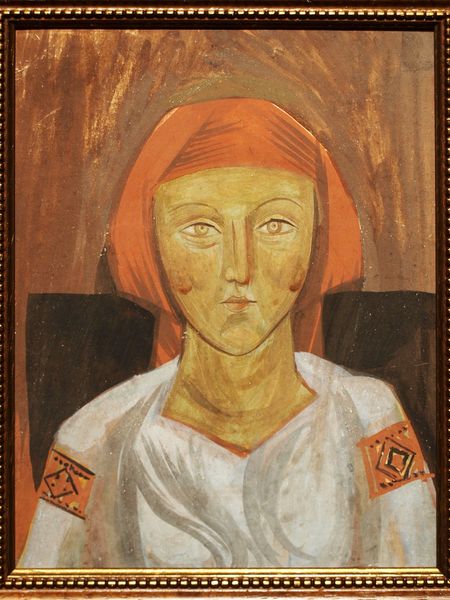
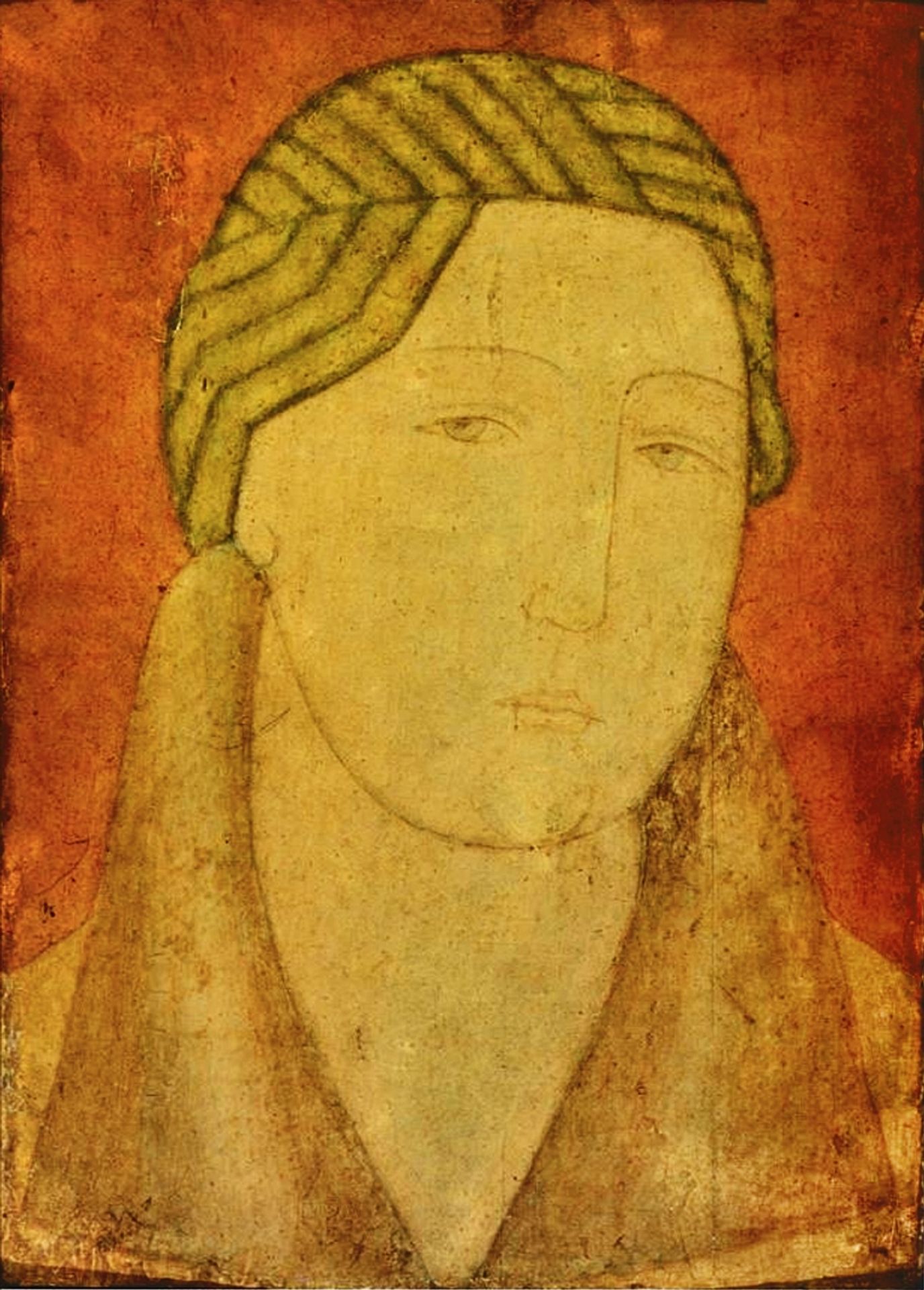
Портрет жінки

Mykhailo Boychuk
1882 - 1937Location
Lviv National Art Gallery, Lviv, UkraineListen to curator's interpretation
Curatorial notes
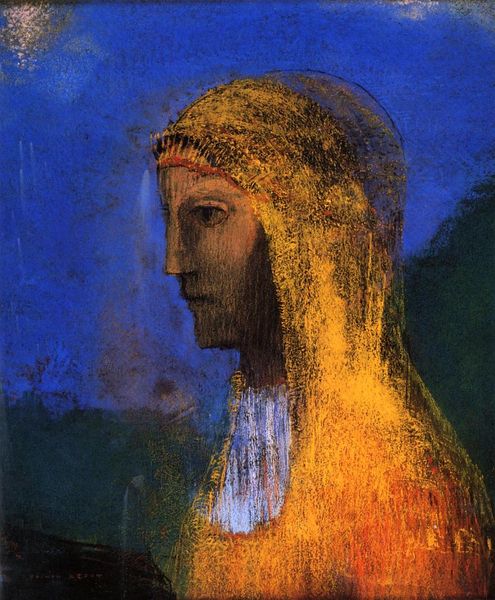
Curator: Immediately striking is its quiet, almost melancholic mood. Editor: This is "Portrait of a Woman", a piece painted around 1910 by Mykhailo Boychuk. He appears to have used a combination of painting and coloured pencil. The piece is currently housed at the Lviv National Art Gallery. Curator: Look at the earthy tones, that warm terracotta backdrop juxtaposed with the figure’s muted gold. The texture itself appears rough, aged. There’s a certain humility evoked, like it was created with what was available rather than some extravagant pigment. Editor: I am fascinated by Boychuk's departure from pure representation. The geometric simplification of the hair and face invite closer inspection, creating subtle linear rhythms across the figure. Curator: And note Boychuk’s role within the artistic circles of early 20th century Ukraine. Boychuk was committed to art rooted in a dialogue with Byzantine and Ukrainian folk traditions, meant to be accessible to everyday people and tied to social reform, challenging the elite circles. He wasn’t just depicting a face, but perhaps offering an idealized representation of the Ukrainian peasant class and celebrating labor. Editor: Do you think so? I see that geometry and formal simplification almost operating in the opposite direction. To me it suggests a kind of modern abstraction pushing at the boundary of Realism, yet still restrained, not fully disengaged with figurative representation. Curator: I concede that, yet cannot separate this artwork from what it embodies – Ukrainian identity and accessible art designed to reflect and elevate working-class experiences. Even this portrait, in its serene simplicity, speaks to shared heritage. Editor: Ultimately, Boychuk delivers an artwork that marries formalism and deeply evocative qualities through simplified representation. I am drawn in by the figure's introspective aura, but the painting simultaneously directs us to scrutinize the materiality of representation.