About this artwork
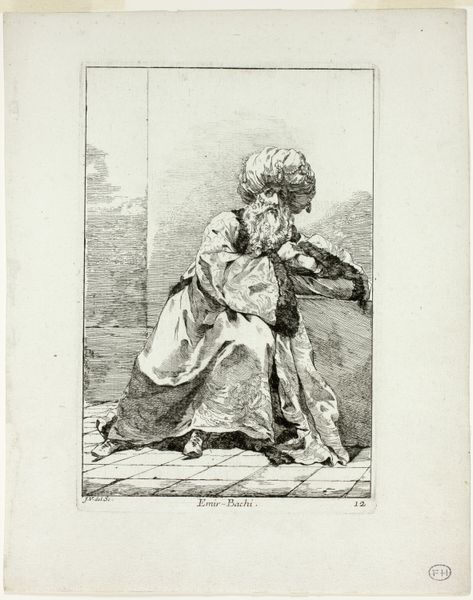
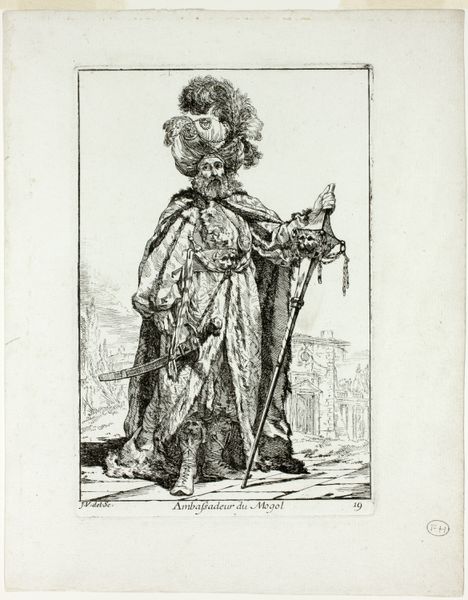
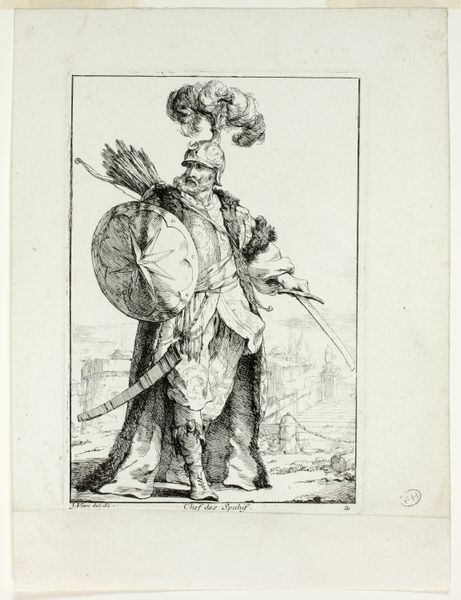
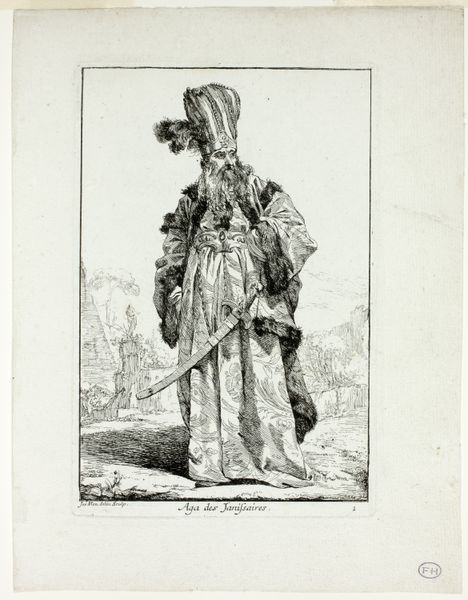
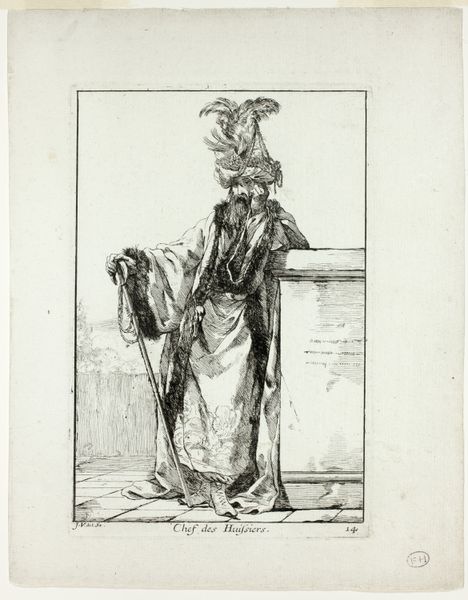
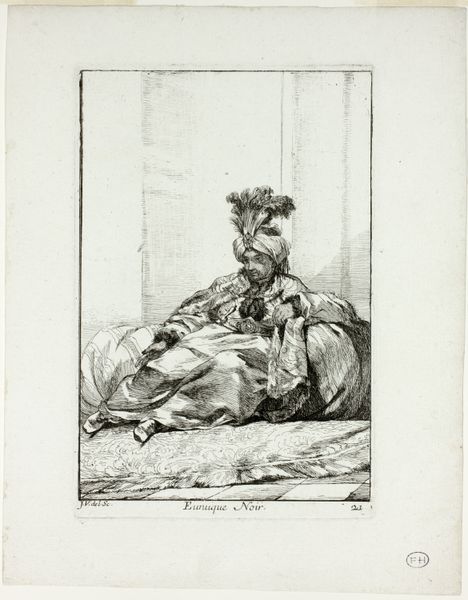
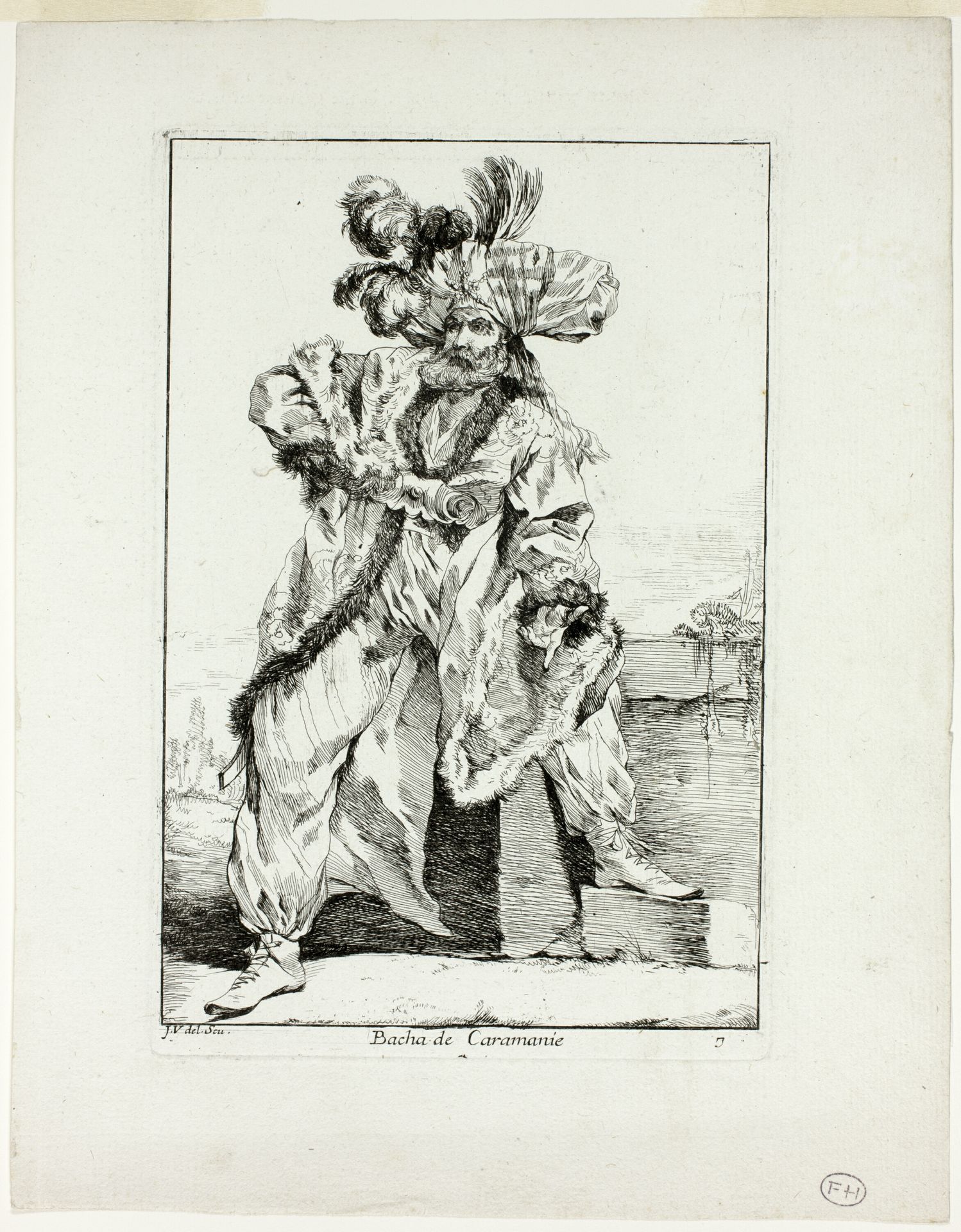
Editor: So, this etching by Joseph Marie Vien, "Bacha de Caramanie," created in 1748, depicts a rather opulent figure. I’m struck by how theatrical the composition feels; it's like a portrait of someone performing a role. What stands out to you in this piece? Curator: Well, let’s consider the political climate in which this print was made. The "Caravanne du Sultan à la Mecque" series aimed to represent Ottoman culture, but often through a Western lens. Consider the title: Bacha was a rank within the Ottoman Empire. What's your view of Vien’s orientalism here? Is it purely observational or does it serve other agendas? Editor: It definitely feels like a construction. The exaggerated turban, the fur, it reads as more of a fantasy than a documentary piece. Do you think this representation reinforced specific European perceptions of the East? Curator: Precisely! These images circulated widely. They helped to define and solidify Western ideas about the 'exotic' and, in doing so, implicitly assert a sense of European superiority. The figure's elaborate costume might be seen not just as documentation, but as a way to highlight perceived Ottoman extravagance. It’s fascinating how these visual representations influenced policy and public sentiment. Did the artist's intentions shape how these images were received in society? Editor: It's interesting to think about how art becomes part of a broader historical narrative. The piece goes beyond just a study of clothing, but is rather indicative of cross-cultural interpretations that impacted social-political perception. Curator: Absolutely, and that's precisely what I think is worth focusing on - how the public role of art intersects with political and social ideologies. Hopefully it gives people something to think about.
Bacha de Caramanie, plate seven from Caravanne du Sultan à la Mecque
1748


Artwork details
- Medium
- drawing, print, etching, paper
- Dimensions
- 195 × 132 mm (image); 204 × 136 mm (plate); 265 × 206 mm (sheet)
- Location
- The Art Institute of Chicago
- Copyright
- Public Domain
Tags
Comments
Share your thoughts
About this artwork
Editor: So, this etching by Joseph Marie Vien, "Bacha de Caramanie," created in 1748, depicts a rather opulent figure. I’m struck by how theatrical the composition feels; it's like a portrait of someone performing a role. What stands out to you in this piece? Curator: Well, let’s consider the political climate in which this print was made. The "Caravanne du Sultan à la Mecque" series aimed to represent Ottoman culture, but often through a Western lens. Consider the title: Bacha was a rank within the Ottoman Empire. What's your view of Vien’s orientalism here? Is it purely observational or does it serve other agendas? Editor: It definitely feels like a construction. The exaggerated turban, the fur, it reads as more of a fantasy than a documentary piece. Do you think this representation reinforced specific European perceptions of the East? Curator: Precisely! These images circulated widely. They helped to define and solidify Western ideas about the 'exotic' and, in doing so, implicitly assert a sense of European superiority. The figure's elaborate costume might be seen not just as documentation, but as a way to highlight perceived Ottoman extravagance. It’s fascinating how these visual representations influenced policy and public sentiment. Did the artist's intentions shape how these images were received in society? Editor: It's interesting to think about how art becomes part of a broader historical narrative. The piece goes beyond just a study of clothing, but is rather indicative of cross-cultural interpretations that impacted social-political perception. Curator: Absolutely, and that's precisely what I think is worth focusing on - how the public role of art intersects with political and social ideologies. Hopefully it gives people something to think about.
Comments
Share your thoughts