1886 - 1908
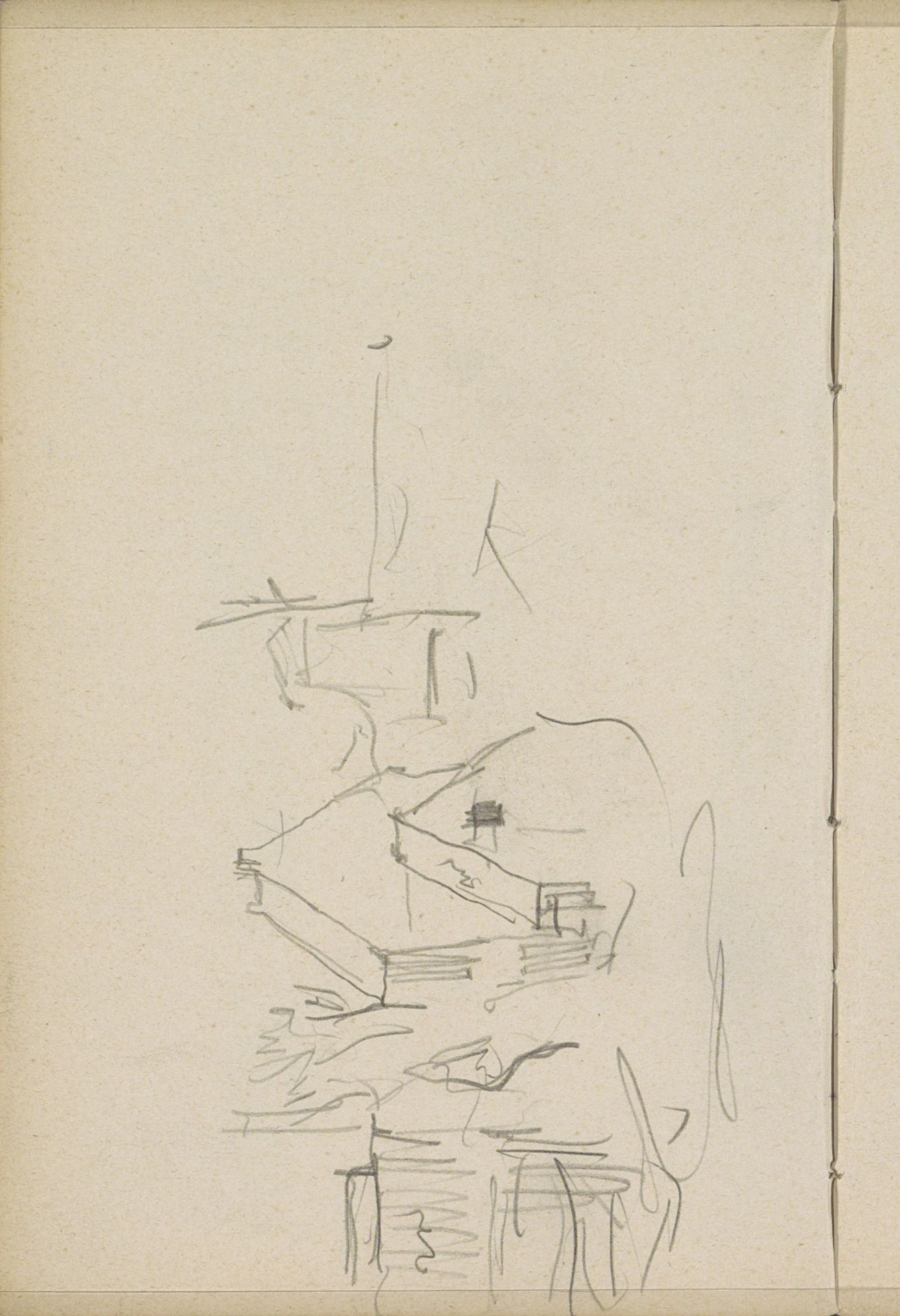
Gezicht op huizen en een molen

George Hendrik Breitner
1857 - 1923Location
RijksmuseumListen to curator's interpretation
Curatorial notes
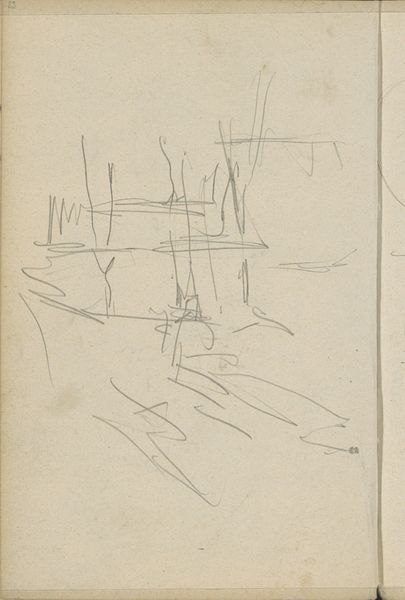
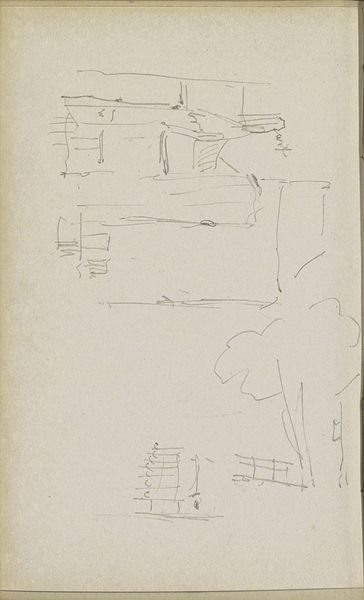
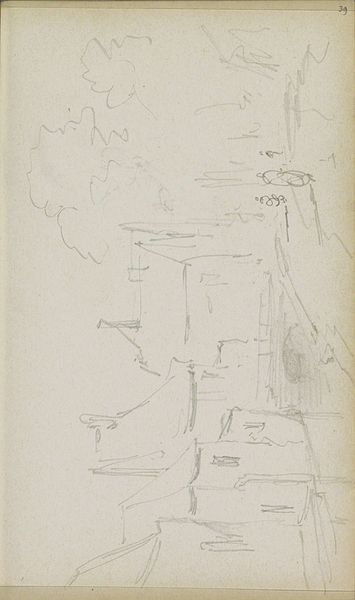
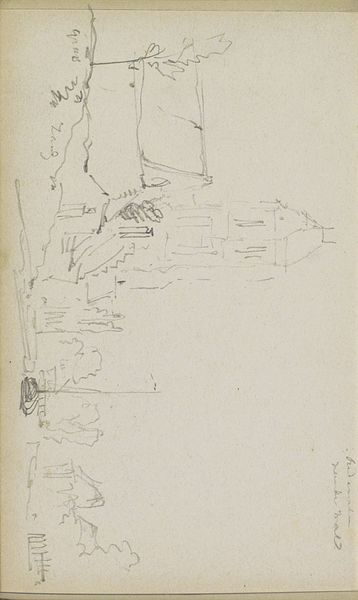
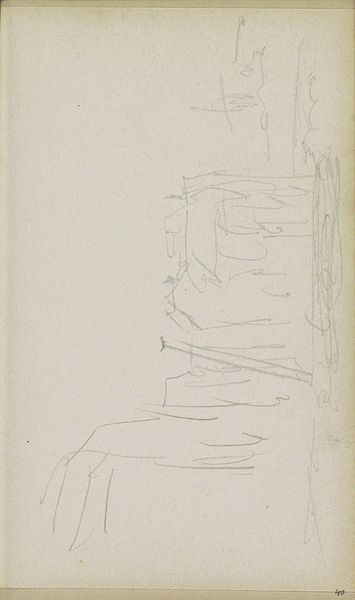
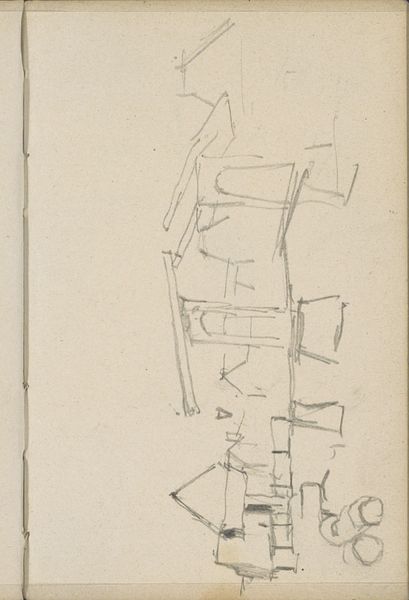
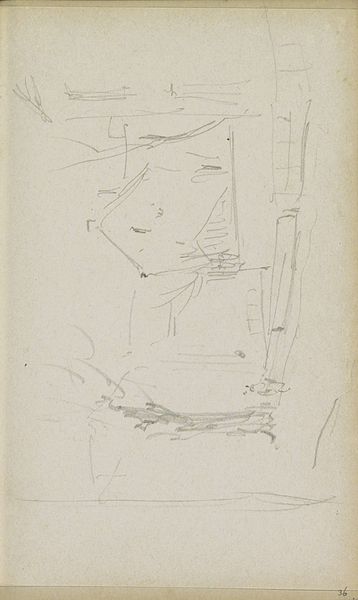
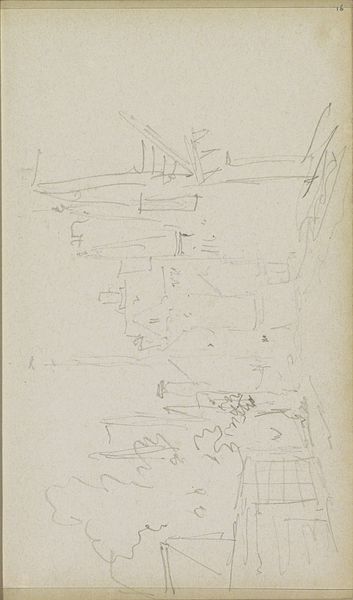
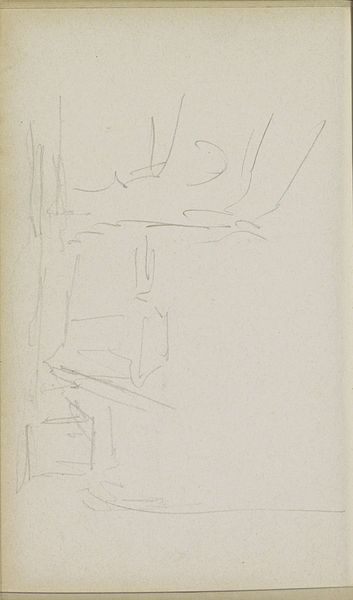
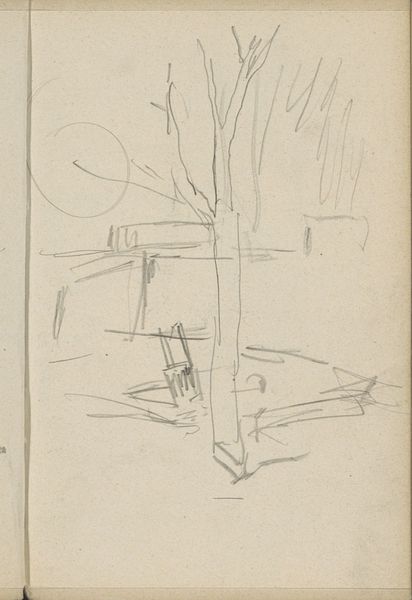
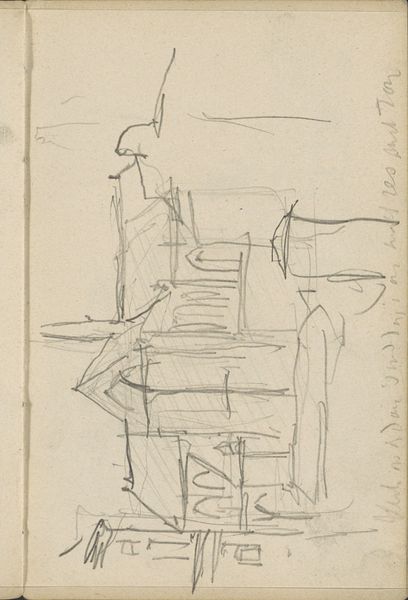
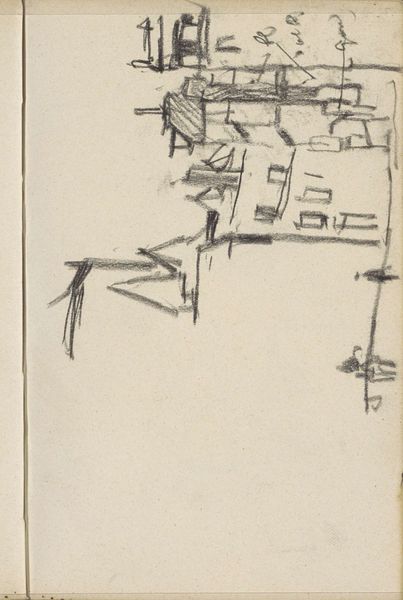
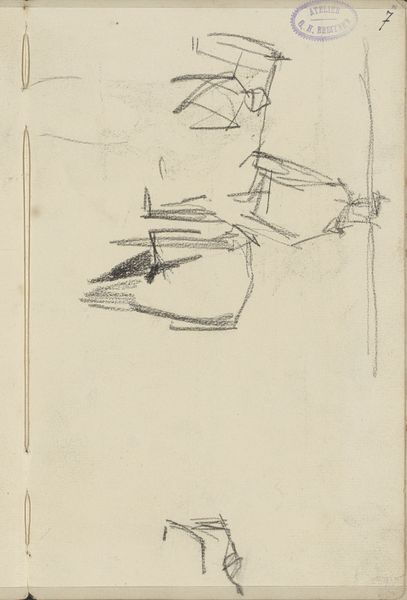
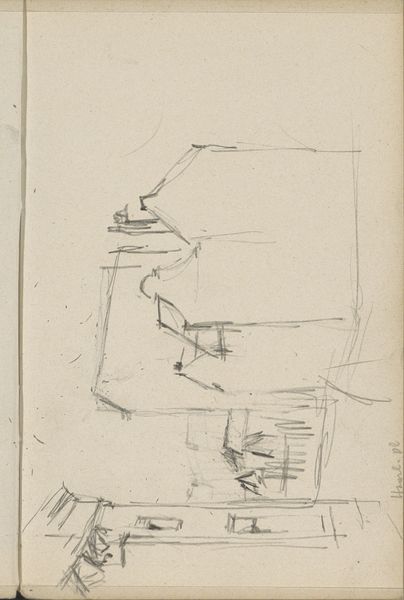
Curator: This graphite drawing, "View of Houses and a Mill," comes to us from the sketchbook of George Hendrik Breitner, dating roughly from 1886 to 1908. It’s currently held here at the Rijksmuseum. What's your immediate impression? Editor: Barely there, isn't it? Like a memory clinging to the page. Fleeting, fragile… Almost makes me want to sneeze. Curator: Well, it is a sketch, capturing a fleeting moment of daily life. Breitner was deeply embedded in the urban experience, choosing the mundane over the monumental. Editor: Mundane is one word for it. I see these scratchy lines trying to wrestle down something real, but it’s like watching someone chase smoke. Is it meant to feel so unresolved? Curator: It highlights Breitner's interest in capturing impressions rather than photographic detail, which aligned with the emerging trends in impressionism. This approach served as a tool for a deeper engagement with the social realities of his time. Editor: So he was rebelling? Making art from what others ignored? I always wonder about the pressure… Does the grit enhance the artistry or overshadow it? Curator: In Breitner’s Amsterdam, there was growing disparity between the rich and poor and his art can be seen as democratizing vision – that is, shifting attention towards a broader range of people. It shows that Breitner was more interested in recording his contemporary urban existence than pursuing art for art's sake. Editor: Hmm. When you put it like that, the drawing gets a little weightier. That scratchy mill and those huddled houses… I wonder what stories are locked within those barely-there walls. It definitely makes you think about what he chooses to reveal – and what he doesn't. Thanks for painting a picture, it wasn’t one I initially saw for myself. Curator: And that's precisely why art, especially historical pieces like this, should spark conversation. The interpretation can be just as important as the creation itself.