1758
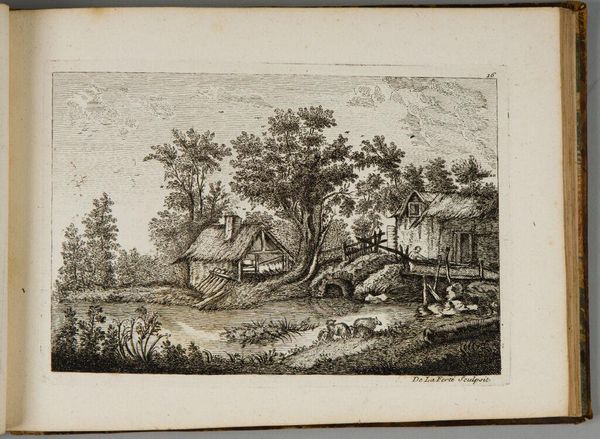
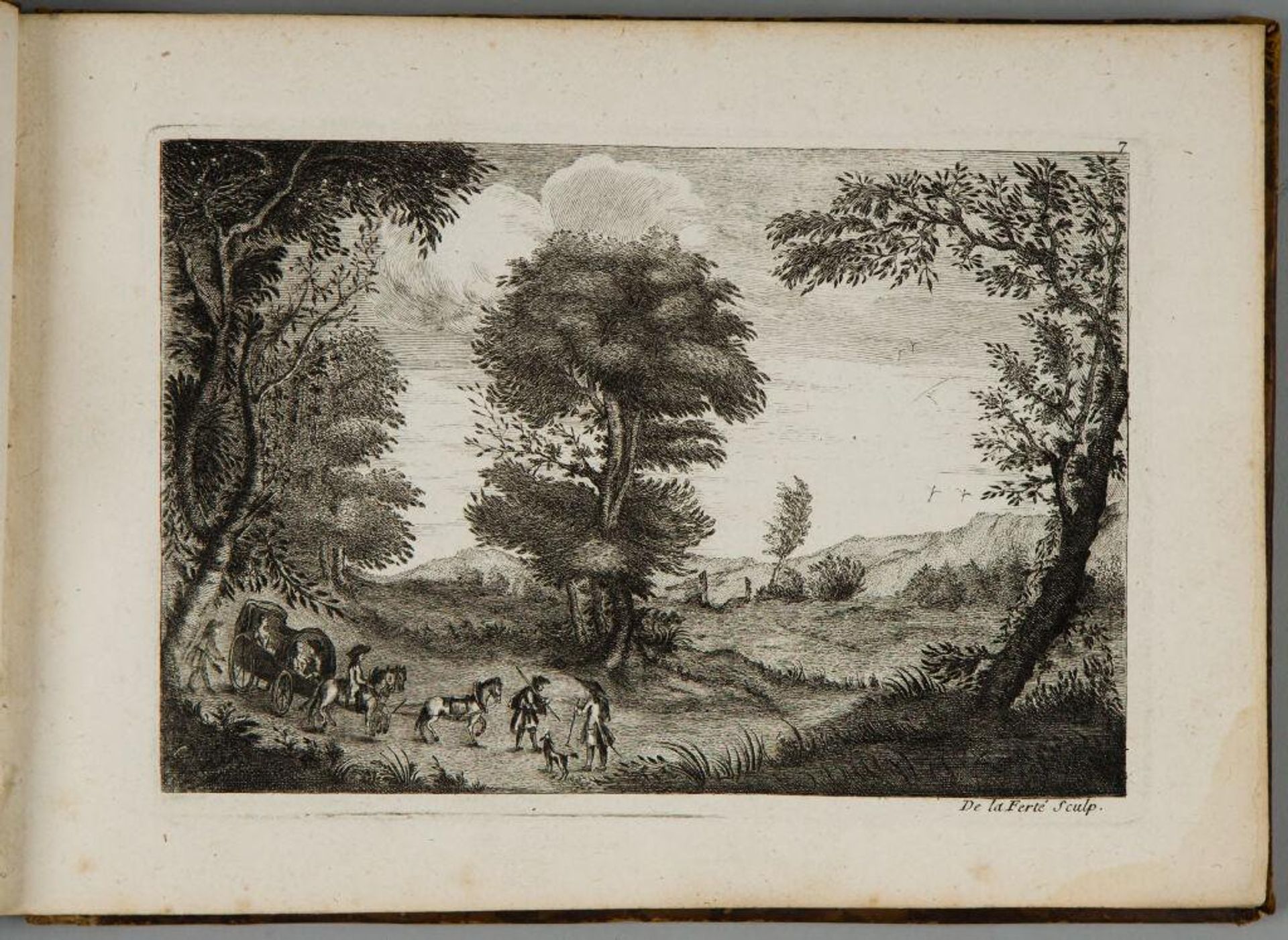
Riverview with Stilt Houses, Bridge and Foreground Tree
Denis-Pierre-Jean Papillon de la Ferté
@denispierrejeanpapillondelaferta
Harvard Art Museums
Harvard Art MuseumsListen to curator's interpretation
Curatorial notes
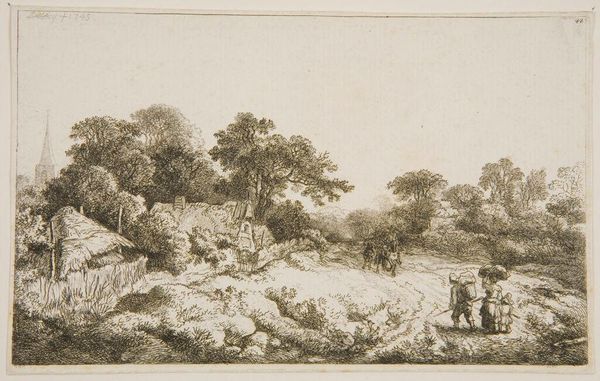
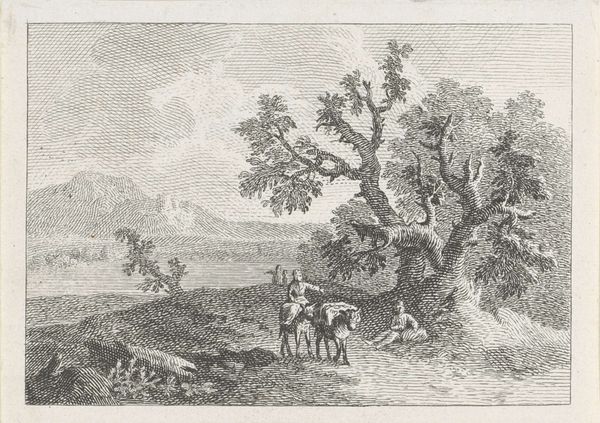
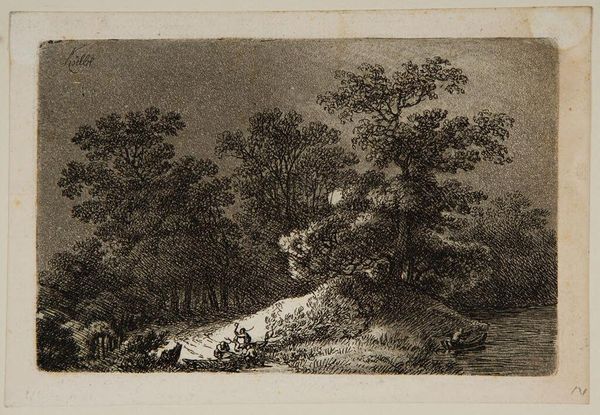
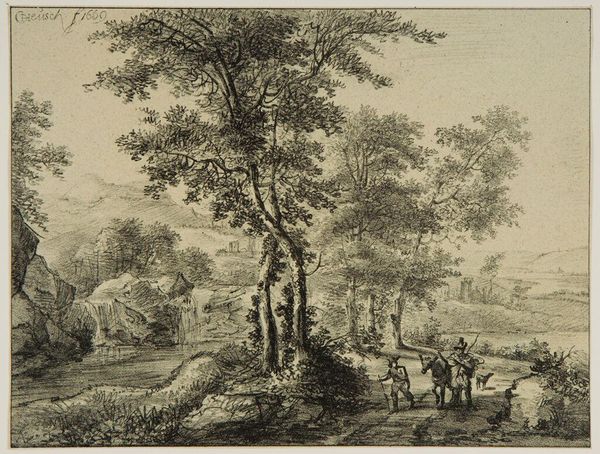
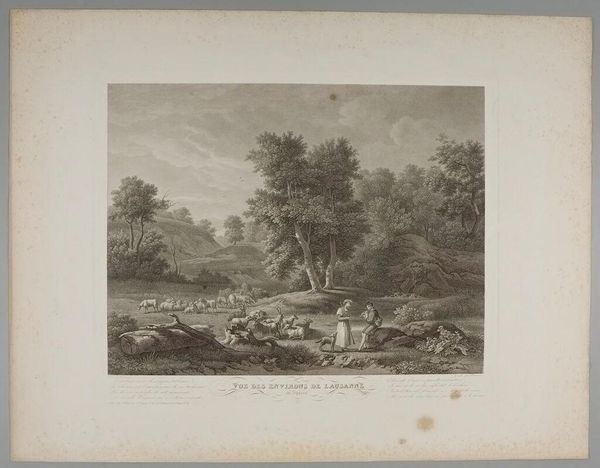
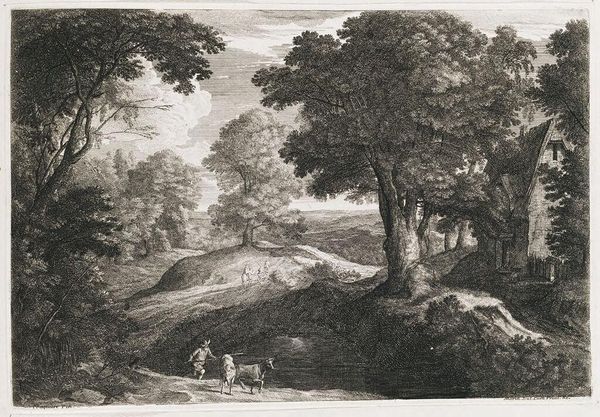
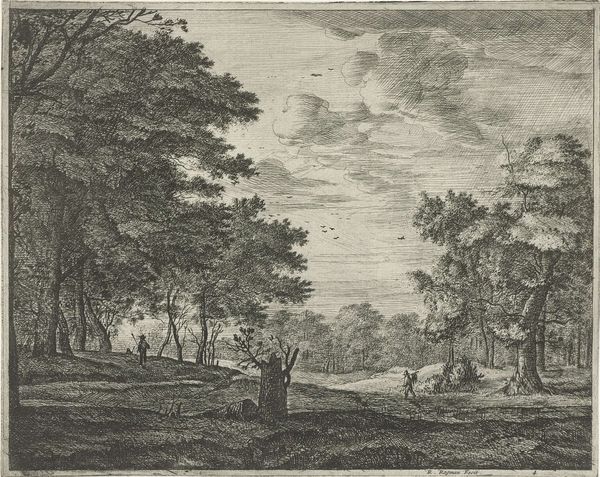
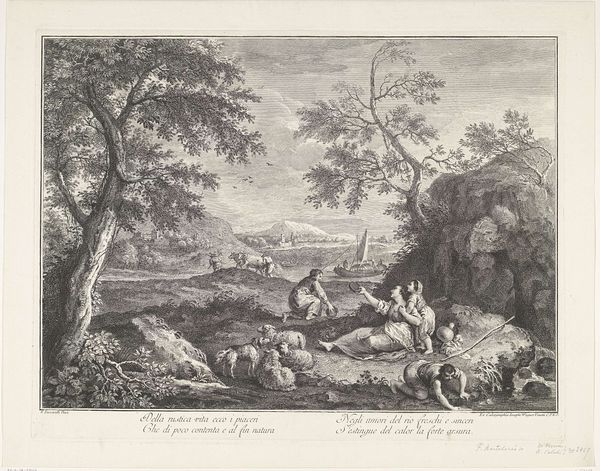
Curator: Denis-Pierre-Jean Papillon de la Ferté's etching, "Riverview with Stilt Houses, Bridge and Foreground Tree", captures a scene that feels both idyllic and meticulously constructed. Editor: It's quite striking—the figures almost seem secondary to the landscape's embrace. There's a sense of the theater, the way the trees frame the view. Curator: Indeed, and it's crucial to acknowledge how such pastoral scenes often served to legitimize power structures, obscuring the realities of land ownership and labor. The leisurely figures are symbols, perhaps, of privilege and dominion within a rigid social hierarchy. Editor: The stilt houses, bridge, even the foreground tree are all potent symbols as well. Water often represents the unconscious; the bridge, a transition. Is this a visual metaphor for the changing social landscape? Curator: It could well be. The act of representing these particular settings within a specific visual language helps us understand the complex relationship between art, class, and the construction of landscape as a concept. Editor: Fascinating. It leaves me contemplating how these seemingly tranquil scenes hold a deeper, sometimes unsettling resonance.