drawing, painting, paper, watercolor, architecture
#
drawing
#
dutch-golden-age
#
painting
#
landscape
#
paper
#
watercolor
#
coloured pencil
#
architecture drawing
#
genre-painting
#
architecture
#
realism
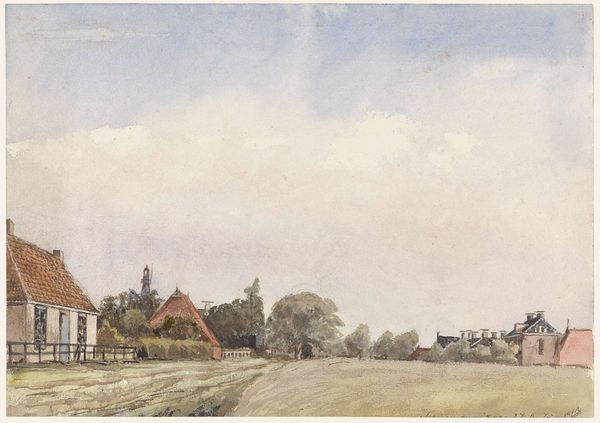
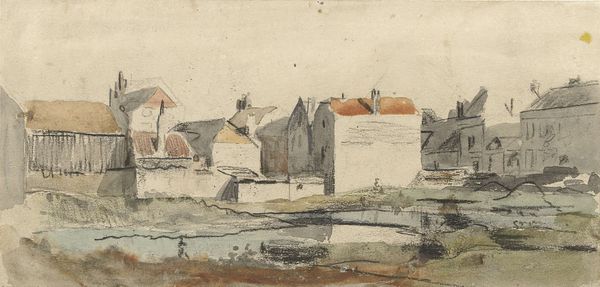
Dimensions: height 122 mm, width 207 mm
Copyright: Rijks Museum: Open Domain
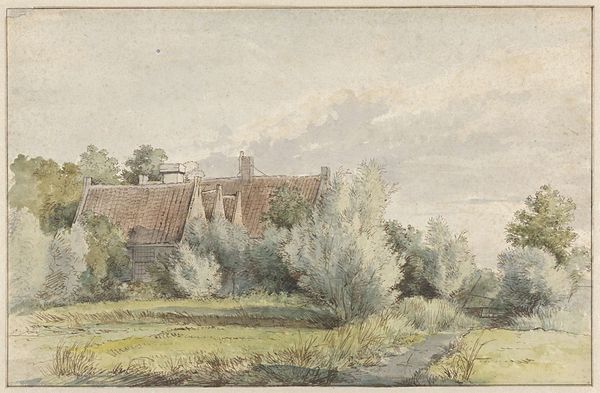
Editor: This watercolor on paper, “Blekerijen achter een vaart,” or "Bleaching Fields behind a Canal," by Hendrik Abraham Klinkhamer, feels incredibly serene, almost dreamlike. All of the white laundry spread out makes the scene look freshly cleansed, quiet. What can you tell me about it? Curator: This drawing offers a glimpse into the intersection of labor, industry, and domestic life in the 19th-century Netherlands. Bleaching grounds, as depicted here, were vital for processing textiles. Can you see how the architecture is almost secondary to the depiction of the linens? Editor: Yes, the lines of white linen visually dominate. It's interesting that a process so closely linked to cleanliness relies on open fields; a visual contradiction. How were these scenes perceived then, would you guess? Curator: Consider the growth of a textile industry and its impact on the landscape and its people. Bleaching wasn’t just practical; it was performative. Displaying bright white laundry was a sign of prosperity, a public declaration of domestic virtue. What does this say about the intended audience of such a scene and what Klinkhamer aims to express through the depiction of the landscape and blekerijen (bleaching fields)? Editor: That makes me think about how art becomes this advertising venue for certain lifestyles, almost a propaganda of daily life through textiles. Did Klinkhamer focus on textiles? Curator: He primarily was an architect and draftsman and this piece offers insight into architectural documentation practices of the era; how they reflect the cultural and economic values of the time. The placement of the bleaching fields hints at a visual vocabulary of prosperity through commerce. Editor: I didn’t think about the connection between commerce and art quite this way, but seeing it, especially regarding Dutch art in that period, suddenly feels incredibly clear. Curator: Precisely. It invites reflection on how we consume art, considering both its aesthetic qualities and the intricate web of social and economic forces at play during its creation.
Comments
No comments
Be the first to comment and join the conversation on the ultimate creative platform.
 Collect
 React
React Comment
More like this