About this artwork
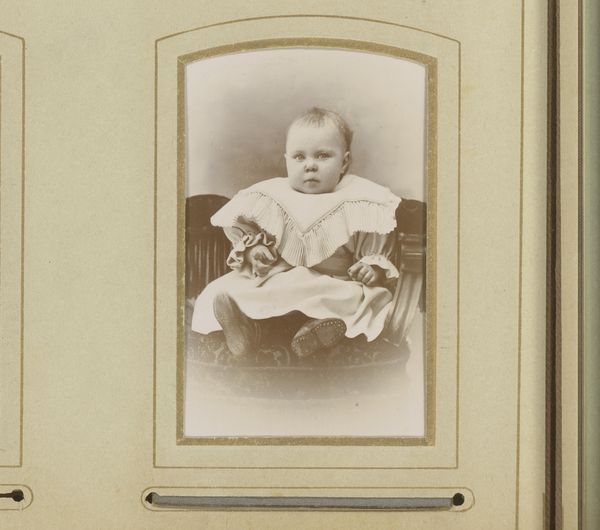
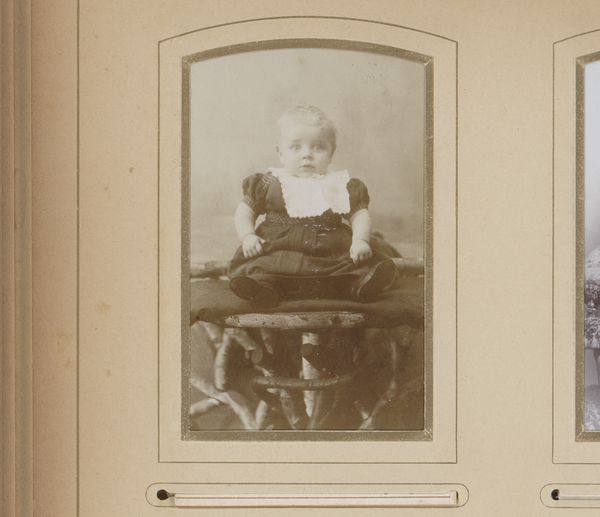
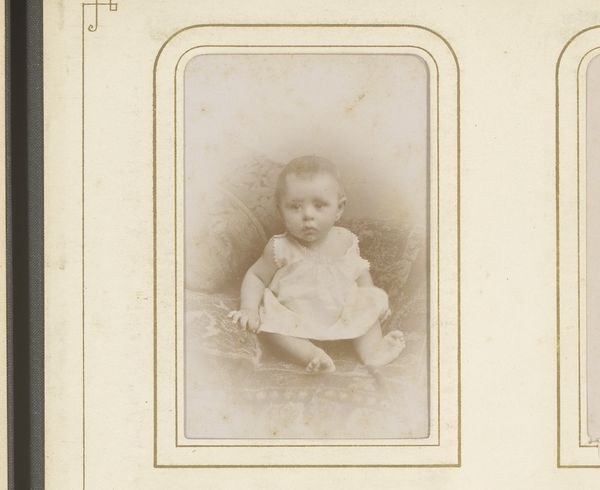
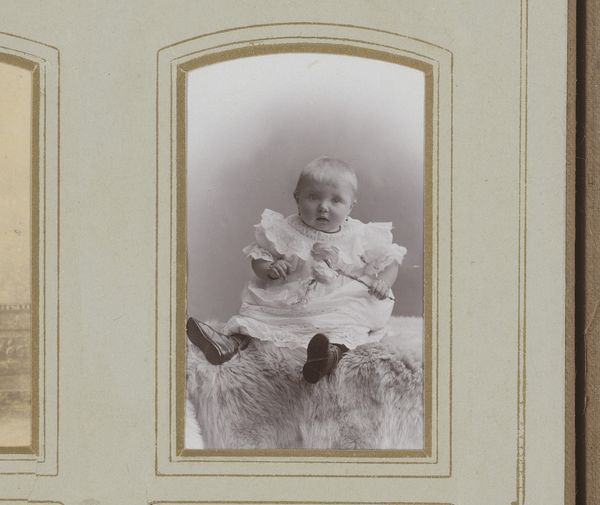
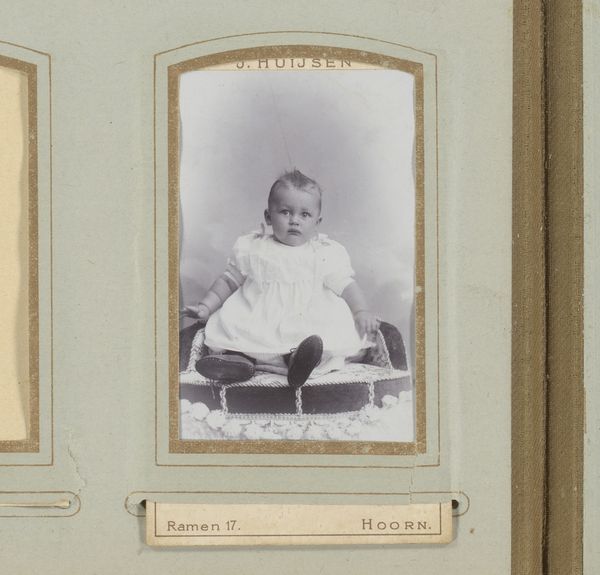
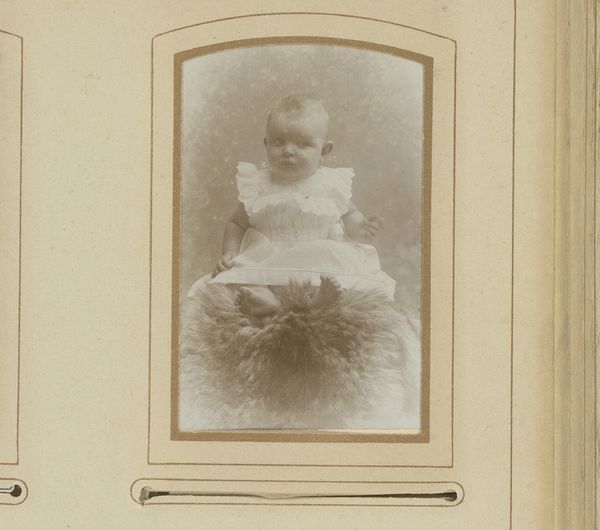
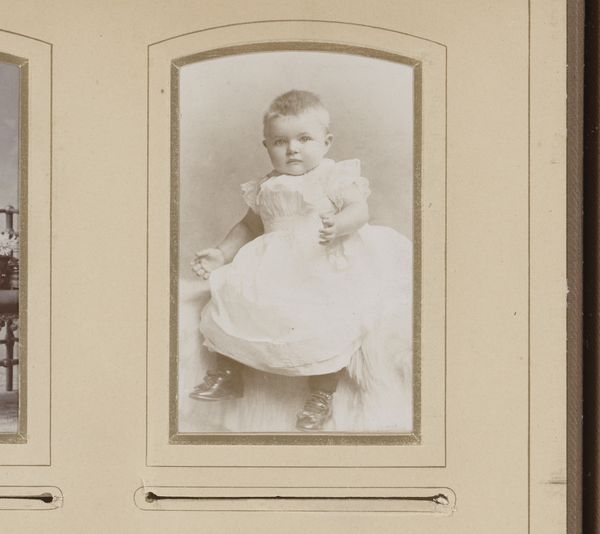
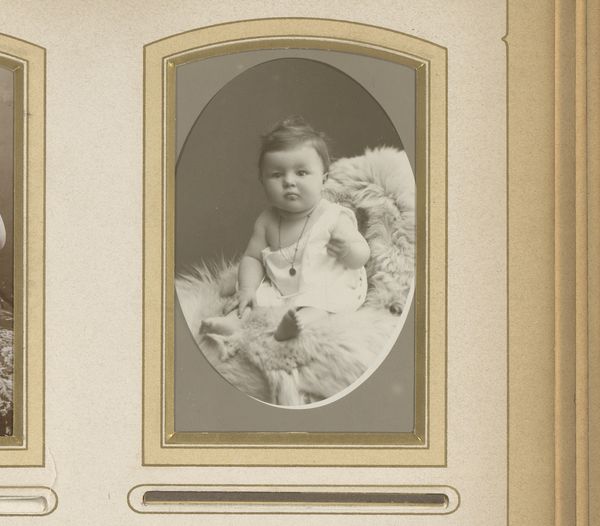
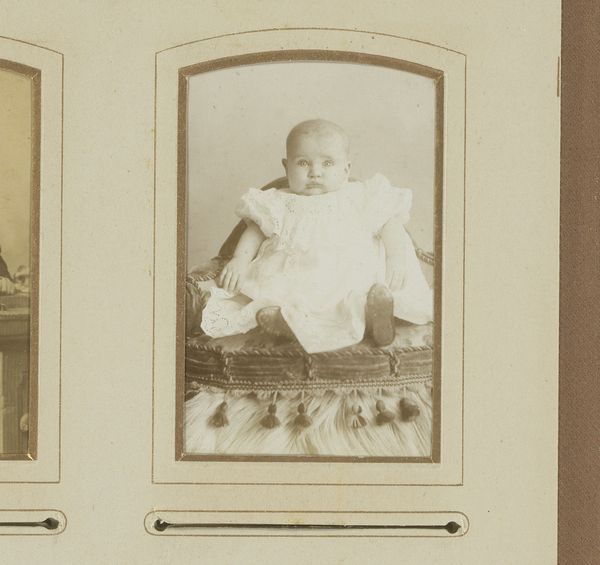
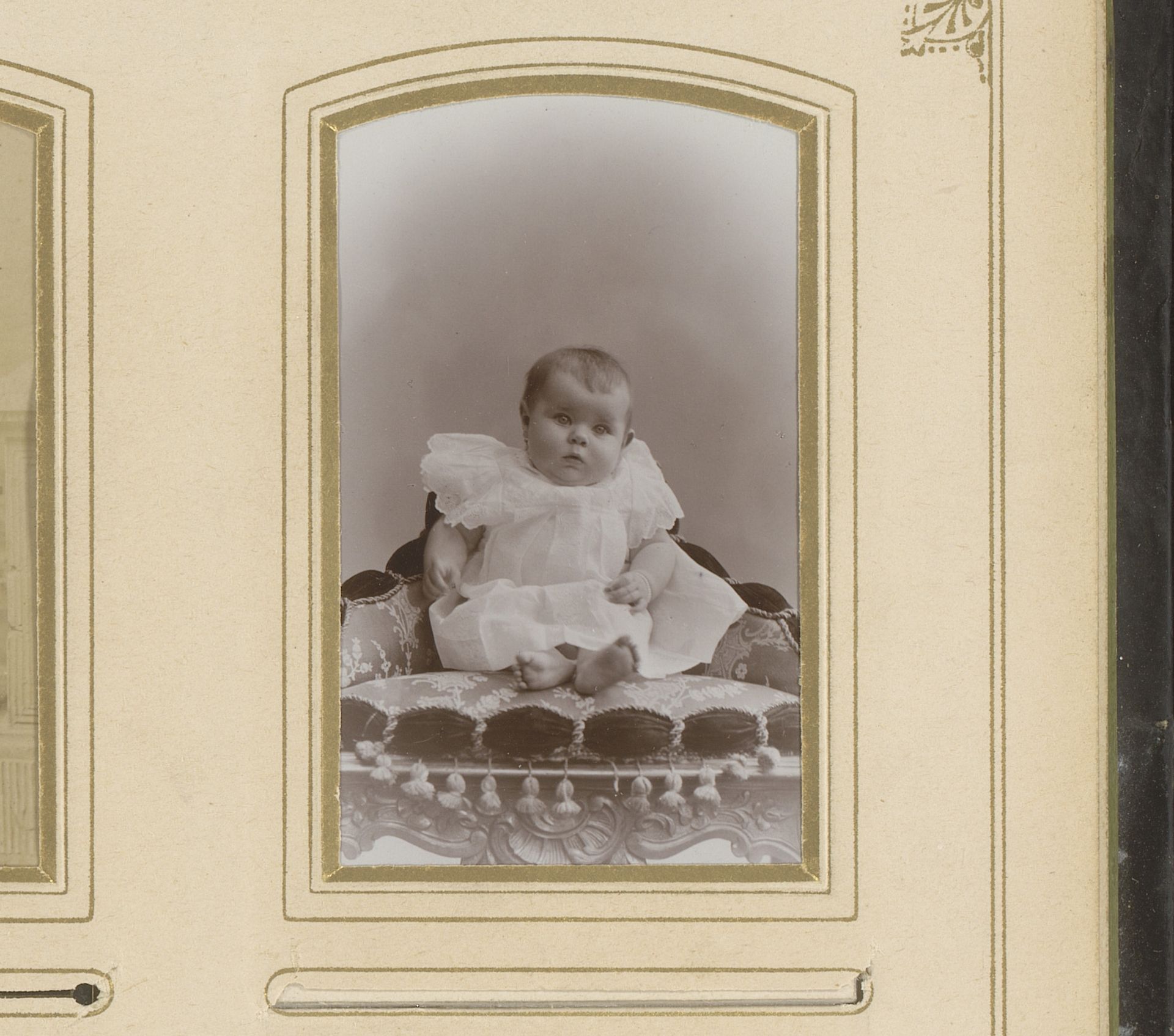
Editor: We're looking at "Portret van een zittende baby," a photograph taken between 1892 and 1906 by Machiel Hendricus Laddé. It's an albumen print. I find the formality of the image almost comical, a tiny human perched so seriously! What stands out to you? Curator: Oh, the weight of expectation in those eyes! Laddé captures not just an infant, but a whole era's aspirations. Notice the meticulous composition; the way the ornate cushion hints at bourgeois comfort, the stark backdrop focusing our attention entirely on the child. Does it feel staged? Because it is! Every fold of that pristine dress, every cherubic fold of the baby, carefully orchestrated, reflecting societal values surrounding innocence and purity, the promise of a bright future! Editor: Absolutely, staged, but the baby's expression is so… unimpressed. Is that intentional, do you think? A commentary on the constraints of the era? Curator: Perhaps! Or, perhaps it’s simply the wonderfully unpredictable nature of photographing infants! More likely it just happened, you see? But as time passes it becomes so much more that just happenstance. What I see there—I really believe this—is more a reflection of *our* expectations projected back onto a blank canvas, *onto* this historical baby, like this image is now is now, just for *us*! What do you feel when you really look at it? Editor: I guess it's a little bit sad, because they were also babies that weren’t being photographed. They’re just absent from our record and so are not considered to matter… That makes it… difficult. Curator: Yes, photography, for so long a means of memorialization, yes, that selective gaze of history—we must always ask: Whose story is being told, and at what cost to all others? That disquiet you're feeling— hold on to it. That's where true understanding blossoms. Editor: Well, I'll definitely be chewing on that for a while. Thanks!
Portret van een zittende baby
1892 - 1906

Machiel Hendricus Laddé
1866 - 1932Location
RijksmuseumArtwork details
- Medium
- photography, albumen-print
- Dimensions
- height 84 mm, width 51 mm
- Location
- Rijksmuseum
- Copyright
- Rijks Museum: Open Domain
Tags
Comments
Share your thoughts
About this artwork
Editor: We're looking at "Portret van een zittende baby," a photograph taken between 1892 and 1906 by Machiel Hendricus Laddé. It's an albumen print. I find the formality of the image almost comical, a tiny human perched so seriously! What stands out to you? Curator: Oh, the weight of expectation in those eyes! Laddé captures not just an infant, but a whole era's aspirations. Notice the meticulous composition; the way the ornate cushion hints at bourgeois comfort, the stark backdrop focusing our attention entirely on the child. Does it feel staged? Because it is! Every fold of that pristine dress, every cherubic fold of the baby, carefully orchestrated, reflecting societal values surrounding innocence and purity, the promise of a bright future! Editor: Absolutely, staged, but the baby's expression is so… unimpressed. Is that intentional, do you think? A commentary on the constraints of the era? Curator: Perhaps! Or, perhaps it’s simply the wonderfully unpredictable nature of photographing infants! More likely it just happened, you see? But as time passes it becomes so much more that just happenstance. What I see there—I really believe this—is more a reflection of *our* expectations projected back onto a blank canvas, *onto* this historical baby, like this image is now is now, just for *us*! What do you feel when you really look at it? Editor: I guess it's a little bit sad, because they were also babies that weren’t being photographed. They’re just absent from our record and so are not considered to matter… That makes it… difficult. Curator: Yes, photography, for so long a means of memorialization, yes, that selective gaze of history—we must always ask: Whose story is being told, and at what cost to all others? That disquiet you're feeling— hold on to it. That's where true understanding blossoms. Editor: Well, I'll definitely be chewing on that for a while. Thanks!
Comments
Share your thoughts