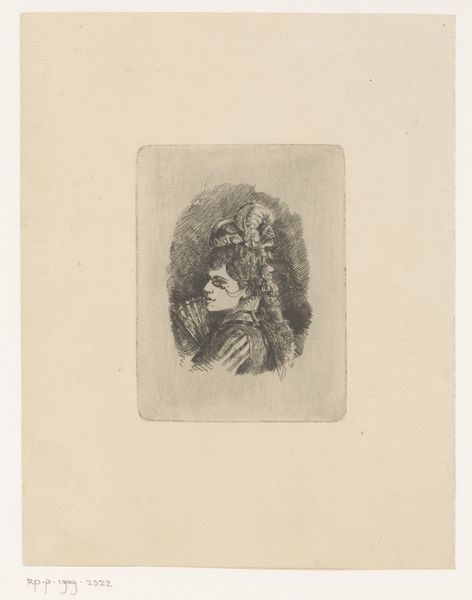
c. 1880
Jennie Gerson


Listen to curator's interpretation
Curatorial notes
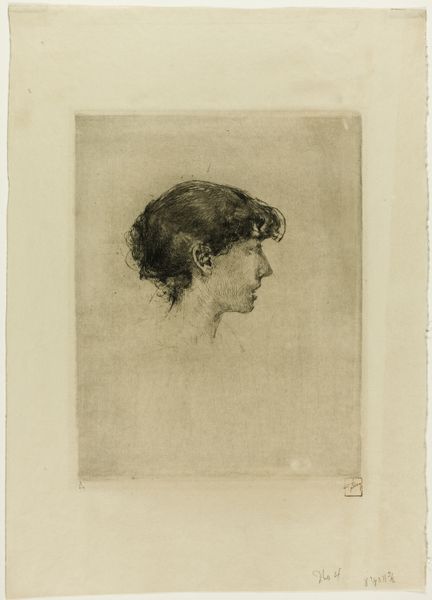
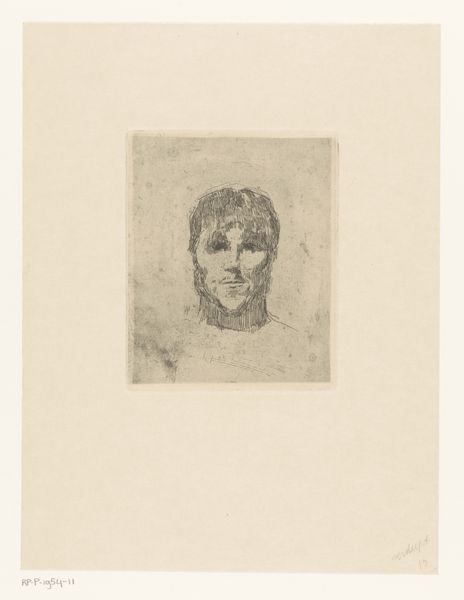
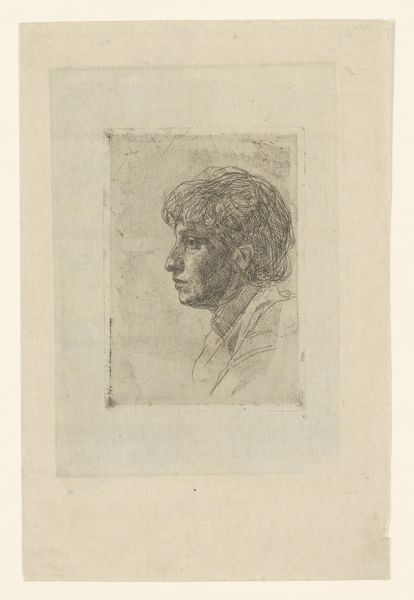
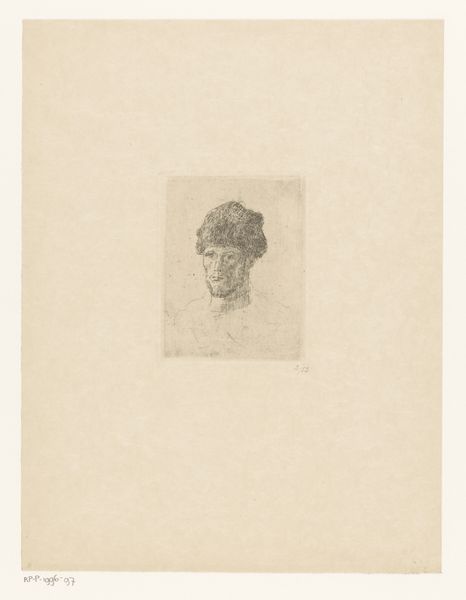
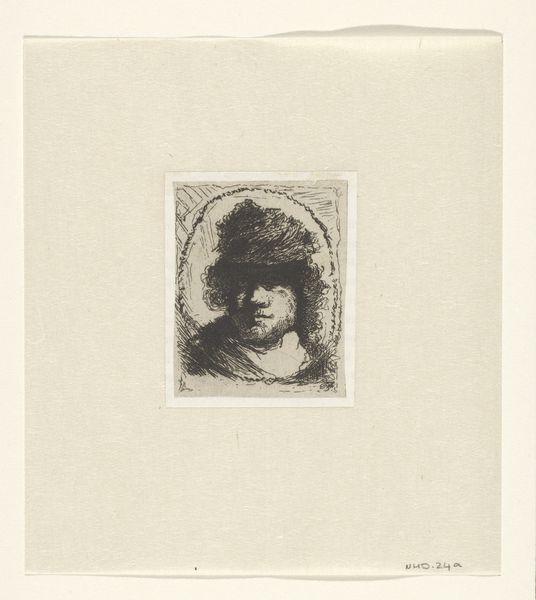
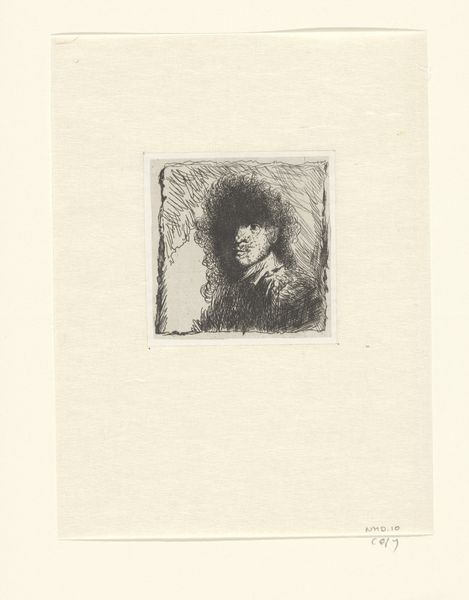
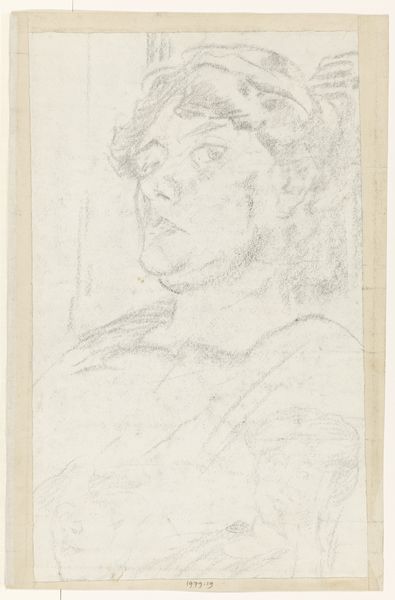
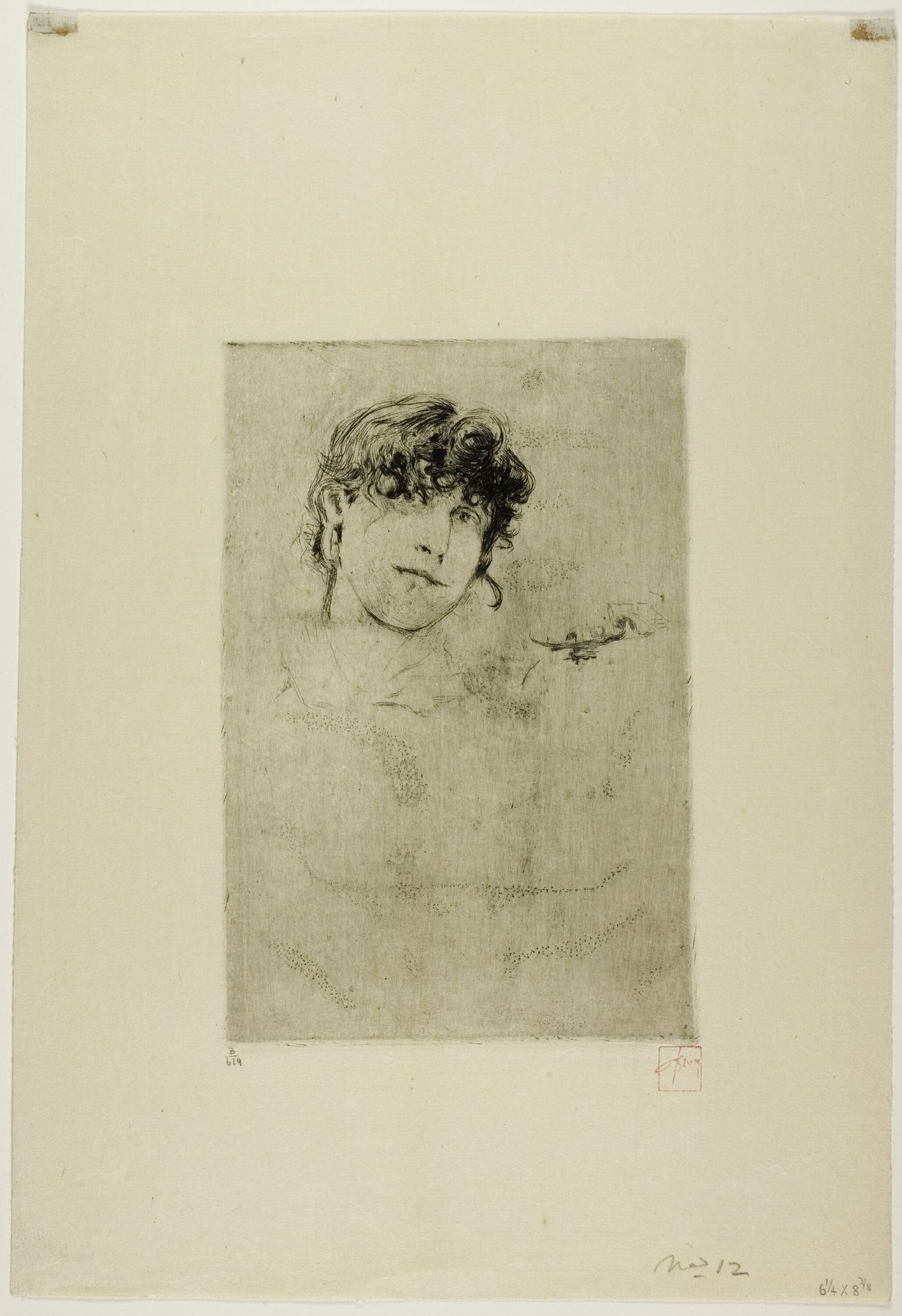
Editor: This is Robert Frederick Blum’s "Jennie Gerson" from around 1880. It's an etching, so a print on paper. It feels so immediate and intimate, like we're catching Jennie in a private moment. What do you see in this piece? Curator: Oh, the beauty of etched lines! It's as though Blum whispered her essence onto the paper. I see a world of quiet observation, a gentle probing of personality. Doesn't it feel as though we are invited into a hushed confidence? He caught the spirit of her youth, I suspect... like a fleeting memory caught in the light. Does she seem at all melancholic to you? Editor: Melancholic, yes, perhaps a touch. There’s something about her eyes, the way they aren't quite focused...or maybe thoughtful? It's hard to tell. The sketchy quality adds to that sense of ambiguity, doesn’t it? Curator: Exactly! And that's the beauty of the etching process, isn't it? That soft focus. Blum wasn’t aiming for clinical accuracy; he wanted to capture a mood, a feeling. It reminds me a bit of how we see people in our dreams: familiar but just out of reach. Did Blum succeed at evoking the inner life? Editor: Definitely. I like that comparison to dreams, the etching style suits that sense of a hazy memory, perfectly. I’ll remember to think about mood and artistic choices rather than strict realism next time. Curator: Precisely! It’s about the dance between observation and the artist’s interior world. Sometimes, it seems, that the truest portraits are those that dare to whisper, not shout. Don't you think?