About this artwork
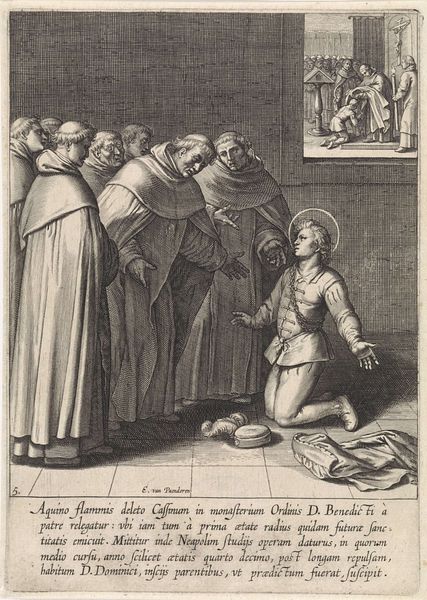
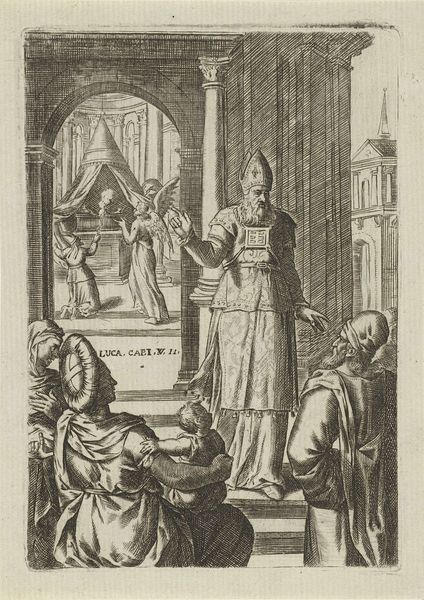
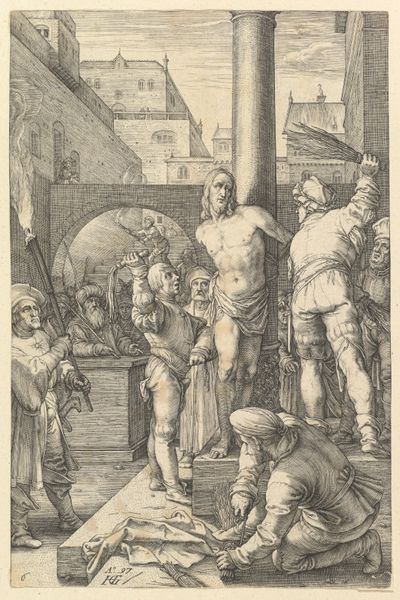
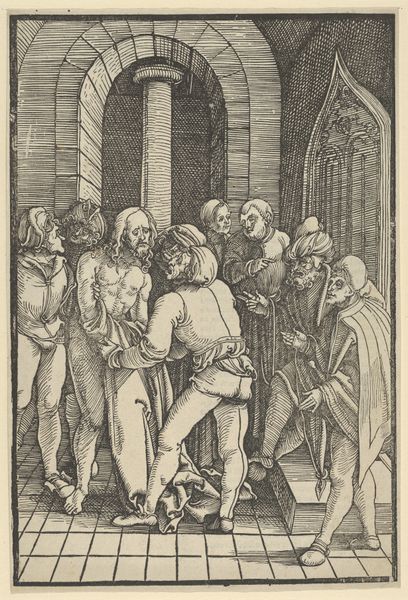
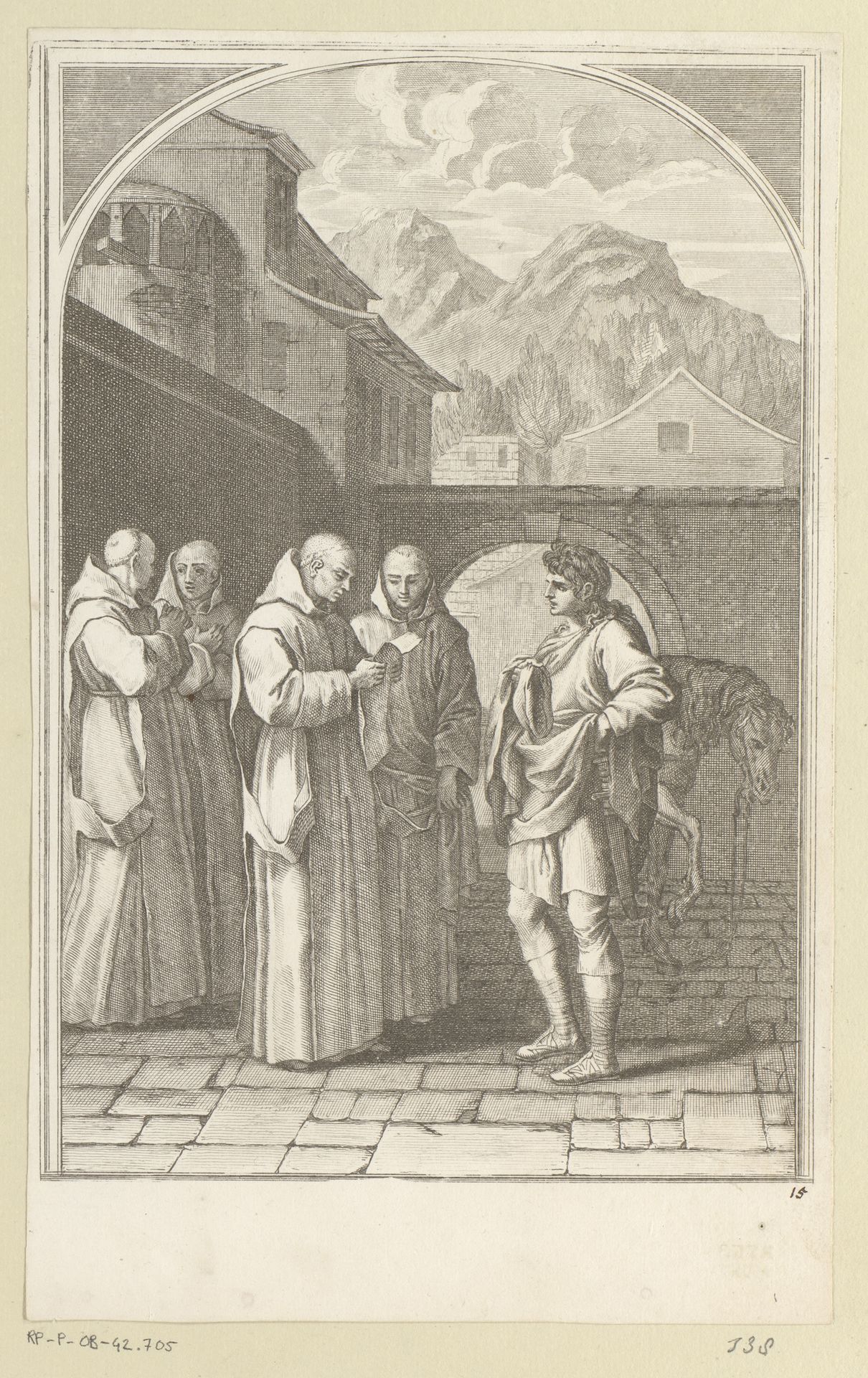
This print of Saint Bruno receiving a message from Pope Urbanus II was made by Sébastien Leclerc I. The artist employed engraving, meticulously cutting lines into a metal plate, to create an image of tonal gradations and fine details. This laborious process demanded considerable skill and time, a reflection of the traditional craft practices that existed alongside the burgeoning industrial methods of the era. Look at the way Leclerc uses line to describe the folds of fabric, the texture of the stone, and the distant mountains. Prints like this were produced in multiples and distributed widely, making religious narratives accessible to a broad audience. The work's material influence lies not only in its aesthetic appearance but also in its role as a vehicle for cultural and religious dissemination. By considering the materials, production methods, and the broader social context in which it was made, we can understand the significance of this print as a convergence of craft, religion, and emerging capitalist modes of production.
Heilige Bruno ontvangt een boodschap van paus Urbanus II
1647 - 1714

Sébastien Leclerc I
1637 - 1714Location
RijksmuseumArtwork details
- Medium
- print, engraving
- Dimensions
- height 345 mm, width 215 mm
- Location
- Rijksmuseum
- Copyright
- Rijks Museum: Open Domain
Tags
Comments
Share your thoughts
About this artwork
This print of Saint Bruno receiving a message from Pope Urbanus II was made by Sébastien Leclerc I. The artist employed engraving, meticulously cutting lines into a metal plate, to create an image of tonal gradations and fine details. This laborious process demanded considerable skill and time, a reflection of the traditional craft practices that existed alongside the burgeoning industrial methods of the era. Look at the way Leclerc uses line to describe the folds of fabric, the texture of the stone, and the distant mountains. Prints like this were produced in multiples and distributed widely, making religious narratives accessible to a broad audience. The work's material influence lies not only in its aesthetic appearance but also in its role as a vehicle for cultural and religious dissemination. By considering the materials, production methods, and the broader social context in which it was made, we can understand the significance of this print as a convergence of craft, religion, and emerging capitalist modes of production.
Comments
Share your thoughts