About this artwork
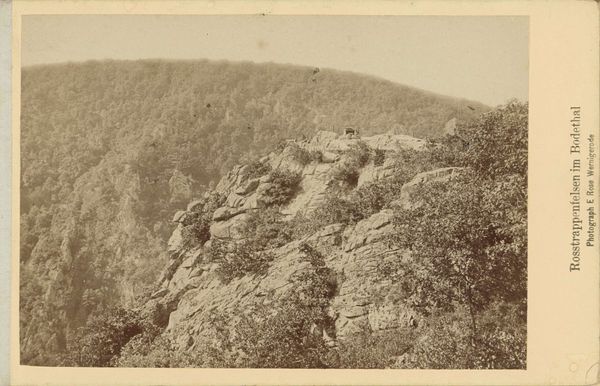
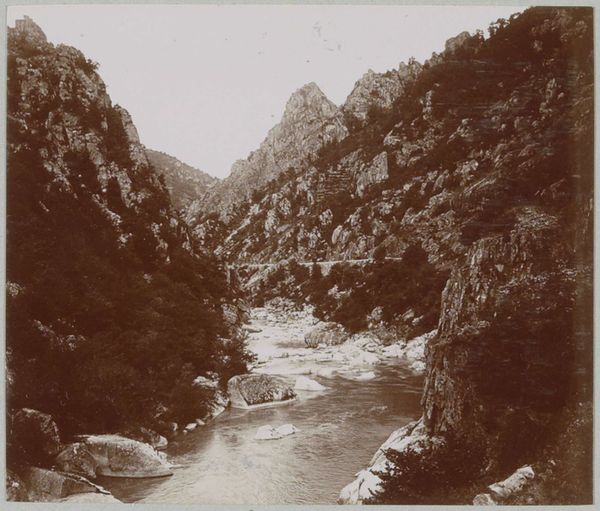
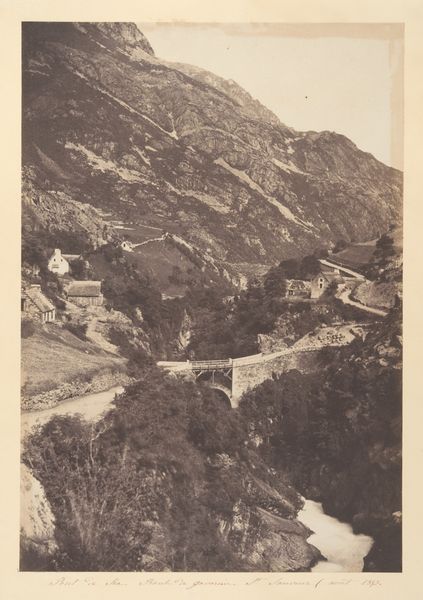
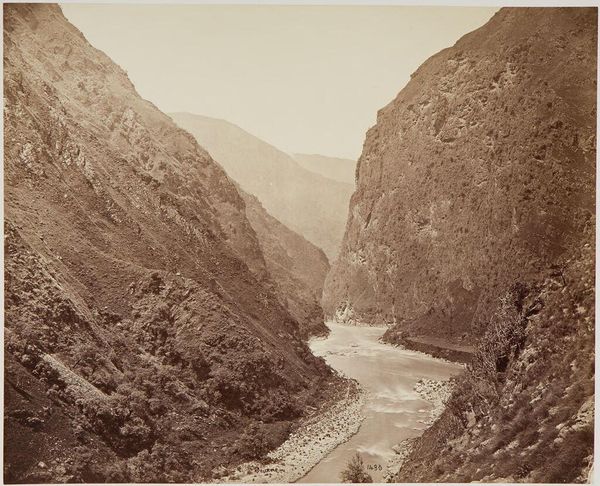
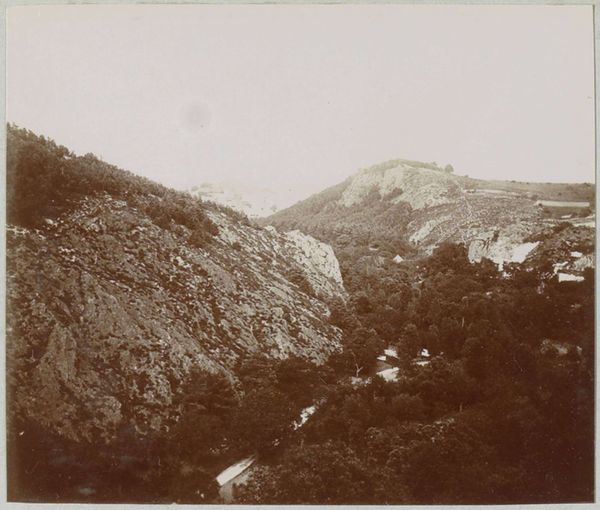
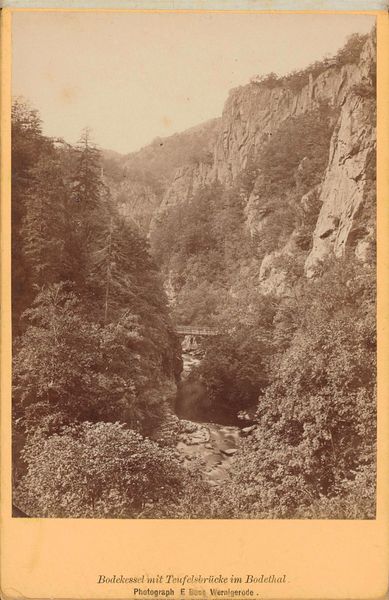
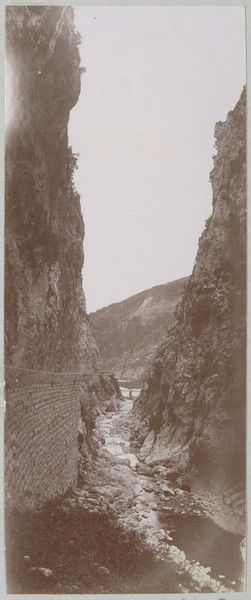
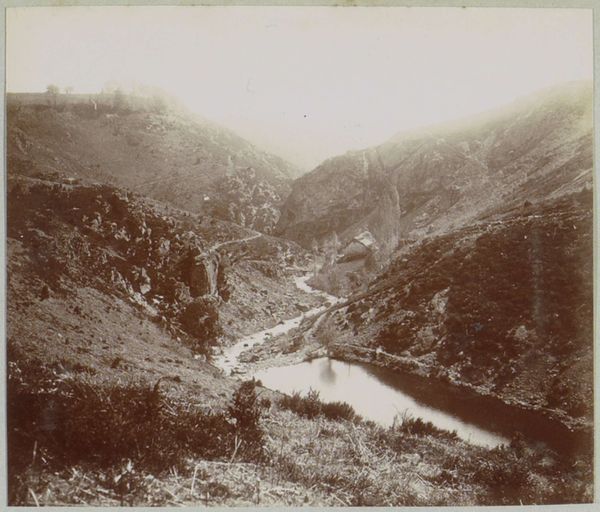
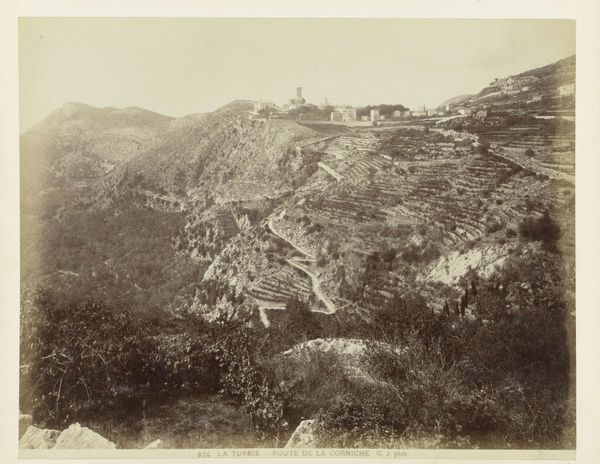
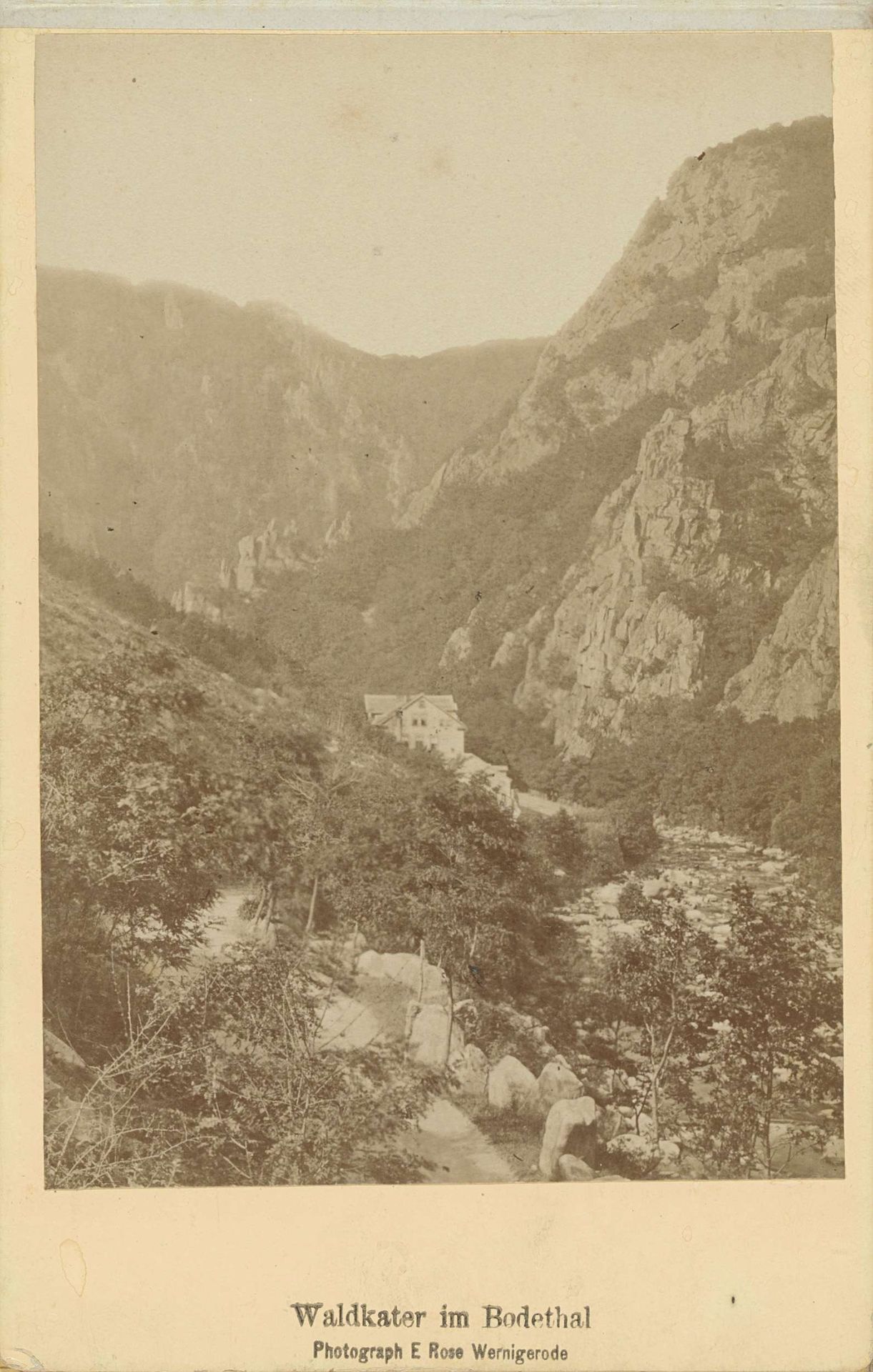
This photograph, titled 'Waldkater in het Bodedal' and taken by E. Rose, uses the craft of photography to frame a landscape. Though we don't know the exact date, the sepia tone and mounting suggest it was created in the late 19th or early 20th century, when photography was becoming more accessible but still required a skilled hand. Consider the labor involved: the careful composition, the development process in the darkroom, the printing and mounting. Each step demanded precision. Photography in this era was not just about pointing and shooting. It was a chemical and optical process, a craft that translated light and shadow into a tangible image. The photograph itself, a fragile paper object, is now a relic. It invites us to consider photography not just as a means of documentation, but as a material practice embedded in a specific time and place. It challenges our contemporary understanding of photography as instantaneous and ubiquitous.

Artwork details
- Dimensions
- height 142 mm, width 98 mm
- Copyright
- Rijks Museum: Open Domain
Comments
Share your thoughts
About this artwork
This photograph, titled 'Waldkater in het Bodedal' and taken by E. Rose, uses the craft of photography to frame a landscape. Though we don't know the exact date, the sepia tone and mounting suggest it was created in the late 19th or early 20th century, when photography was becoming more accessible but still required a skilled hand. Consider the labor involved: the careful composition, the development process in the darkroom, the printing and mounting. Each step demanded precision. Photography in this era was not just about pointing and shooting. It was a chemical and optical process, a craft that translated light and shadow into a tangible image. The photograph itself, a fragile paper object, is now a relic. It invites us to consider photography not just as a means of documentation, but as a material practice embedded in a specific time and place. It challenges our contemporary understanding of photography as instantaneous and ubiquitous.
Comments
Share your thoughts