About this artwork
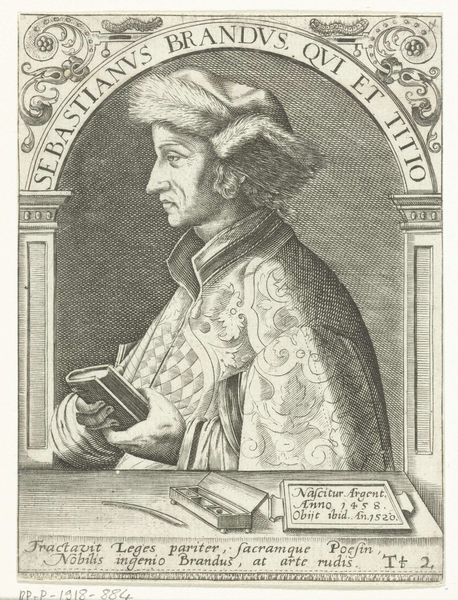
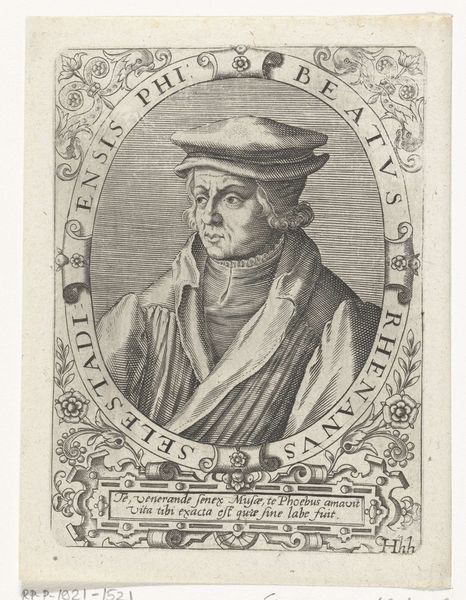
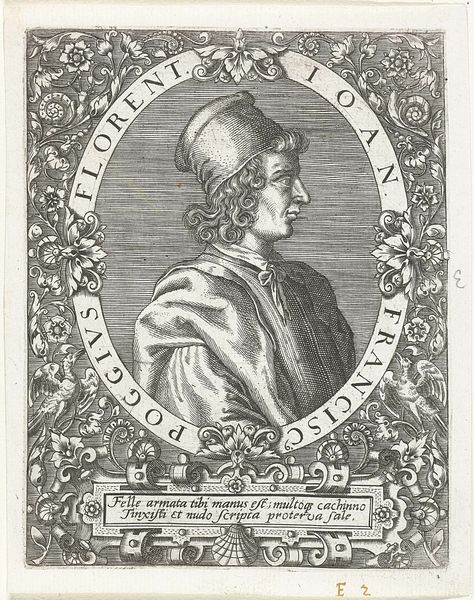
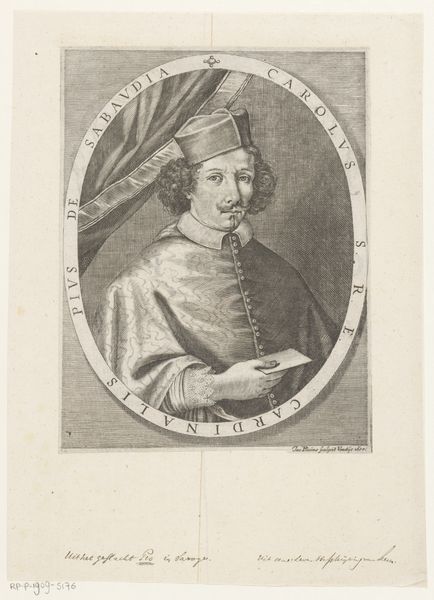
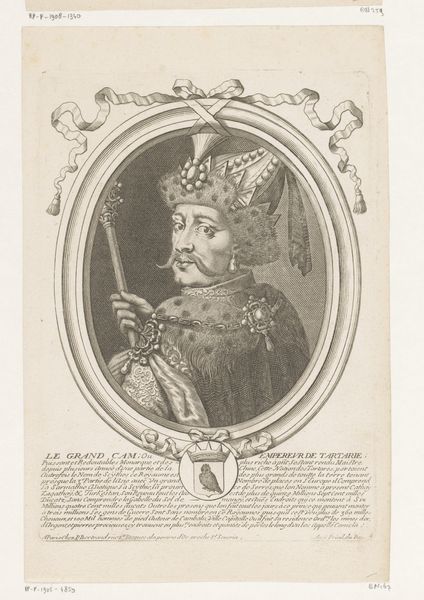
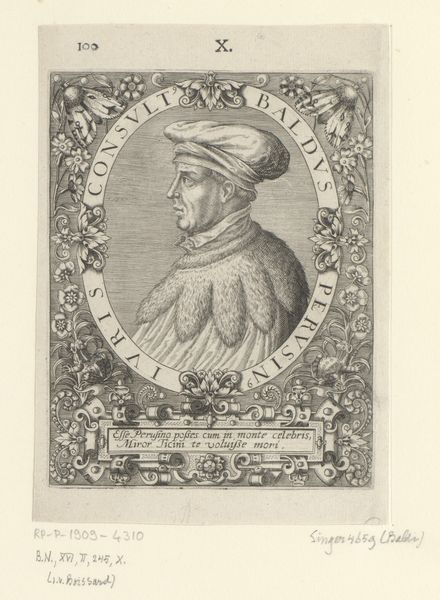
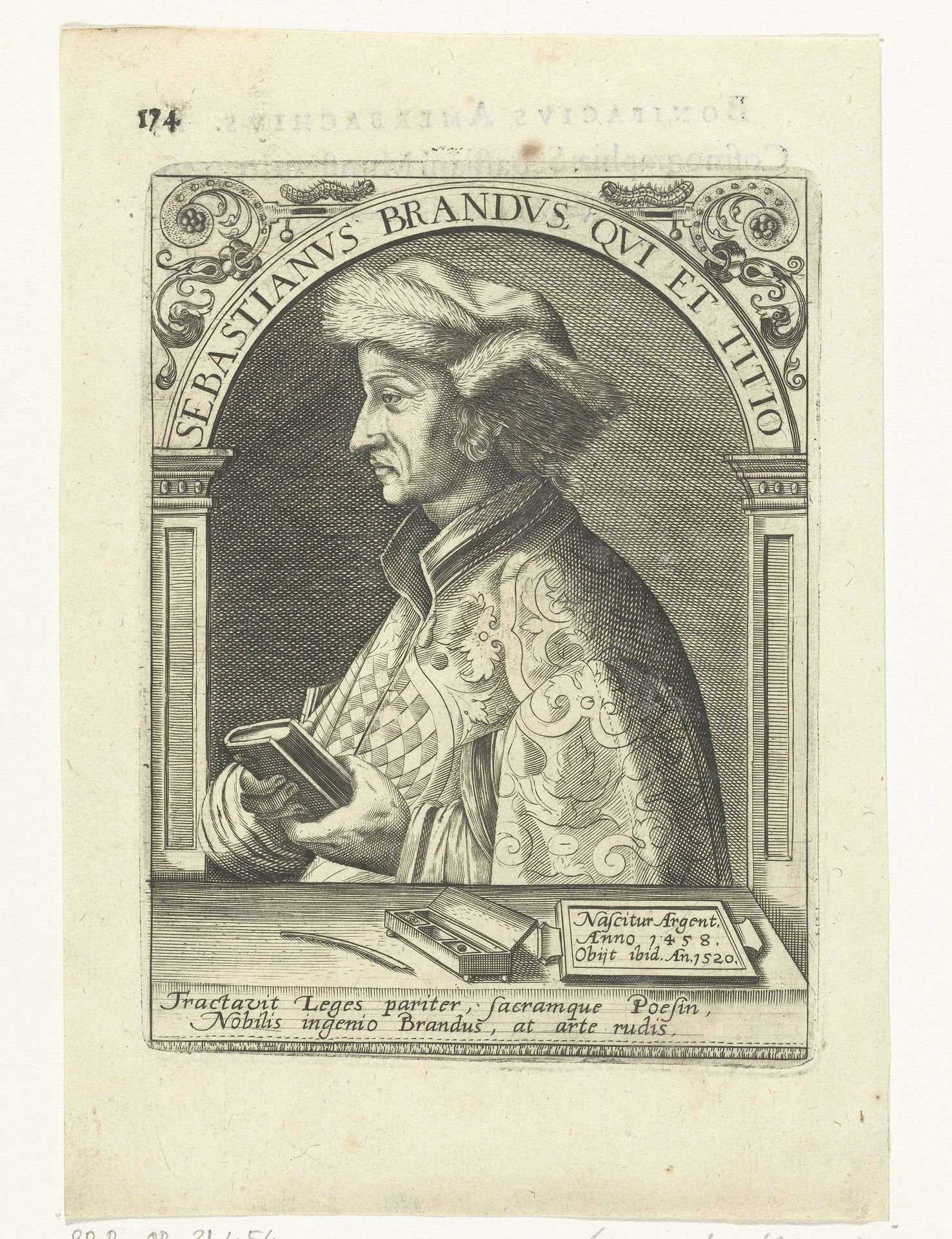
Editor: Here we have Cornelis Galle I's engraving, "Portret van Sebastian Brant," dating back to the late 16th century. The subject's face is serious, and the details of his fur hat and checkered robe are incredibly intricate. What symbols stand out to you? Curator: Notice how Brant is framed. The architectural details give a sense of formality and permanence, placing him within a structure of established knowledge, as do the Latin inscriptions. His fur hat? A signifier of status. He holds a book, representing not just learning but the very dissemination of ideas during the Renaissance. Consider how portraits in the Renaissance legitimized fame. What message do you think it conveys? Editor: So it's about visually reinforcing his authority and intellectual contributions? Almost like branding. Curator: Exactly. What else catches your eye about how his portrait has been constructed? Editor: I guess the little tray of pigments indicates something about his creativity. Are you suggesting that everything here has multiple layers of symbolic value? Curator: Precisely. Even his turned head, looking towards the past? Towards Rome, and classical precedents, with its calligraphic forms echoing across generations of visual symbolism. It creates a potent connection to cultural memory, inviting the viewer to consider Brant's legacy. Editor: I hadn't considered the direction of his gaze. Seeing how many meanings can be embedded in an image really changes how I understand art. Curator: Indeed. Remember to question what’s visible. Consider, too, what the image, however aged, holds as part of a dialogue within a collective unconscious.

Artwork details
- Medium
- print, engraving
- Dimensions
- height 140 mm, width 100 mm
- Location
- Rijksmuseum
- Copyright
- Rijks Museum: Open Domain
Tags
portrait
old engraving style
11_renaissance
history-painting
northern-renaissance
engraving
Comments
Be the first to share your thoughts about this work.
About this artwork
Editor: Here we have Cornelis Galle I's engraving, "Portret van Sebastian Brant," dating back to the late 16th century. The subject's face is serious, and the details of his fur hat and checkered robe are incredibly intricate. What symbols stand out to you? Curator: Notice how Brant is framed. The architectural details give a sense of formality and permanence, placing him within a structure of established knowledge, as do the Latin inscriptions. His fur hat? A signifier of status. He holds a book, representing not just learning but the very dissemination of ideas during the Renaissance. Consider how portraits in the Renaissance legitimized fame. What message do you think it conveys? Editor: So it's about visually reinforcing his authority and intellectual contributions? Almost like branding. Curator: Exactly. What else catches your eye about how his portrait has been constructed? Editor: I guess the little tray of pigments indicates something about his creativity. Are you suggesting that everything here has multiple layers of symbolic value? Curator: Precisely. Even his turned head, looking towards the past? Towards Rome, and classical precedents, with its calligraphic forms echoing across generations of visual symbolism. It creates a potent connection to cultural memory, inviting the viewer to consider Brant's legacy. Editor: I hadn't considered the direction of his gaze. Seeing how many meanings can be embedded in an image really changes how I understand art. Curator: Indeed. Remember to question what’s visible. Consider, too, what the image, however aged, holds as part of a dialogue within a collective unconscious.
Comments
Be the first to share your thoughts about this work.