


Curatorial notes
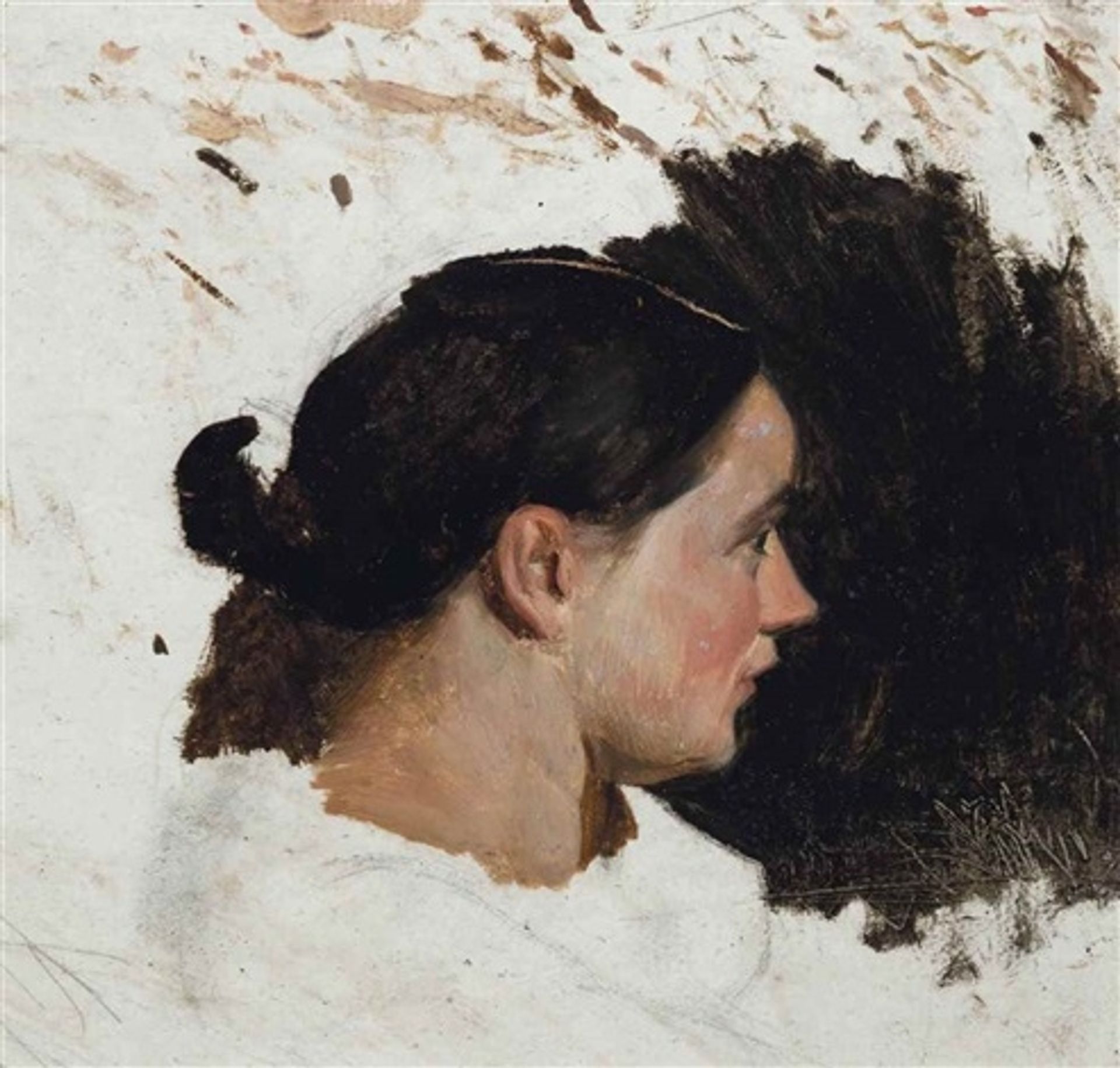
Editor: Here we have, "Portrait of a Girl" by Alfred Dehodencq. It's unsigned and undated, but seems to be oil on canvas. I find it quite striking for its simplicity and direct gaze – even in profile, she feels very present. What do you see in this piece? Curator: I'm drawn to the contrast between the visible brushstrokes, the rawness of the unfinished background, and the smoothness of her face. It brings to mind the concept of “memory theater”, this idea that we construct memories from fragments. How might this girl be a symbol for remembrance, or even the fleeting nature of youth, given the fragmented context around her? Editor: That’s fascinating. I hadn't considered that connection between the unfinished aspects and memory. The dark background really makes her profile stand out. Do you think the artist had a specific reason for choosing such a stark contrast? Curator: Black, psychologically, can signify the unknown, but also a powerful void, a space of potential. Dehodencq may have used it to shroud the girl's future, her identity outside of this portrait, or even the unspoken societal constraints placed upon young women at the time. Does her upward gaze hint at defiance or perhaps just youthful optimism, existing in opposition to this "void"? Editor: I see what you mean. It's not just a portrait; it's almost like an icon representing a certain moment in a young woman’s life. That simple choice to use such bold contrasts really changes how you view the subject. Curator: Absolutely. And how art often operates, weaving together the personal with the symbolic and cultural narratives that echo long after the artist has set down their brush.