About this artwork
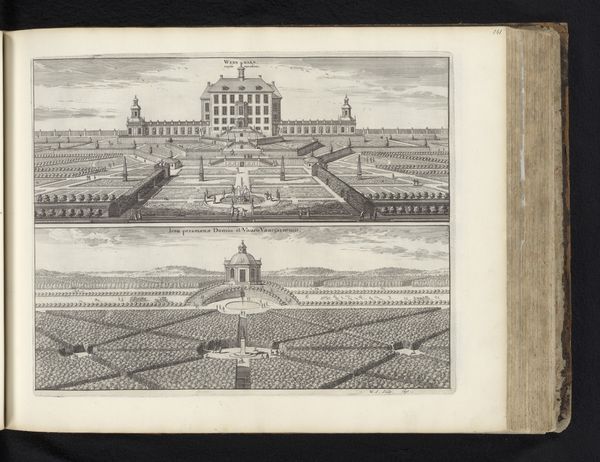
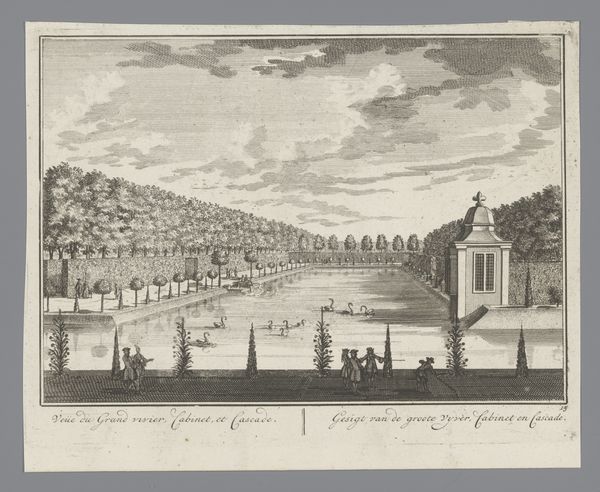
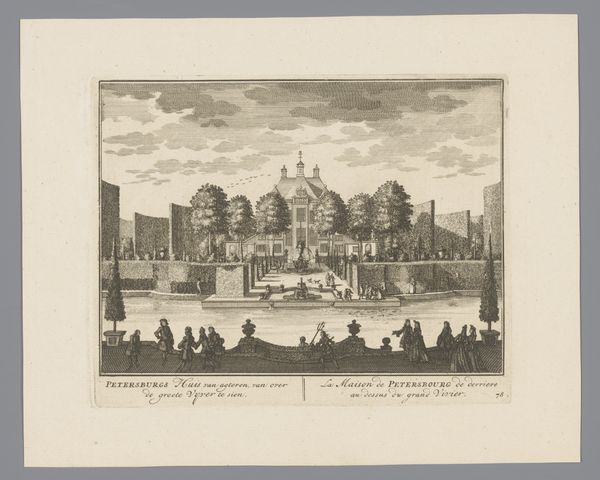
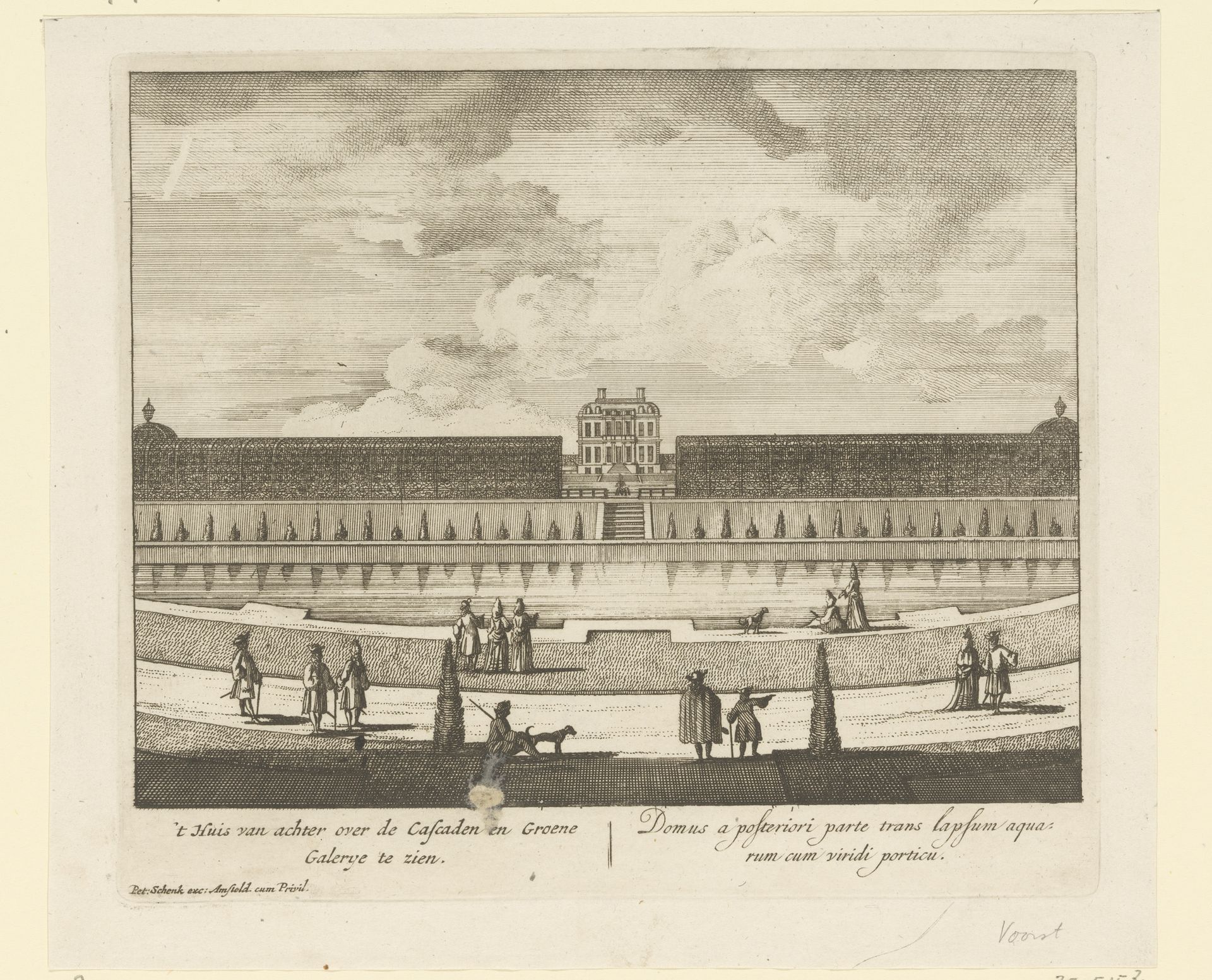
Pieter Schenk created this print, "View of the Rear of Huis de Voorst," capturing the architectural aesthetics and social life of the Dutch elite. Though undated, the artwork offers a glimpse into the late 17th or early 18th century. The print depicts an elevated perspective of the rear of the House of Voorst, complete with formal gardens and cascading water features, populated by figures from the privileged classes enjoying the lavish space. This carefully constructed environment reflects not only wealth but also the power dynamics of the time, where land ownership and estate design reinforced social hierarchies. Schenk’s rendering invites contemplation on the relationship between humanity and nature, shaped by the desires and ambitions of the wealthy landowners. The artwork is a cultural artifact, embodying the ethos of an era marked by grandeur and the subtle assertion of dominance through landscape. It is a world where nature is meticulously sculpted to reflect and reinforce the social order, inviting us to reflect on the emotional distance cultivated in such contrived settings.
Gezicht op de achterzijde van Huis de Voorst
c. 1700

Pieter Schenk
1660 - 1711Location
RijksmuseumArtwork details
- Medium
- drawing, print, etching, engraving
- Dimensions
- height 170 mm, width 196 mm
- Location
- Rijksmuseum
- Copyright
- Rijks Museum: Open Domain
Tags
Comments
Share your thoughts
About this artwork
Pieter Schenk created this print, "View of the Rear of Huis de Voorst," capturing the architectural aesthetics and social life of the Dutch elite. Though undated, the artwork offers a glimpse into the late 17th or early 18th century. The print depicts an elevated perspective of the rear of the House of Voorst, complete with formal gardens and cascading water features, populated by figures from the privileged classes enjoying the lavish space. This carefully constructed environment reflects not only wealth but also the power dynamics of the time, where land ownership and estate design reinforced social hierarchies. Schenk’s rendering invites contemplation on the relationship between humanity and nature, shaped by the desires and ambitions of the wealthy landowners. The artwork is a cultural artifact, embodying the ethos of an era marked by grandeur and the subtle assertion of dominance through landscape. It is a world where nature is meticulously sculpted to reflect and reinforce the social order, inviting us to reflect on the emotional distance cultivated in such contrived settings.
Comments
Share your thoughts