ceramic, porcelain, sculpture
#
sculpture
#
ceramic
#
porcelain
#
sculptural image
#
sculpture
#
men
#
genre-painting
#
monochrome
#
decorative-art
#
rococo
#
monochrome
Dimensions: H. 6-1/8 in. (15.6 cm.)
Copyright: Public Domain
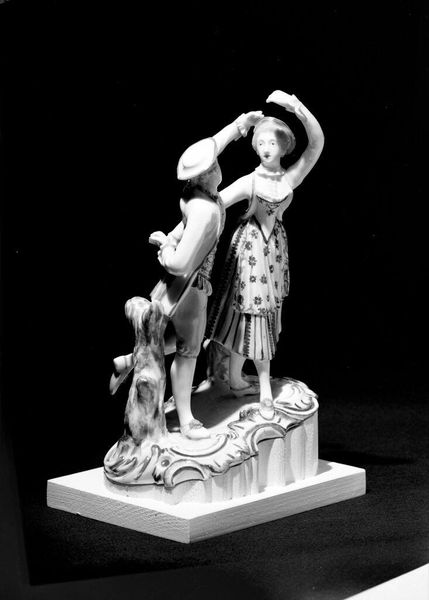
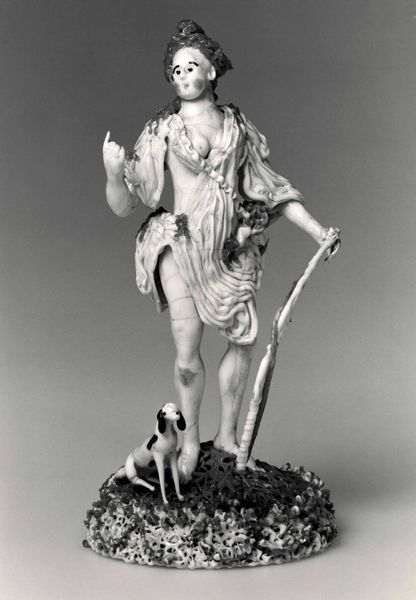
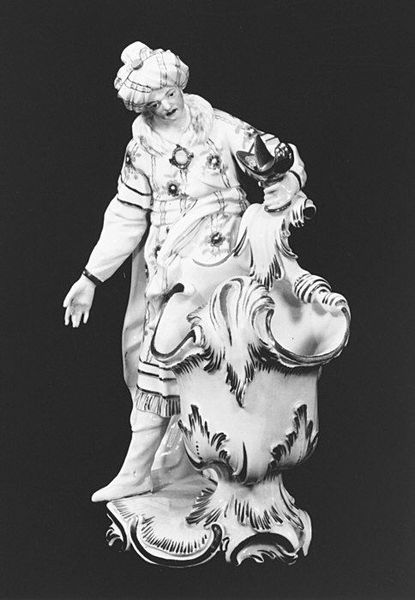
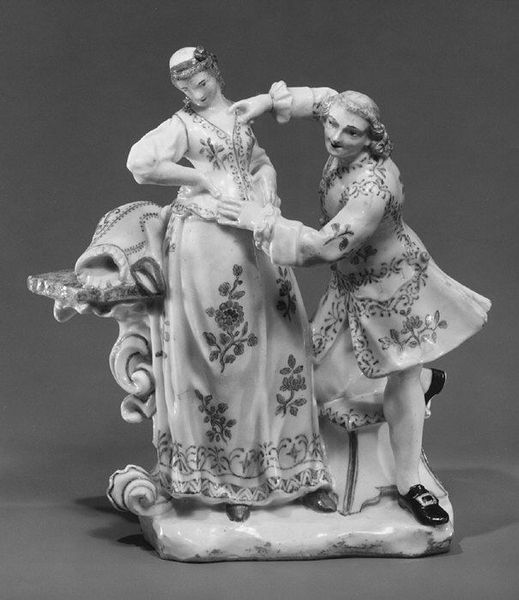
Curator: I’m struck by how playful this porcelain sculpture appears. The figure seems caught mid-dance. Editor: That's certainly the first impression! Let me introduce some context. This is “The Morning Coffee,” made by the Höchst Manufactory between 1750 and 1760. The rococo style immediately situates us within the aesthetics of the 18th-century European elite. It’s currently housed at the Metropolitan Museum of Art. Curator: The details of the man’s attire fascinate me—his casual dress and nightcap, the asymmetrical lines—everything about his image marks this sculpture with its historical place and social milieu. What cultural values are embedded here, I wonder? Editor: Absolutely. One could interpret the coffee ritual itself as a symbol. It was a luxury, tied to global trade, colonialism, and systems of power and exploitation, of course. Curator: The figure is idealized, seemingly disconnected from the material realities that enable his lifestyle. The tree behind the figure, although skeletal, and the dog also carry allegorical weight. Is this an Eden-like scene where coffee plays an awakening part? Editor: That's fascinating! Dogs often symbolize fidelity and domesticity. And coffee—the bitter drink turning so quickly into sweet confection for wealthy Europeans in the 1700's—was a kind of imported domesticity itself, so there’s no clear narrative here, but so much loaded symbolic content, from overseas trading networks, the evolution of status symbols in Europe. Curator: The entire piece exudes this effortless grace while whispering complex realities, like a silent protest masked in artistry. Editor: Yes, looking at it today, we see layered meanings through that contrast of surface charm and implicated, and often fraught, origins. It reminds us that even simple pleasures have histories worth investigating.
Comments
No comments
Be the first to comment and join the conversation on the ultimate creative platform.
 Collect
 React
React Comment
More like this