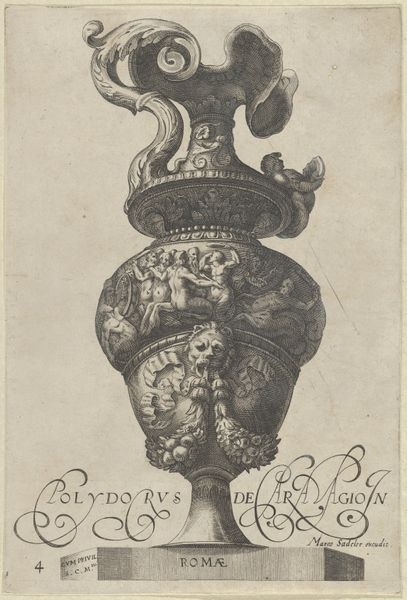
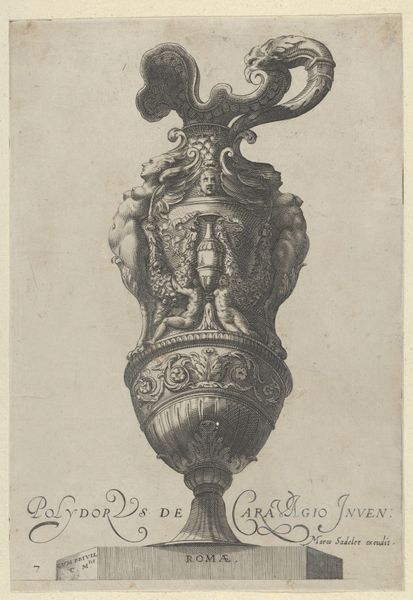
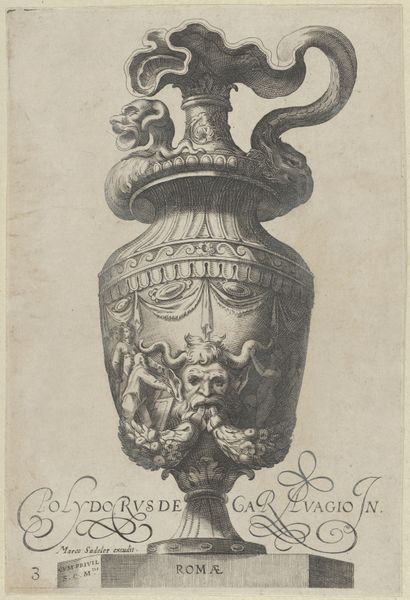
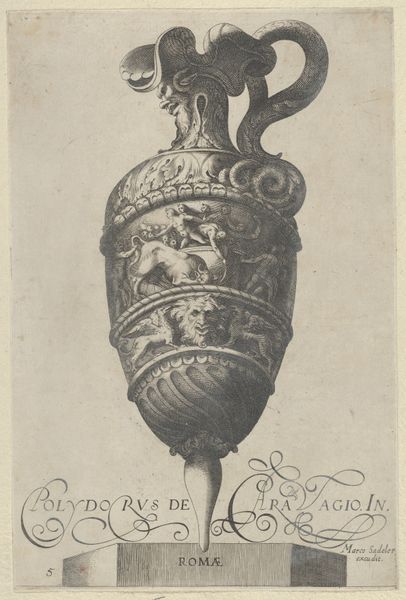
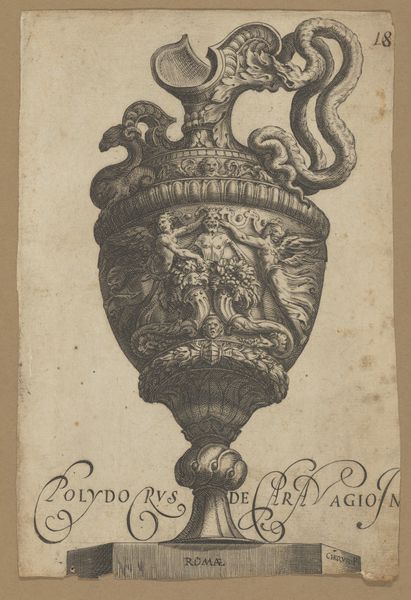
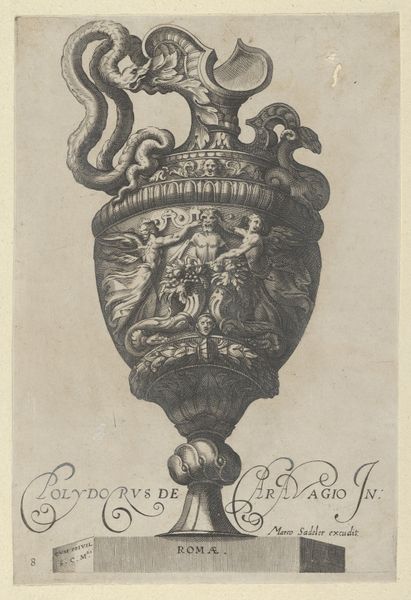
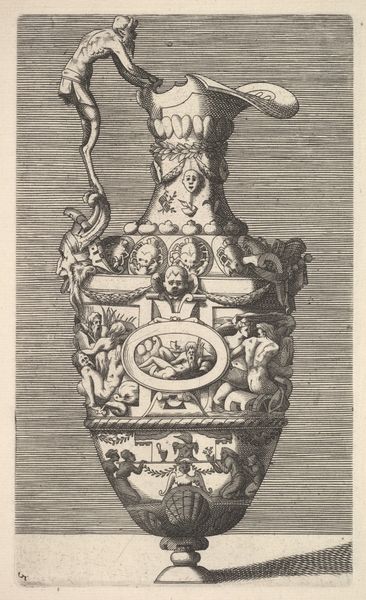
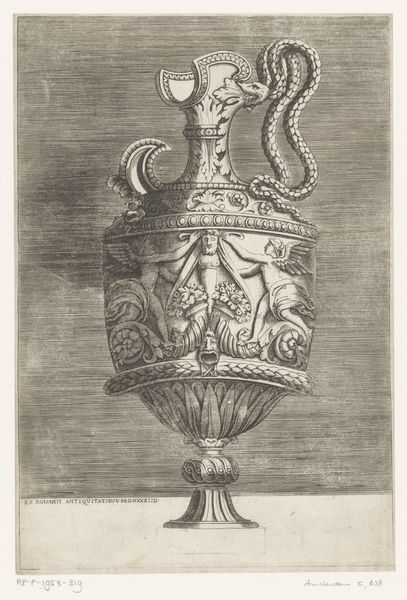
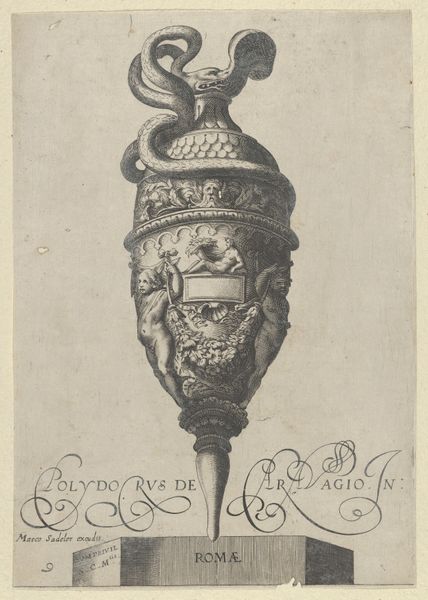
Plate 6: Vase or Ewer with a Frieze Containing Naked Figures, Supported Below by Two Female Sphinxes, from Antique Vases (Vasa a Polydoro Caravagino) 1605


drawing, print, engraving
drawing
toned paper
baroque
old engraving style
vase
figuration
form
personal sketchbook
line
history-painting
italian-renaissance
nude
engraving
male-nude
Dimensions: Sheet: 9 1/4 × 6 3/16 in. (23.5 × 15.7 cm)
Copyright: Public Domain
This print, made by Aegidius Sadeler II, depicts an ornate vase embellished with a frieze of naked figures and supported by two female sphinxes. The sphinx, a composite creature, is one of our most ancient symbols. Here, they evoke a sense of classical antiquity. Their presence reminds me of the monumental sculptures that once guarded the entrance to ancient Egyptian temples, or the riddling Sphinx of Greek myth. Through centuries, the Sphinx has embodied wisdom, mystery, and the ominous unknown. Consider how the emotional weight of these forms shifts across time. Initially guardians, then bearers of riddles, and here, refined into mere ornament. The enduring presence of the Sphinx is a testament to our collective unconscious, a powerful force engaging viewers on a deep, subconscious level. It underscores the cyclical nature of symbols, resurfacing and evolving across historical contexts.
Comments
No comments
Be the first to comment and join the conversation on the ultimate creative platform.
 React
React Comment