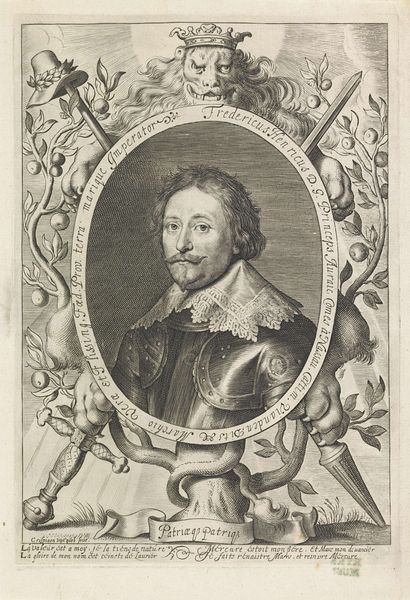
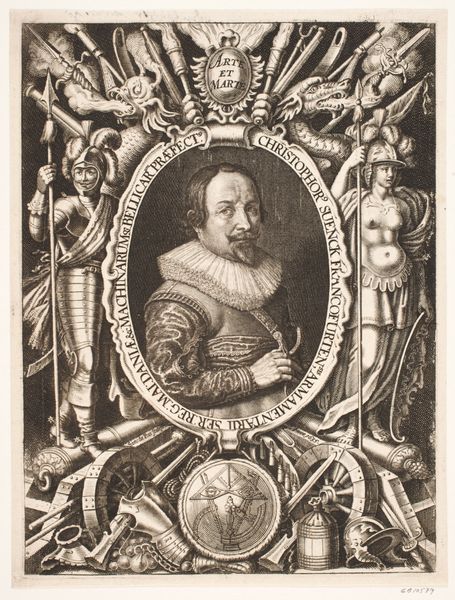
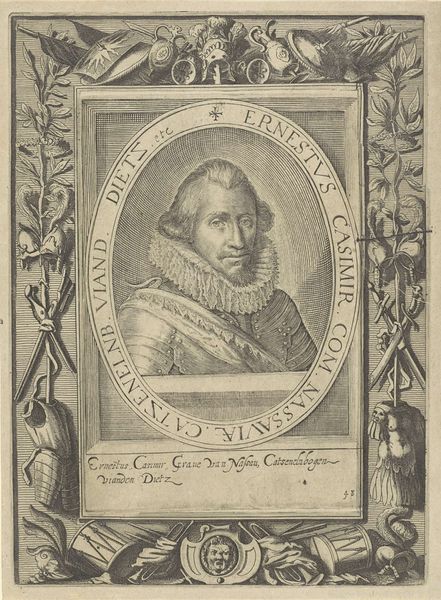
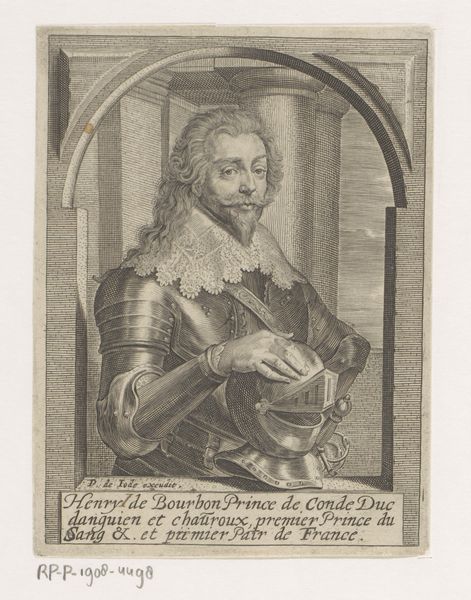
drawing, print, intaglio, engraving
portrait
drawing
baroque
pen drawing
intaglio
old engraving style
pencil drawing
14_17th-century
history-painting
italian-renaissance
engraving
Dimensions: Sheet (Trimmed): 4 3/16 × 5 9/16 in. (10.7 × 14.1 cm)
Copyright: Public Domain
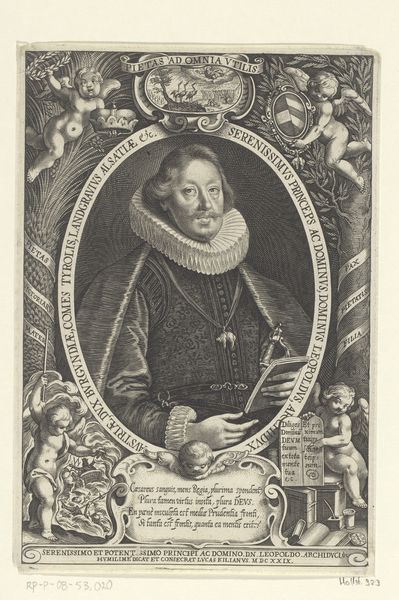
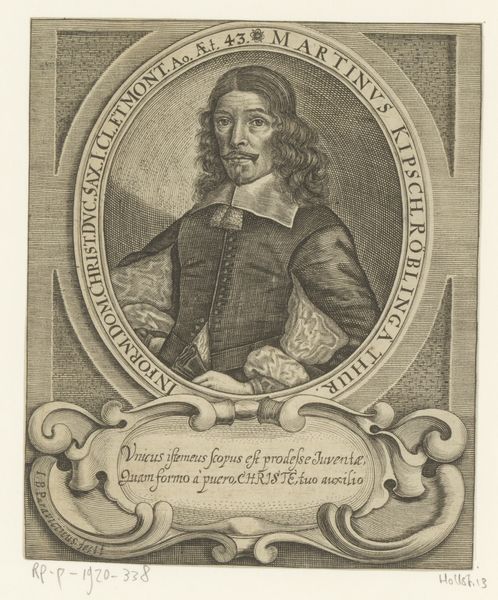
Curator: Look at the expressiveness Johann Wilhelm Baur captures in this self-portrait from 1637, currently residing at The Met. There’s an intriguing balance of vulnerability and self-assuredness in his gaze. Editor: The first thing that strikes me is the density of detail achieved through the intaglio technique; such a labor-intensive method! There’s a tangible sense of meticulous craft that speaks to the value placed on skilled production during this period. Curator: Absolutely. Baur positions himself not simply as a man, but as an artist of significance, surrounded by putti representing various aspects of his creative practice. I see a conscious effort to elevate the artist's status within the broader socio-political framework of the 17th century. He is staging his identity, so to speak. Editor: Note, also, the surrounding wreath, adding a formal quality which amplifies this intended effect. Considering the intaglio process, and Baur’s probable control over production, it's fascinating how printmaking allowed for the circulation and dissemination of a crafted persona. One can see it almost like a piece of branding. Curator: Precisely, printmaking enabled the proliferation of ideas and images beyond the confines of the elite. In Baur’s case, it provided an opportunity to assert his presence and influence within artistic and intellectual circles. Considering that he identifies as "Pictor", its interesting to unpack what the claim implies in this portrait: What labor lies behind that descriptor? Editor: It speaks to the intricate and specialized labor inherent in both artistic creation and reproduction, the tools of his trade carefully arrayed by the putti surrounding him. The viewer then becomes positioned within a larger economy of image and knowledge production. Curator: By studying the circulation and reception of such images, we can understand more of the intersectional contexts within which artistic identities are constructed and consumed, and the relationship between craft, commerce, and reputation. Editor: And perhaps challenge those boundaries through analysis of labor and materials, as well as of access to circulation—who gets seen? Whose labor counts? A close material reading coupled with sociohistorical contextualization proves deeply insightful.
Comments
No comments
Be the first to comment and join the conversation on the ultimate creative platform.
 React
React Comment