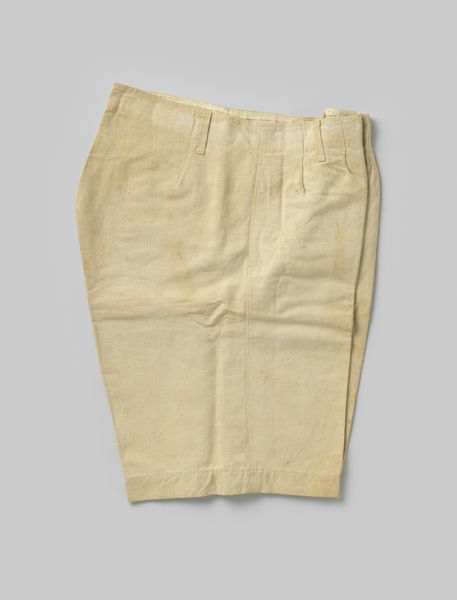
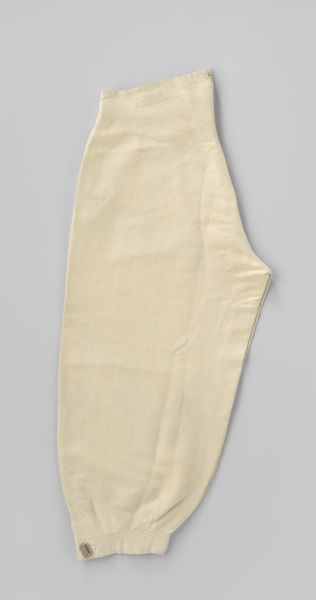
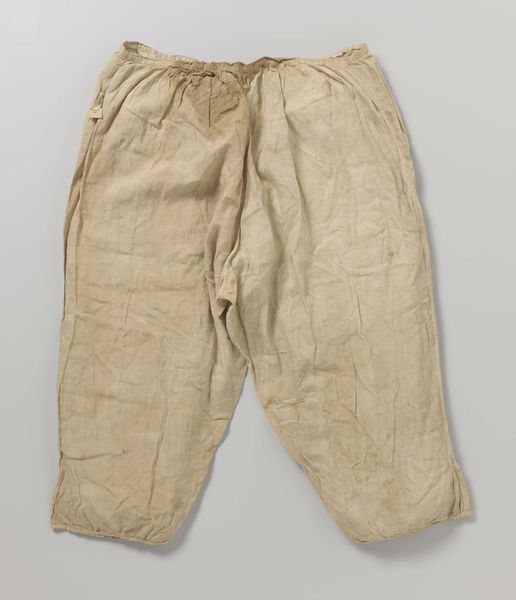
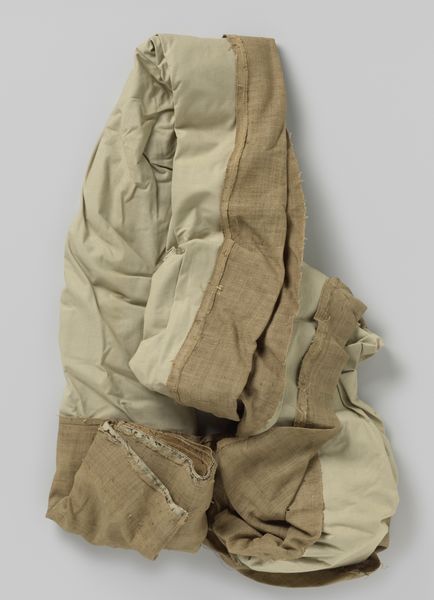
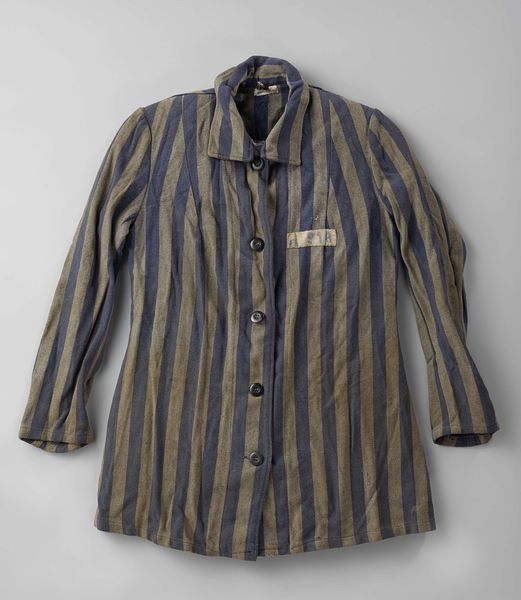
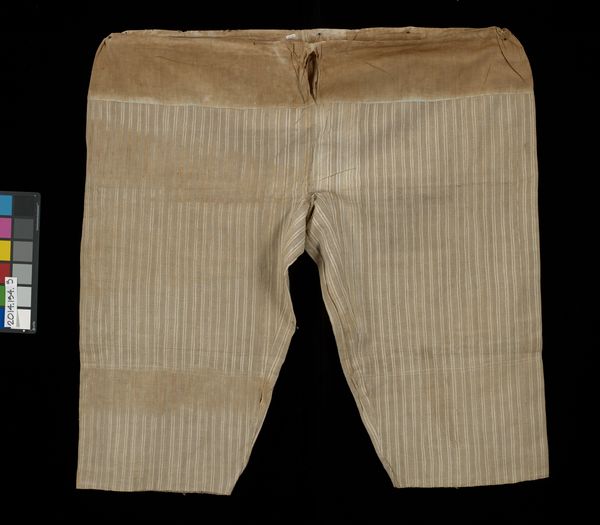
Broek van blauw/wit gestreepte keperkatoen, gedragen in concentratiekamp Dachau tijdens W.O. II c. 1940 - 1945

fibre-art, textile, photography
fibre-art
appropriation
textile
photography
history-painting
Dimensions: length 87 cm, waist cm, diameter cm
Copyright: Rijks Museum: Open Domain
Curator: Up next, we have an object of profound historical weight, though unassuming in appearance. What you see is a pair of trousers. Editor: "Profound weight" is right. They look... worn. Sad, almost. Like pajamas that have seen too much. Curator: Precisely. These blue-and-white striped twill cotton trousers, created sometime between 1940 and 1945, were worn in Dachau concentration camp during World War II. Editor: Oh god. It's one thing to read about it, another to see something... intimate. And it’s also like they are almost normal? Like, you could get these at some vintage store if you didn’t know their story. Curator: That normalcy is jarring, isn't it? Stripes were common across the camps, often replicated for dehumanization. But even here, there’s that suggestion of uniformity, control, visual coding designed to strip identity. Editor: The fact they've survived, I guess, that’s what gets me. Some body kept them. The will to… to document. The story they hold just by being here. Is there an artist, a maker attached to these? Curator: The maker is unknown; they become almost symbolic through association. Every mark, every thread, becomes a testament. Stripes as signifiers of a prison, a camp, in ways that echo through art. Editor: I'm thinking how those stripes look innocent enough, but became imbued with darkness. Even now, looking at them is an… emotional experience. How can clothes hold all that horror and history? And also make you think? That maybe you shouldn’t buy stuff so flippantly. Curator: Consider how these trousers are more than an artefact of war; they act as a poignant, visual memorial, resisting the erosion of time. They ask, implicitly, how memory is materialized in objects. Editor: Objects like this…they feel sacred, even though they're horrifying. Okay sacred might be too strong. But really close. What a dark, powerful statement from blue and white stripes. They speak to so many people. Curator: Indeed. Let's allow the silence to speak alongside us for a moment.
Comments
No comments
Be the first to comment and join the conversation on the ultimate creative platform.
 React
React Comment