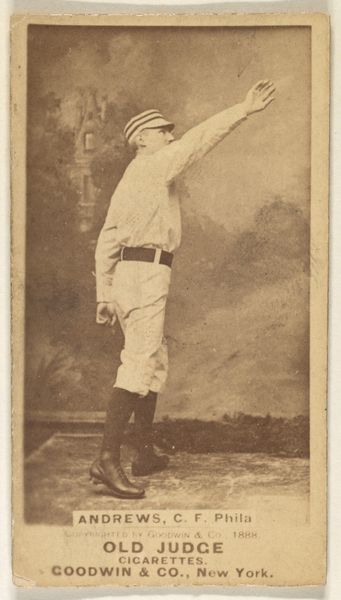
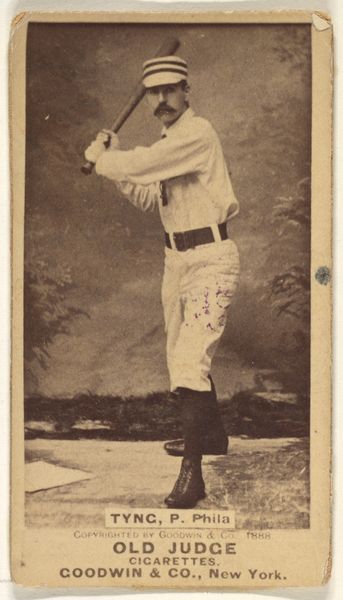
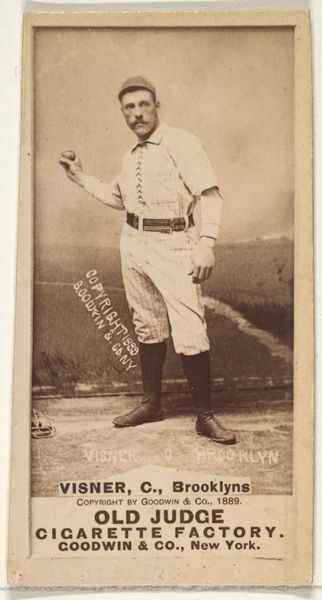
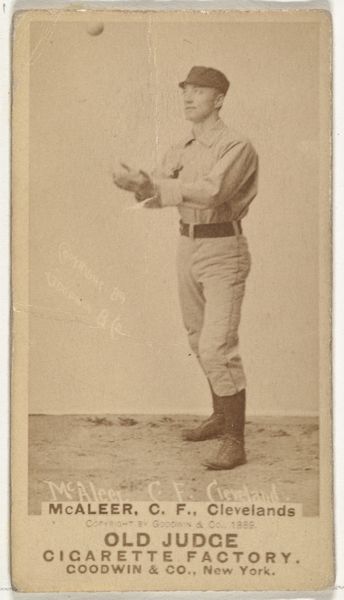
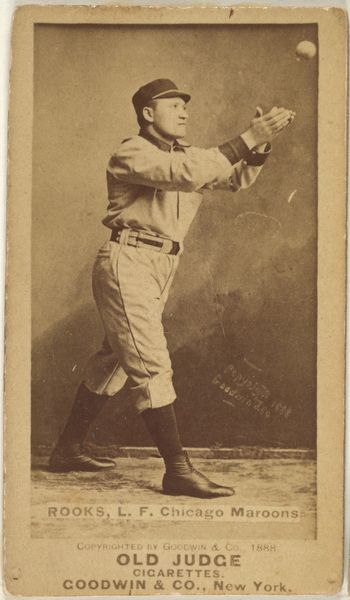
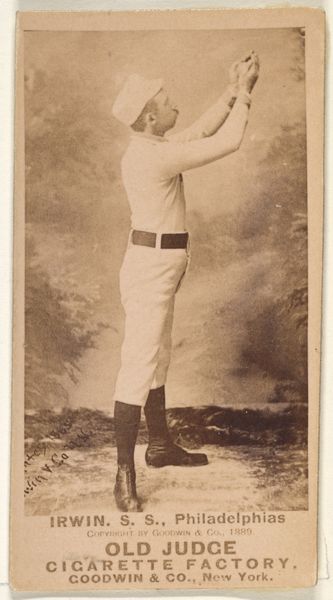
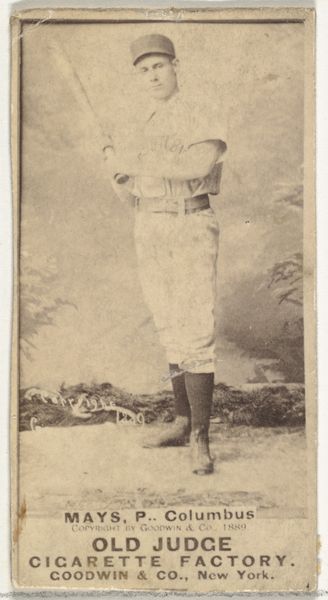
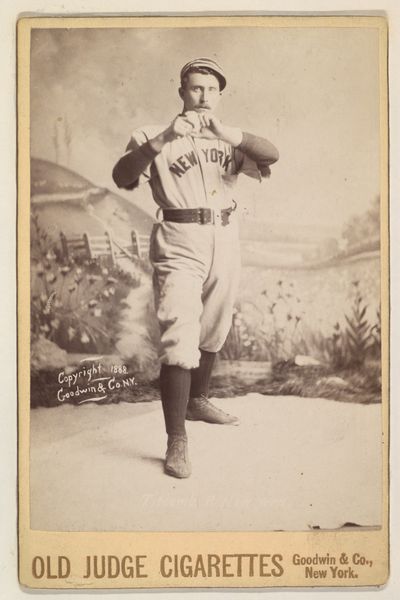
Andrews, Center Field, Philadelphia, from the series Old Judge Cigarettes 1888
0:00
0:00


print, photography, gelatin-silver-print
#
portrait
# print
#
impressionism
#
baseball
#
photography
#
gelatin-silver-print
#
men
#
athlete
Dimensions: sheet: 6 1/2 x 4 3/8 in. (16.5 x 11.1 cm)
Copyright: Public Domain
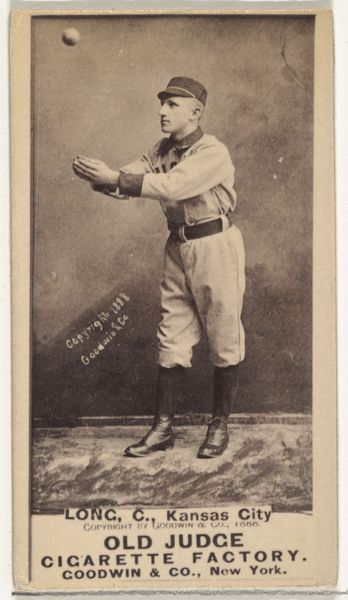
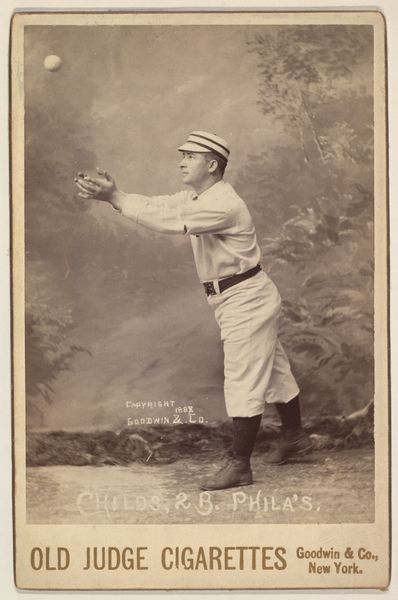
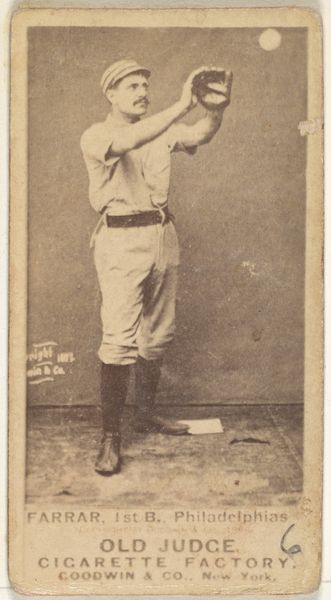
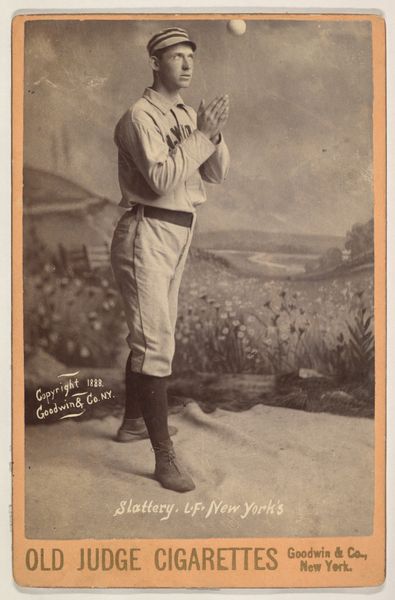
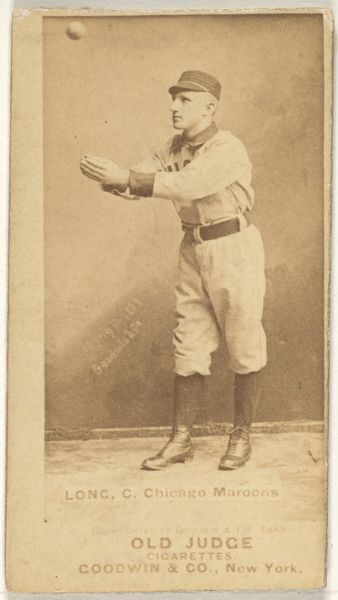
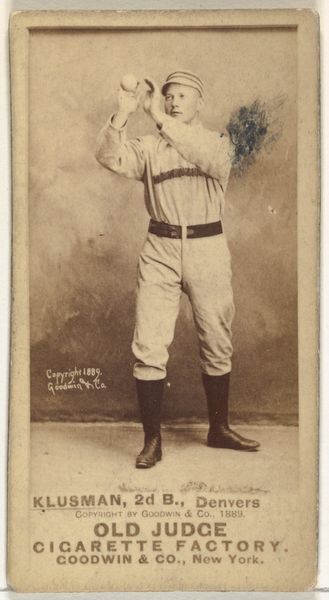
Editor: This gelatin-silver print, "Andrews, Center Field, Philadelphia," made in 1888 by Goodwin & Company, feels like a carefully staged performance rather than a candid shot. It strikes me that it's actually an advertisement for cigarettes. How do you read into this, beyond just seeing an athlete in a static pose? Curator: Well, let's think about what a baseball card really is: a commodity. These "Old Judge Cigarettes" cards used a relatively new photographic process to sell *another* commodity. So, we have layers of production and consumption here. How does that affect our perception of Andrews, the athlete himself? Is he a performer, a laborer, or merely an image to be bought and sold? Editor: It's strange to think of his image as labor, especially given how glorified athletes are today. Back then, baseball was probably seen as a working-class activity, and now it's this commercialized spectacle. Does the photographic process itself contribute to this sense of commodification, even back then? Curator: Absolutely. The gelatin-silver print allowed for mass production, turning individual baseball players into readily available images. This process demystifies the athletic skill; the focus shifts from Andrews's athletic prowess to the consumer's access to his likeness. It changes the cultural perception from that of an amazing athlete to just another "thing" on the market. Look at the backdrop – it’s a painted scene. What does that tell us about the artificiality of the whole enterprise? Editor: That’s fascinating. The backdrop almost seems irrelevant to baseball! So, the materiality of the print – its reproducible nature and its use as advertising – reshapes how we perceive athleticism itself. Curator: Precisely. It's not just about Andrews; it’s about how industry and its materiality changed culture and shifted even our heroes into something that is a consumer product. Editor: I hadn't thought about it in that light before, but framing it through the lens of materials and the production process really illuminates its broader cultural implications. Curator: Exactly! Seeing the materials and means of production highlights how intertwined even leisure and artistry are with capitalism and the construction of celebrity.
Comments
No comments
Be the first to comment and join the conversation on the ultimate creative platform.
 Collect
 React
React Comment
More like this