c. 1795 - 1805
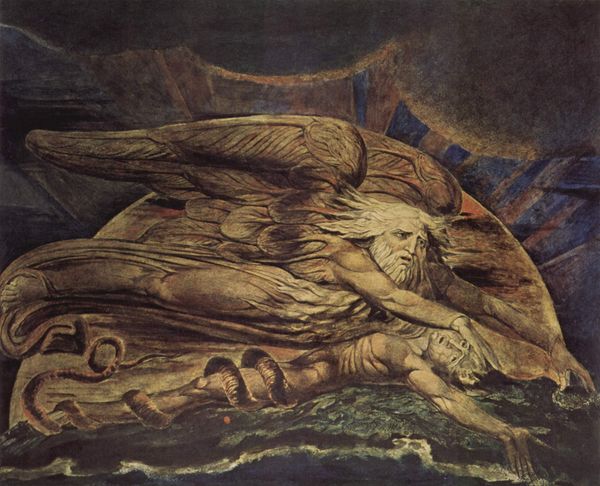
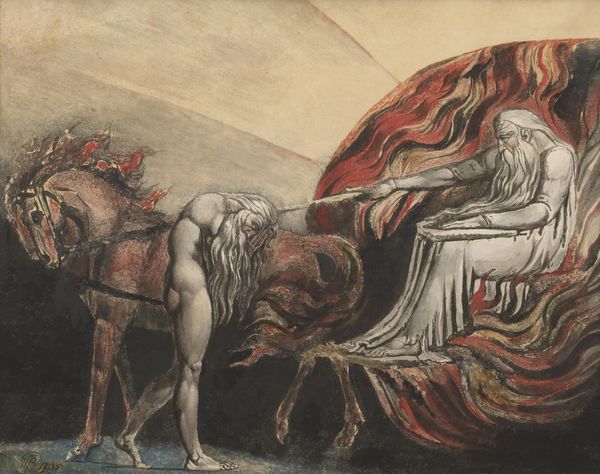
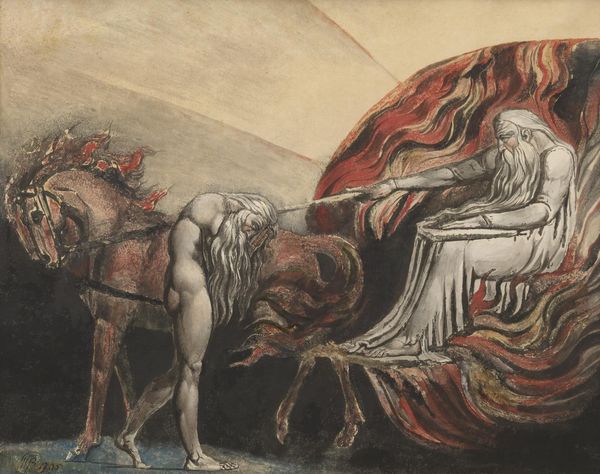
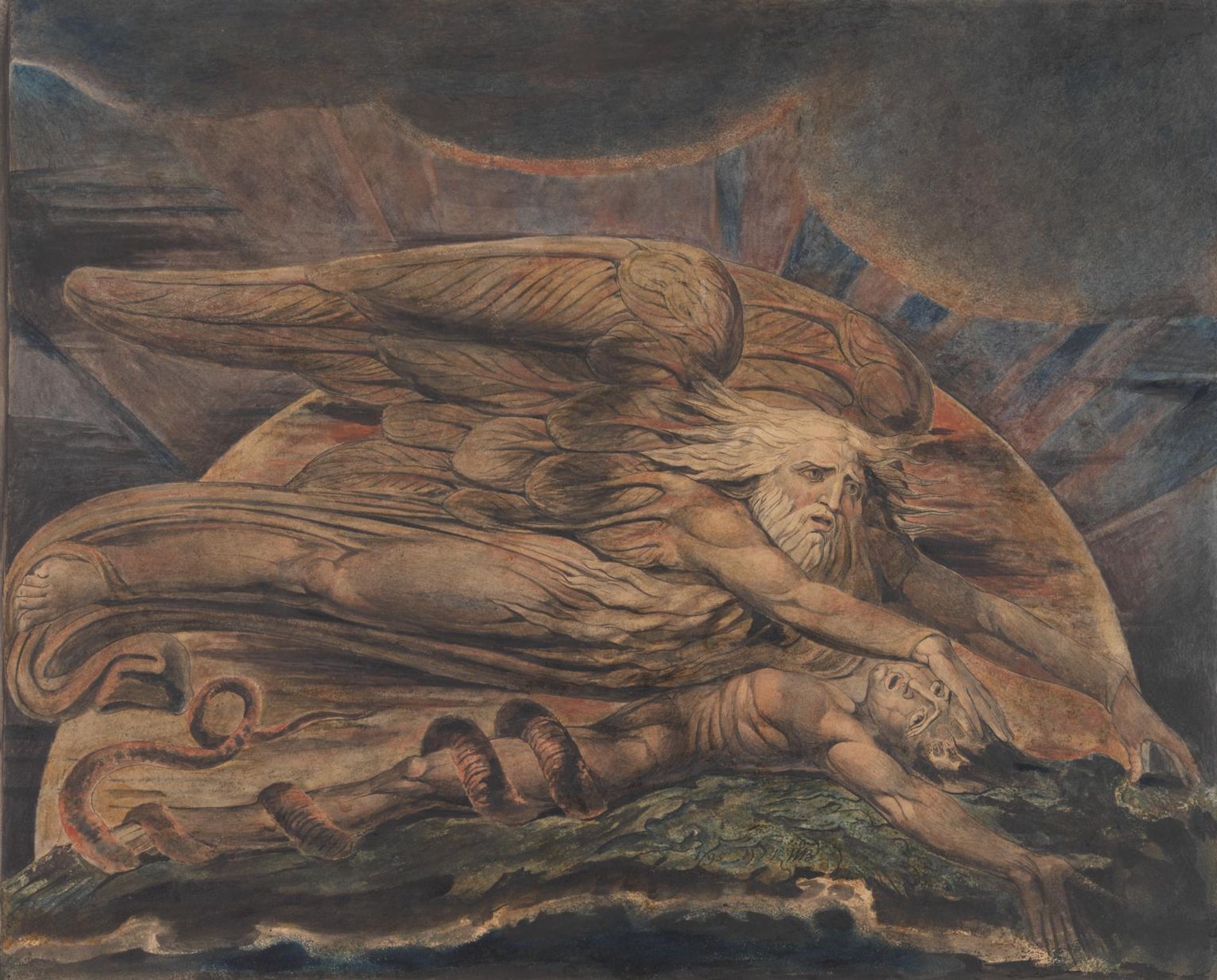
Elohim Creating Adam


Listen to curator's interpretation
Curatorial notes
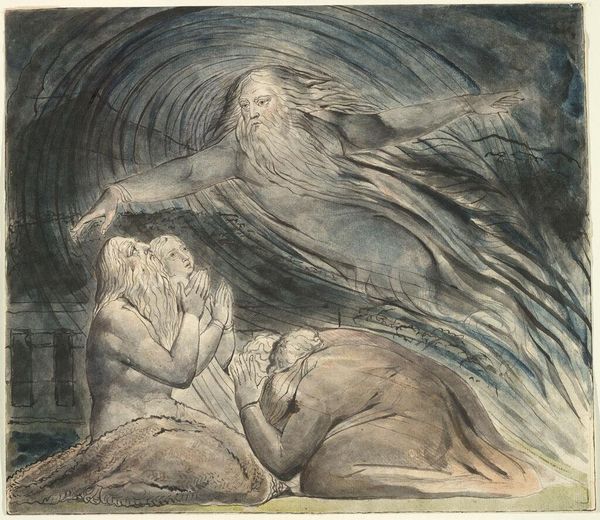
Curator: Here we have William Blake's "Elohim Creating Adam", housed right here at the Tate. It's undated, but scholars place it within his later period. Editor: My goodness, it's quite somber, isn't it? The swirling darkness and the weary expressions... It evokes a real sense of struggle. Curator: Absolutely. Blake often grappled with the darker aspects of creation. Note the musculature, the sheer physicality of Elohim bearing down upon Adam. It's not a gentle awakening. Editor: The linear precision is striking, especially when you consider Blake's mystical bent. It's as if he's dissecting the moment of creation, exposing its inherent tensions. And the serpent, coiled at Adam's feet—a potent symbol. Curator: Precisely. Blake uses the visual language of Genesis to explore his own complex theology, questioning power and the very nature of being. Editor: It's interesting how he renders both figures with such vulnerability, even Elohim seems burdened by the act of creation. Curator: It leaves you contemplating not just the biblical narrative, but Blake's own internal wrestling. Editor: Indeed, it's a reminder that even the most revered stories are ripe for reinterpretation, filtered through the lens of individual experience. Curator: A compellingly dark vision.