print, engraving
#
neoclacissism
# print
#
caricature
#
history-painting
#
engraving
Dimensions: height 359 mm, width 248 mm
Copyright: Rijks Museum: Open Domain
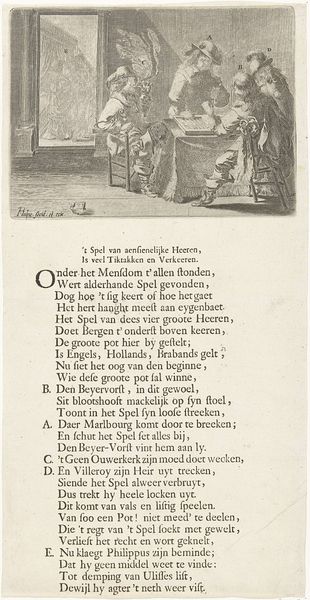
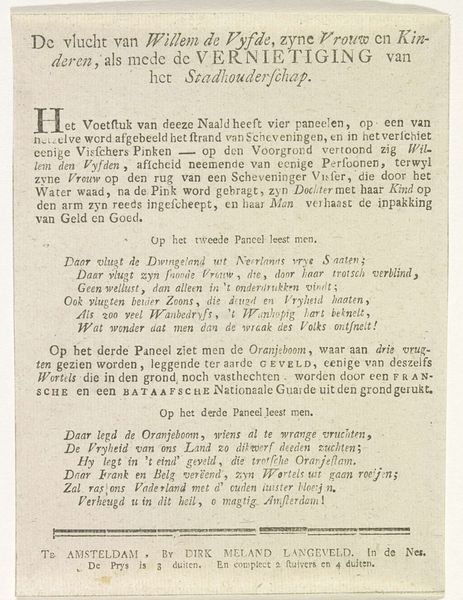
Curator: Here we have a satirical print titled "Spotprent op Willem V," created anonymously in 1786. The printmaking process – specifically the engraving technique – is front and center here. Editor: The bizarre imagery is definitely grabbing my attention. The central figure, this pig with a human head drinking from a trough… it's pretty unsettling. How do you interpret this work? Curator: I see this print as a potent example of political commentary using readily available, mass-produced materials. The choice of engraving suggests accessibility; prints were a means of disseminating ideas widely and cheaply, making them ideal for political critique. Notice the figures: these grotesque hybrid-beasts symbolize those in power. How does this reflect socio-political realities of the period? Editor: So the artist isn't necessarily concerned with fine art traditions, but rather using the medium of printmaking to engage in political discourse, like a meme of its time. And that choice impacts how we understand its purpose and value? Curator: Exactly. Consider the labor involved: the engraver's skill, the printmaker's output, and the consumers who bought and shared this image. The material object is inseparable from its role in fueling political sentiment. How might viewing it in a museum alter or distort that original purpose? Editor: That's something to consider, viewing it here as art in the Rijksmuseum rather than a piece of street-level political propaganda. So, by focusing on the materials and mode of production, we gain a deeper understanding of its historical significance beyond just its artistic merit. Curator: Precisely. The print, in its materiality and mass distribution, became a tool of dissent. Hopefully you agree that shifting away from authorship and intention and moving towards conditions of creation can allow for an open, engaged interpretation. Editor: It’s helped me consider art beyond its aesthetic value. Thanks!
Comments
No comments
Be the first to comment and join the conversation on the ultimate creative platform.
 Collect
 React
React Comment
More like this