1840 - 1884
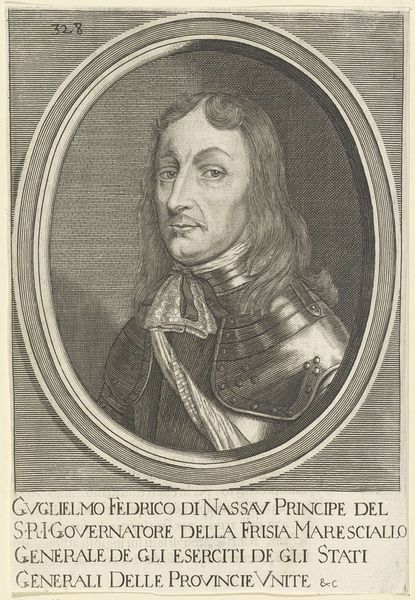
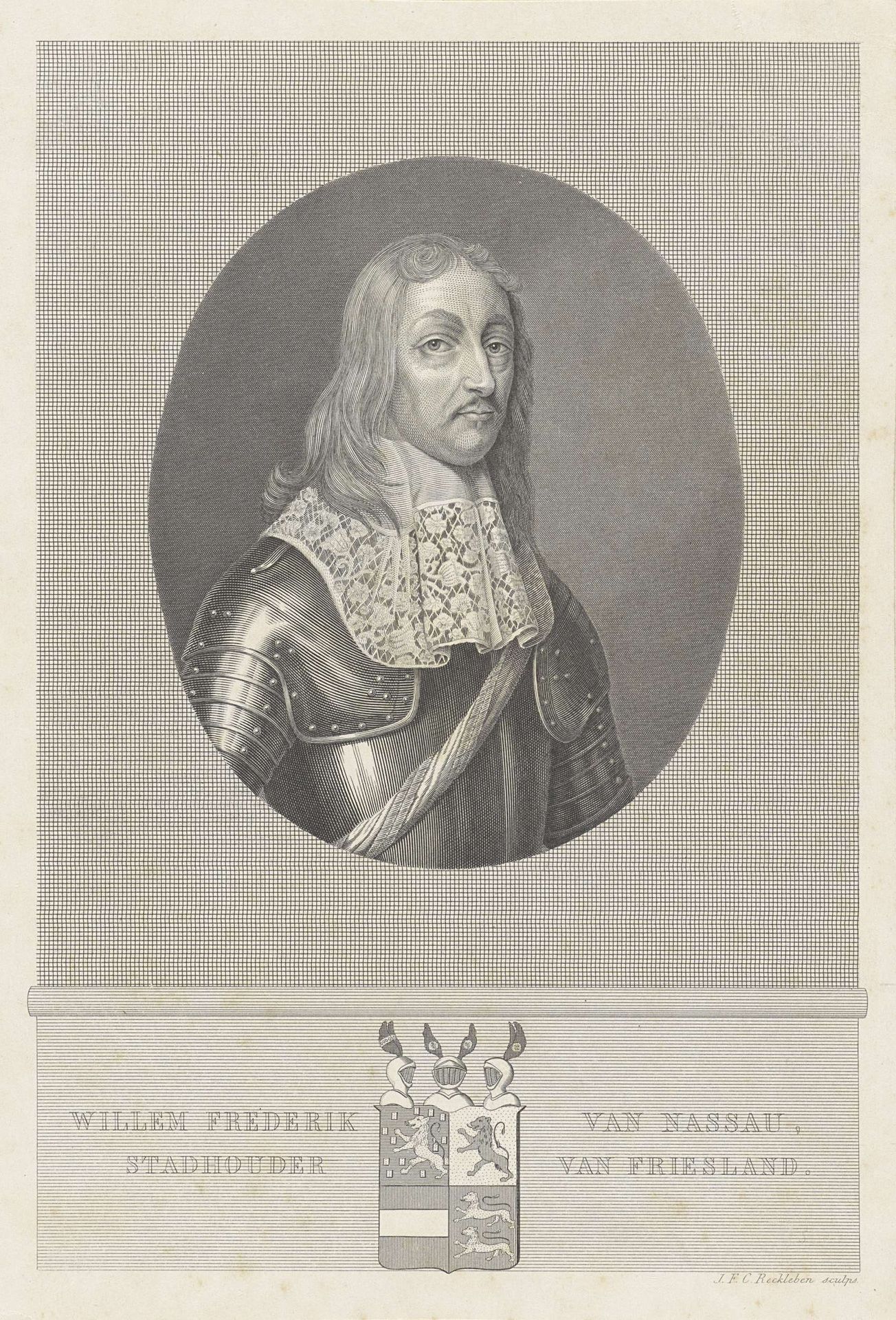
Portret van Willem Frederik, graaf van Nassau-Dietz

Jan Frederik Christiaan Reckleben
1819 - 1879Location
RijksmuseumListen to curator's interpretation
Curatorial notes
Jan Frederik Christiaan Reckleben created this portrait of Willem Frederik, Count of Nassau-Dietz. Note the prominent display of heraldry. Coats of arms, laden with symbolic animals and geometric partitions, were more than mere decoration. They were visual declarations of lineage, power, and allegiance, meticulously designed to convey a family’s history and aspirations. We see the lion rampant, a symbol of courage and nobility, a motif stretching back to ancient Mesopotamia, where lions guarded temples and palaces. Its persistence in European heraldry speaks to a collective desire to align oneself with primal strength. The urge to immortalize family achievements connects us to the past, as does the psychological drive for legacy. Such imagery taps into deep-seated emotions: pride, identity, and the fear of oblivion. As symbols evolve through history, each age imprints its own anxieties and ambitions upon them. It's a non-linear journey through time, with symbols continually resurfacing and adapting to new cultural landscapes.