c. 1870
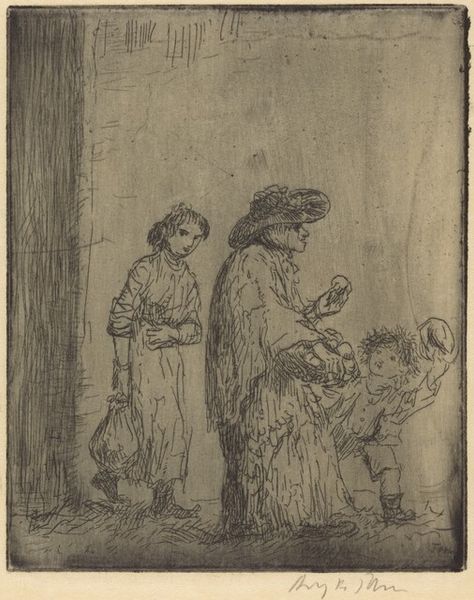
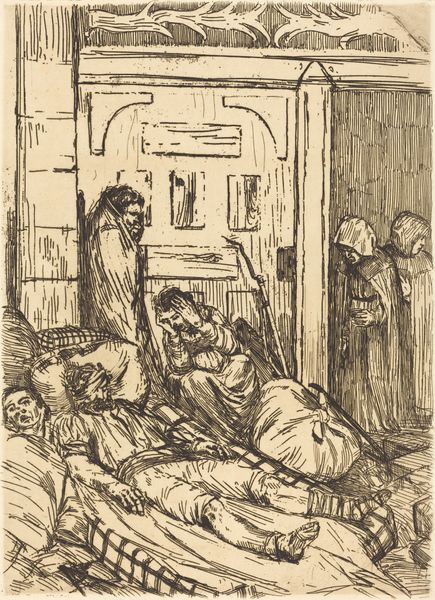
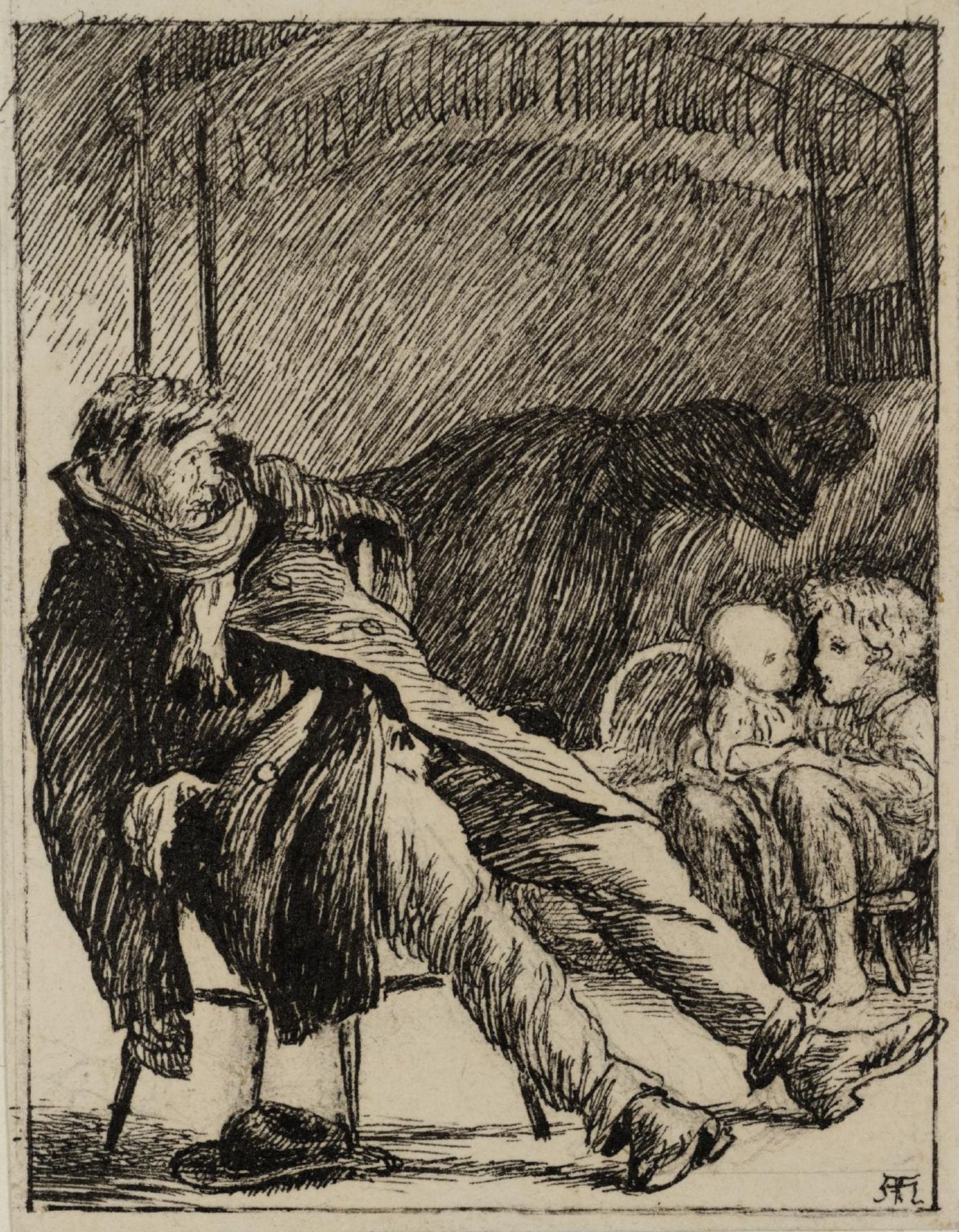
The Drunken Cabman for ‘At the Back of the North Wind’


Listen to curator's interpretation
Curatorial notes
Curator: This is Arthur Hughes' "The Drunken Cabman for 'At the Back of the North Wind,'" held within the Tate Collections. Editor: My immediate reaction is one of stark contrast - the vulnerability of the children juxtaposed against the slumped, oblivious figure. Curator: Note the artist’s etched line work which expertly delineates the cabman’s form and the scene's overall oppressive atmosphere. Consider the semiotic weight of the hat at his feet as a signifier of dereliction. Editor: Hughes really captures the harshness of labor in Victorian London. The cabman's condition speaks volumes about working-class struggles, especially considering the illustrated book would have been destined for middle-class homes. Curator: Indeed. The composition itself, with its stark diagonals and compressed space, amplifies the sense of claustrophobia and moral decay. Editor: It’s sobering to think about the artist’s process. How did Hughes engage with this subject? What kind of research did he do to depict the lives of the working class? Curator: His choices offer a commentary on social inequities. It's a formal arrangement designed to provoke reflection on difficult realities. Editor: I agree; it's a bleak yet thought-provoking glimpse into a challenging world.