About this artwork
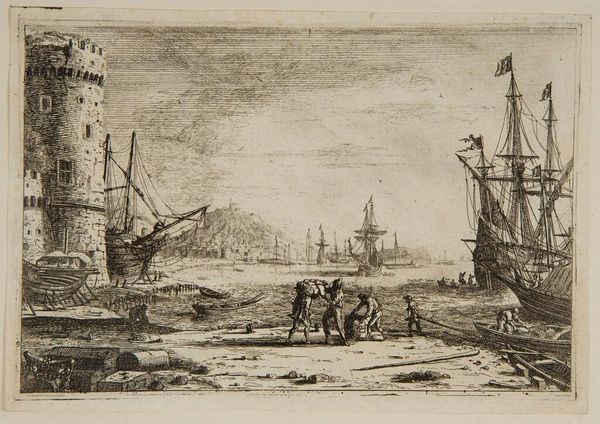
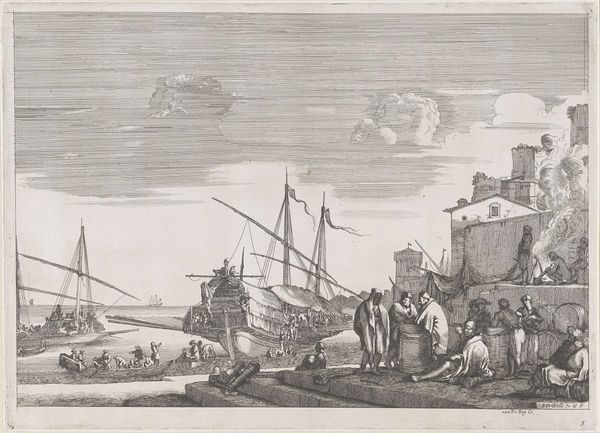
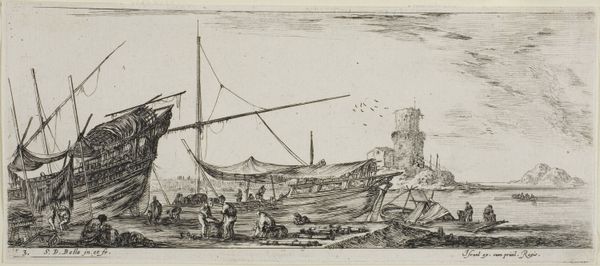
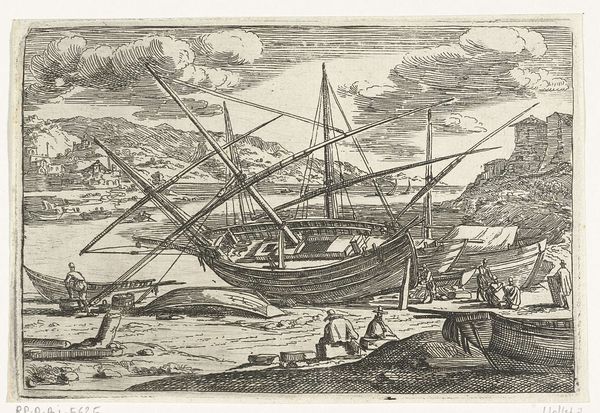
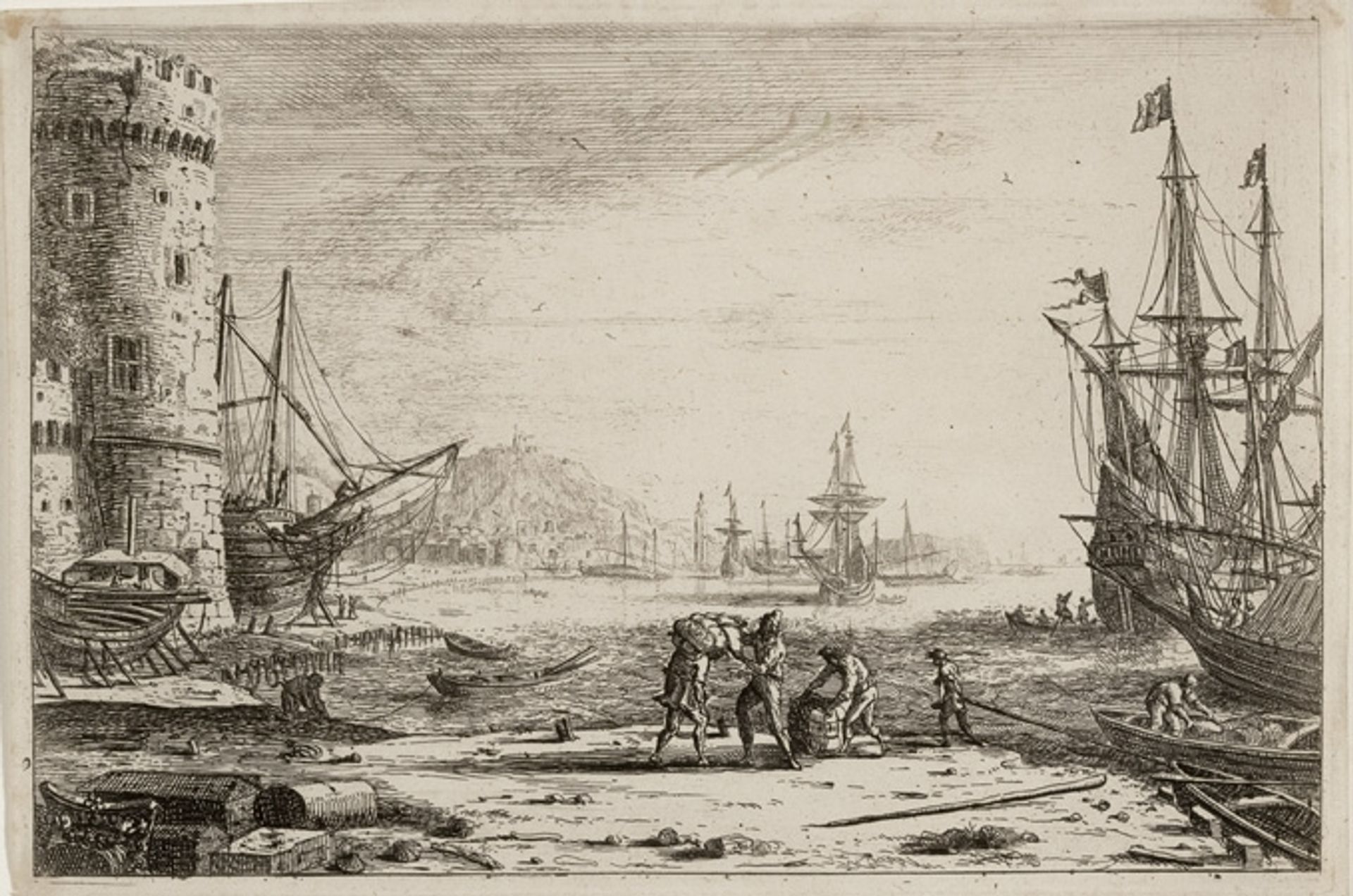
Claude Lorrain made this small etching, Seaport with a big tower, in the 17th century. Claude was known for idealizing landscapes, often featuring classical ruins and pastoral scenes. But here, we see something different, a busy port scene teeming with human activity, and labor. Notice the figures in the foreground: their positioning and activity suggest a sense of toil and perhaps even exploitation. What does it mean to represent labor in this way? Are these anonymous figures meant to evoke empathy, or simply serve as picturesque elements within the scene? Consider the cultural context: seaports were hubs of trade, but also sites of colonial exchange and exploitation. What role did enslaved people play in the maritime economy depicted here? How does Claude's depiction of the scene reflect or obscure these realities? Perhaps by considering these questions, we can understand how Claude's landscapes, while seemingly idyllic, also engage with the complex social and economic realities of his time.

Artwork details
- Dimensions
- 13 x 19 cm
- Copyright
- Public domain
Tags
Comments
Share your thoughts
About this artwork
Claude Lorrain made this small etching, Seaport with a big tower, in the 17th century. Claude was known for idealizing landscapes, often featuring classical ruins and pastoral scenes. But here, we see something different, a busy port scene teeming with human activity, and labor. Notice the figures in the foreground: their positioning and activity suggest a sense of toil and perhaps even exploitation. What does it mean to represent labor in this way? Are these anonymous figures meant to evoke empathy, or simply serve as picturesque elements within the scene? Consider the cultural context: seaports were hubs of trade, but also sites of colonial exchange and exploitation. What role did enslaved people play in the maritime economy depicted here? How does Claude's depiction of the scene reflect or obscure these realities? Perhaps by considering these questions, we can understand how Claude's landscapes, while seemingly idyllic, also engage with the complex social and economic realities of his time.
Comments
Share your thoughts