1697
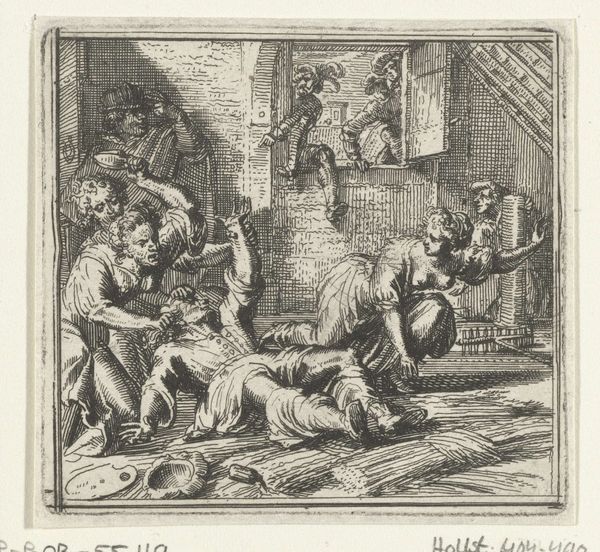
Illustratie voor de Decamerone van Boccaccio

Romeyn de Hooghe
1645 - 1708Location
RijksmuseumListen to curator's interpretation
Curatorial notes
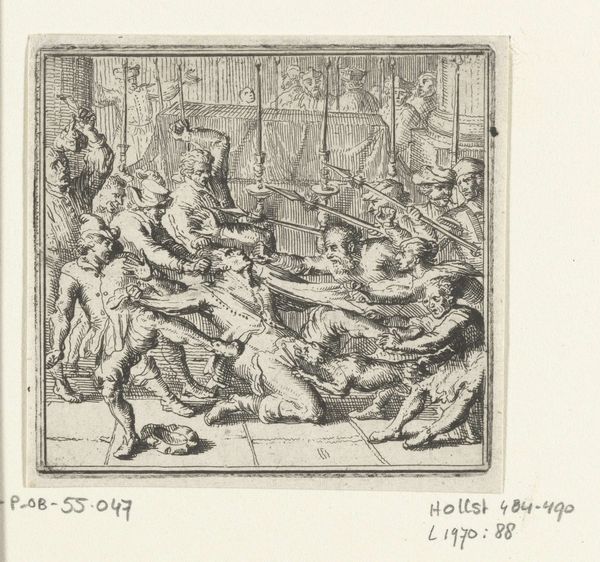
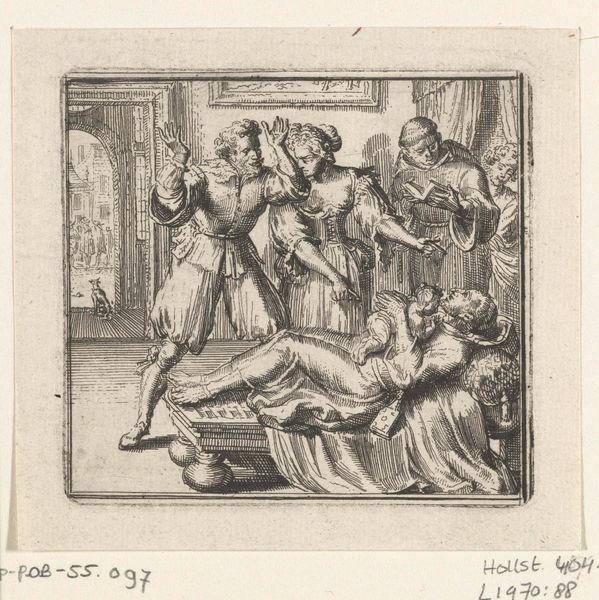
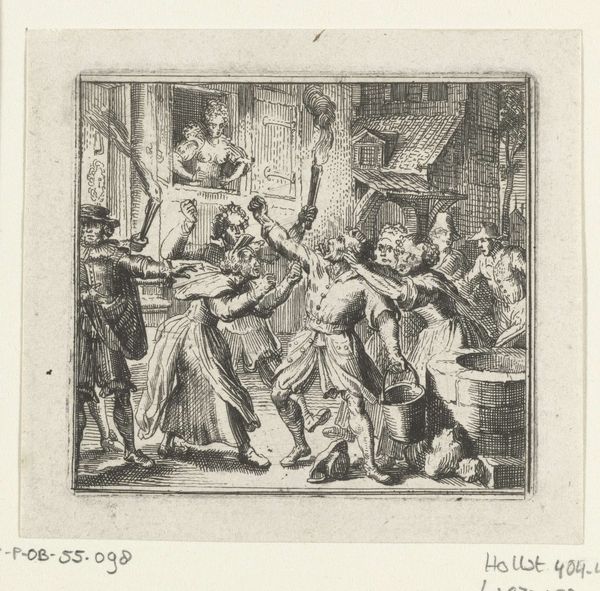
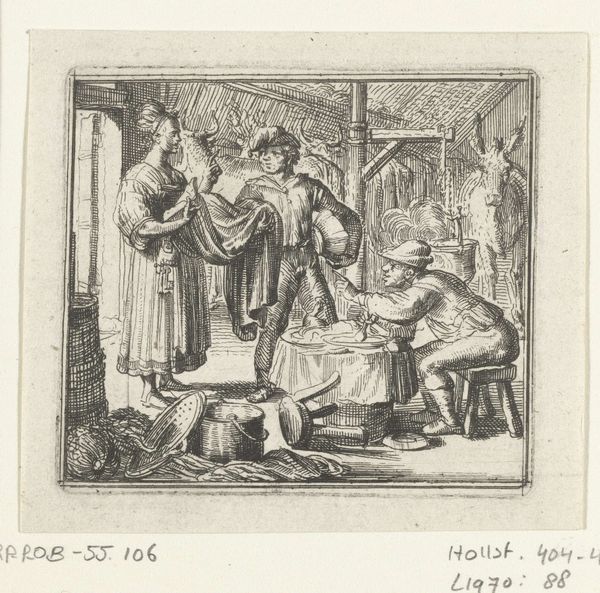
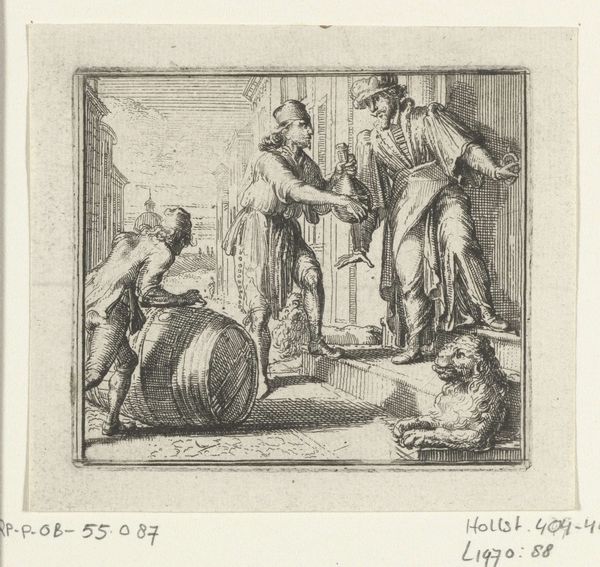
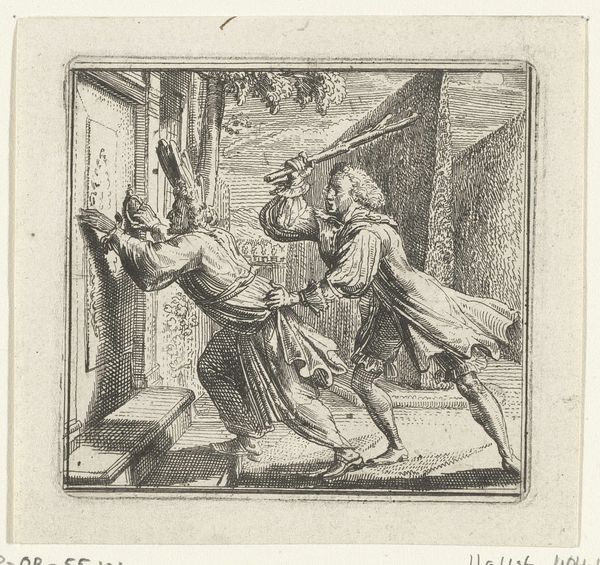
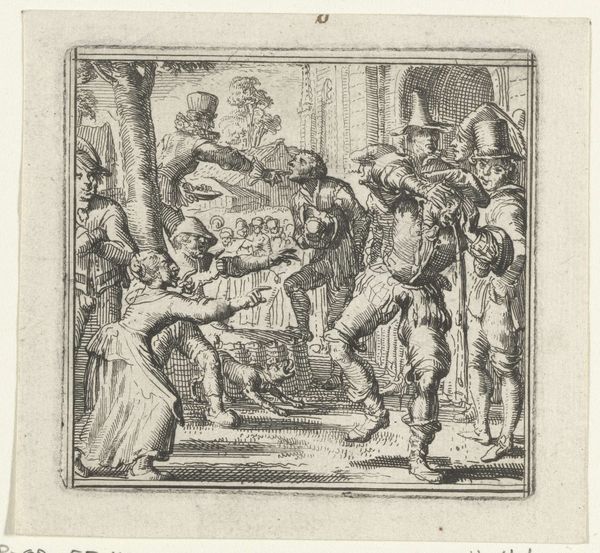
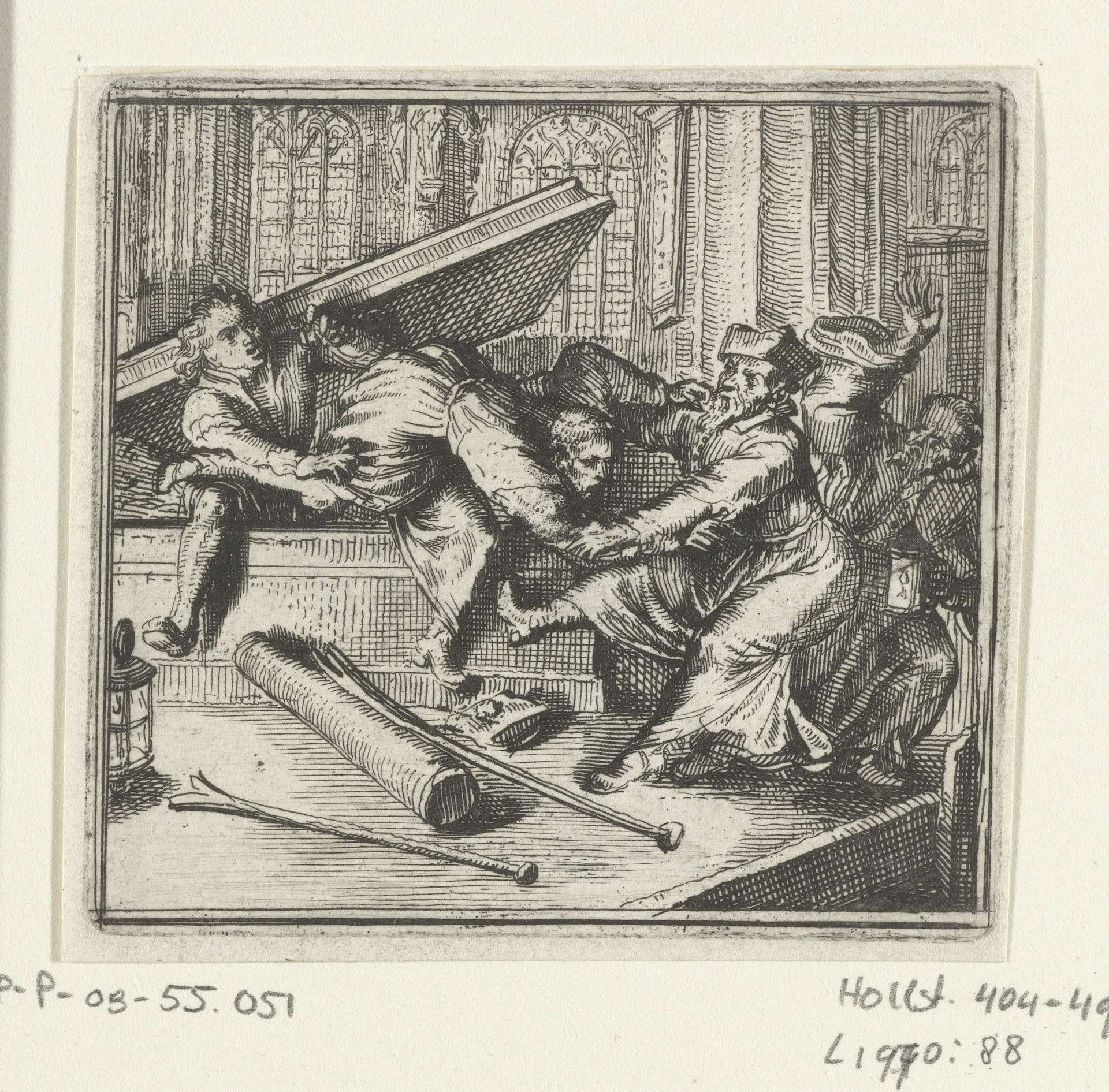
Romeyn de Hooghe created this illustration for Boccaccio's Decameron using etching techniques. The scene is rife with symbolism. Notice the open coffin being carried by a group of men. Death, so starkly represented here, becomes a spectacle of both fear and dark humor. The coffin motif appears throughout art history. Consider the ancient Egyptian sarcophagi, vessels of eternal life, or the Roman funerary reliefs, each a statement on mortality and memory. Here, the coffin is not a solemn reminder but a prop in a bawdy narrative. What does it signify that it is so clumsily carried by men? The awkwardness and the vulnerability of the human condition is exposed, as our inevitable fate is handled with such ungainly hands. Observe how the gestures of the figures evoke deep emotional states. The men are caught in a frenzy of activity, their faces contorted with a mixture of fear and excitement. These expressions engage us viscerally, sparking subconscious recognition. The cyclical nature of symbols reminds us that, in truth, nothing is ever truly new; only perpetually reconfigured.