#
figurative
#
green tone
#
possibly oil pastel
#
oil painting
#
neo expressionist
#
acrylic on canvas
#
green background
#
underpainting
#
painting painterly
#
portrait art
#
digital portrait
Copyright: Public Domain: Artvee
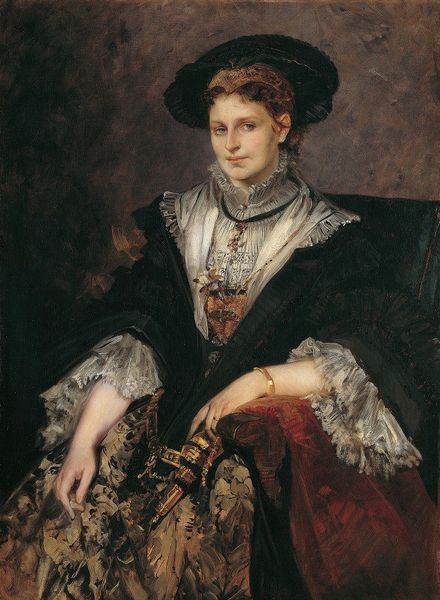
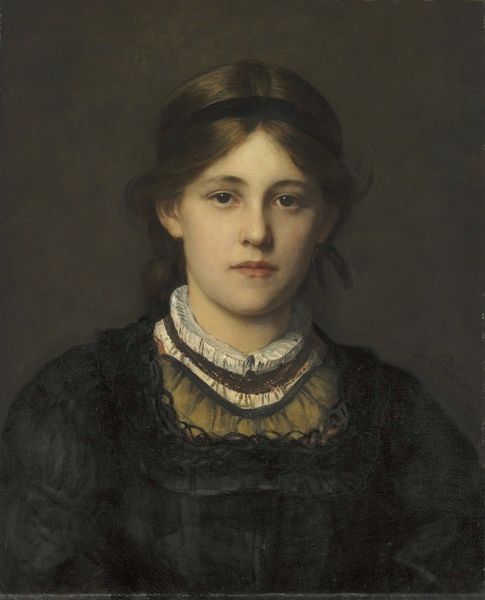
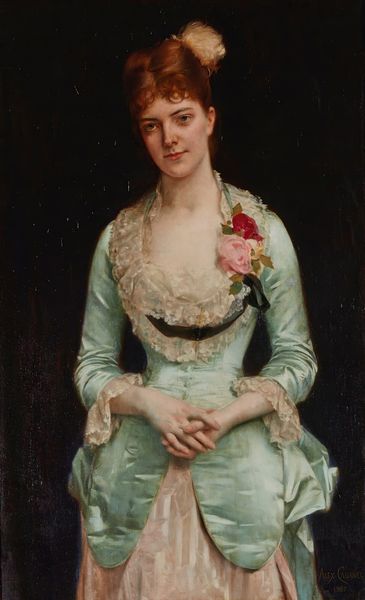
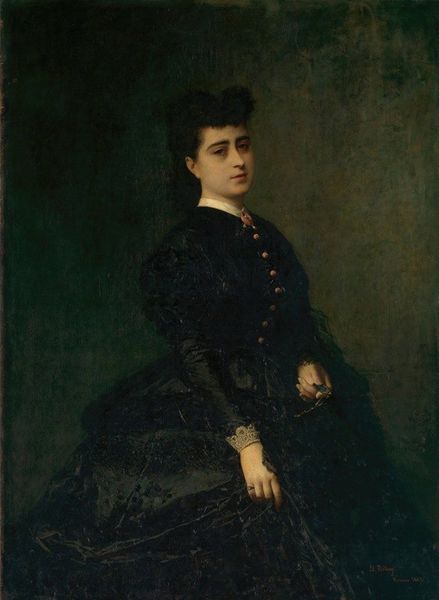
Curator: Looking at "Portrait of a Woman" by Leon Wyczółkowski, painted around 1880, one is immediately struck by the subject's somber, almost stoic expression. Editor: Absolutely. The initial impression is one of restrained power. The dark, enveloping color palette really focuses our attention on her face, giving her an air of contained strength. Curator: This work emerges from a very specific socio-political context in late 19th-century Poland. Partitioned and struggling for its identity, the portrait embodies a tension between aristocratic tradition and an emerging modern sensibility. The subject's clothing, while elaborate, also suggests a period of mourning. Editor: Yes, the somber attire definitely points to mourning rituals. But the red embellishments around her neckline read almost like drops of blood; is this a symbol of a personal loss, or the loss of Polish sovereignty? It’s intriguing how the flowers and the small golden sphere hanging off her right hand carry strong suggestions of vanished prosperity. Curator: That’s a potent reading. We might also consider the implications of her being presented in a highly stylized manner, conforming to expected representations of femininity of the time. I wonder what her place might be as a modern woman versus the expectations placed upon women by societal forces during a tumultuous moment. Editor: Perhaps it’s her own silent resistance? Notice her gaze. It’s direct but somehow avoids being confrontational. I feel there is a visual weight embedded here - almost as if the painter invites us to ponder not just on her identity, but how a person negotiates constraints in the tapestry of symbolic markers. Curator: An excellent observation about navigating constraints. The work leaves us grappling with the power of representation, forcing us to examine what has historically constituted female agency. Editor: Absolutely. Seeing how visual narratives intertwine with emotional and social dimensions has certainly added new layers to the interpretation.
Comments
No comments
Be the first to comment and join the conversation on the ultimate creative platform.
 Collect
 React
React Comment
More like this