1892
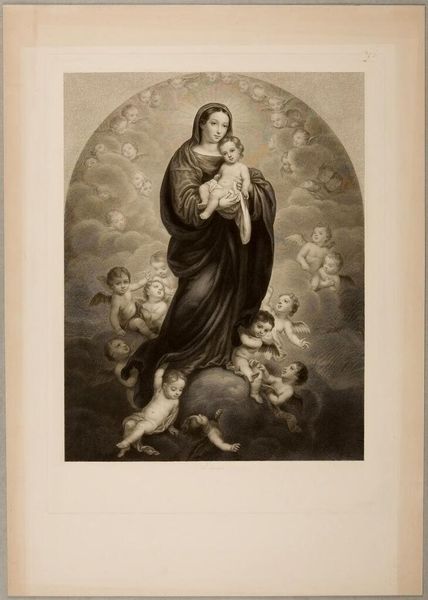
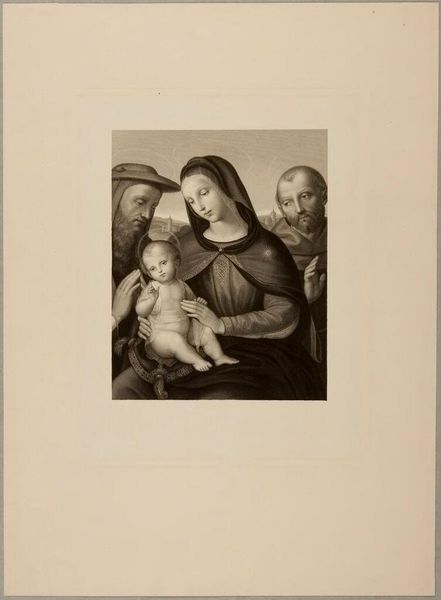
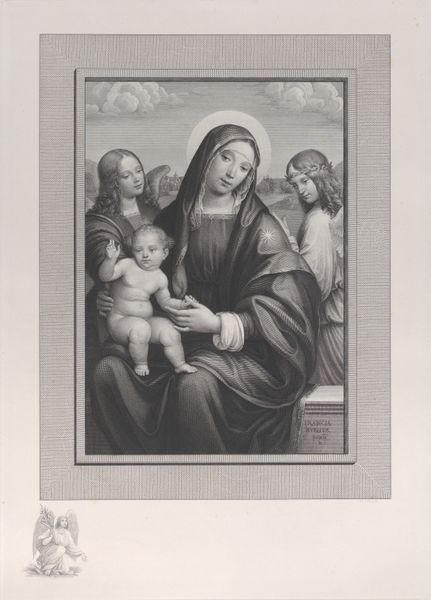
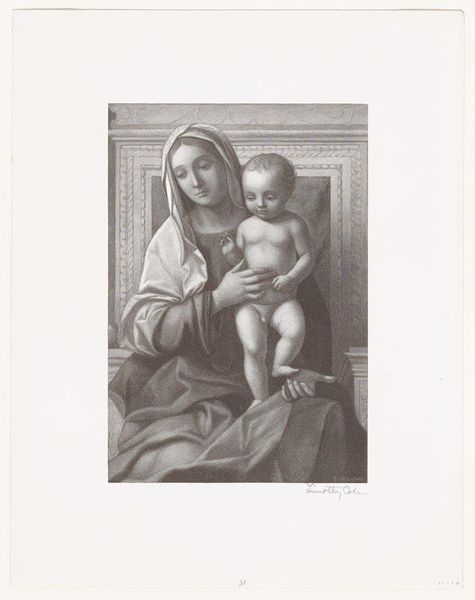
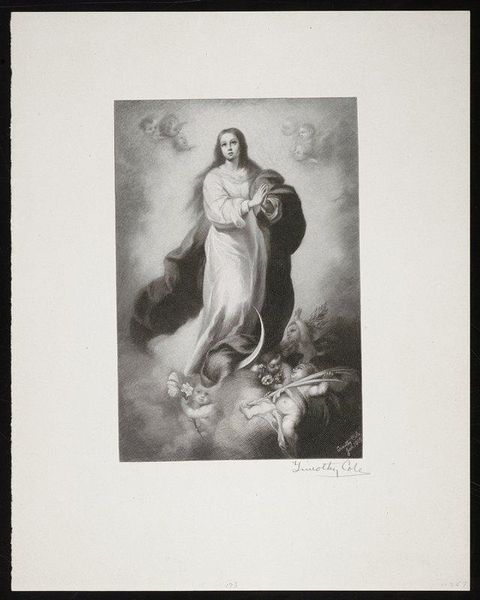
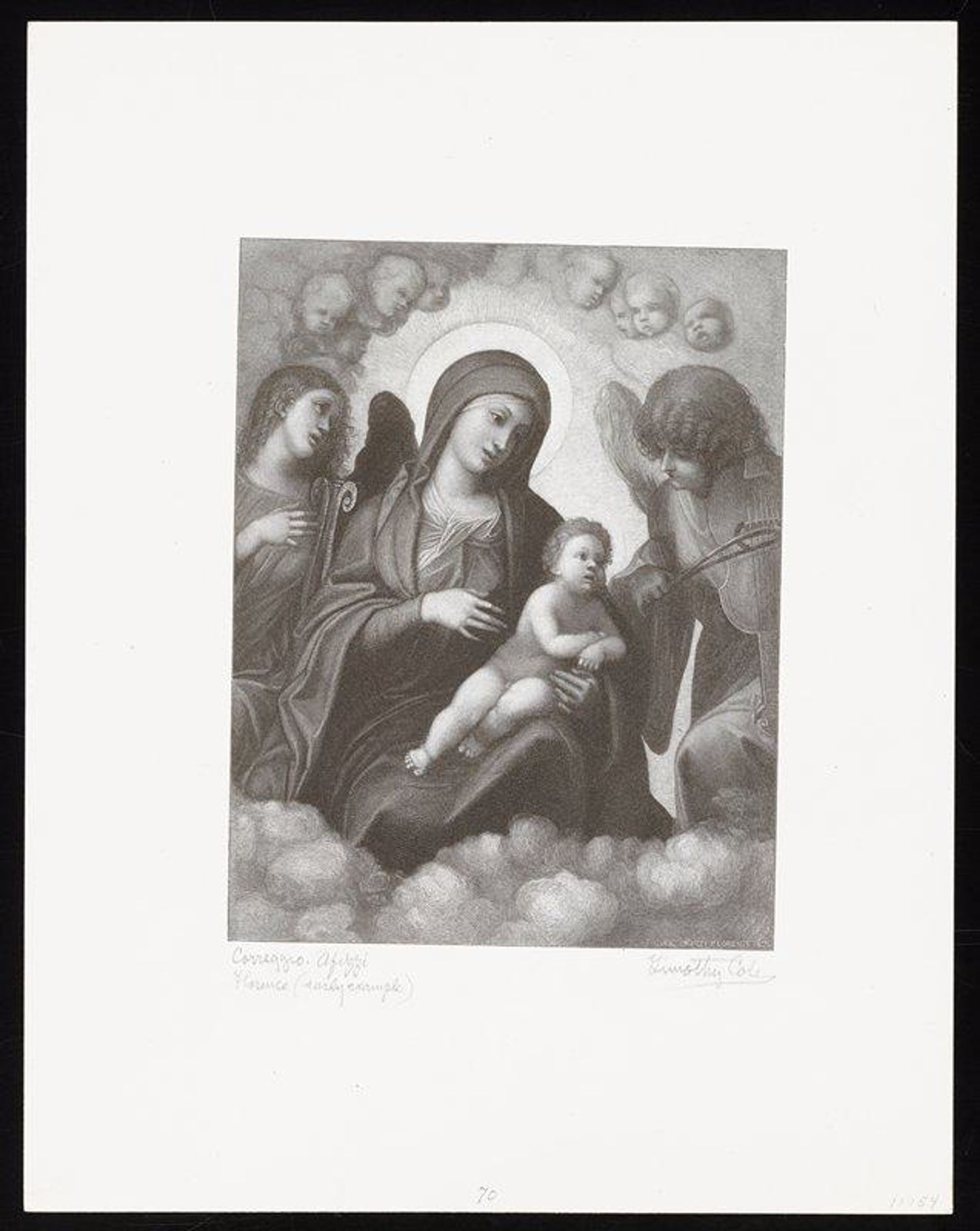
Madonna and Child in Glory


Listen to curator's interpretation
Curatorial notes
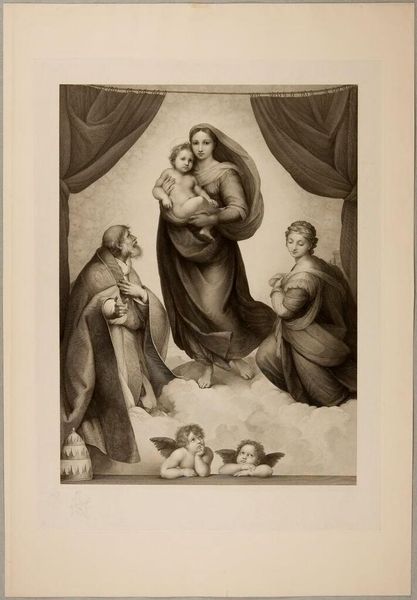
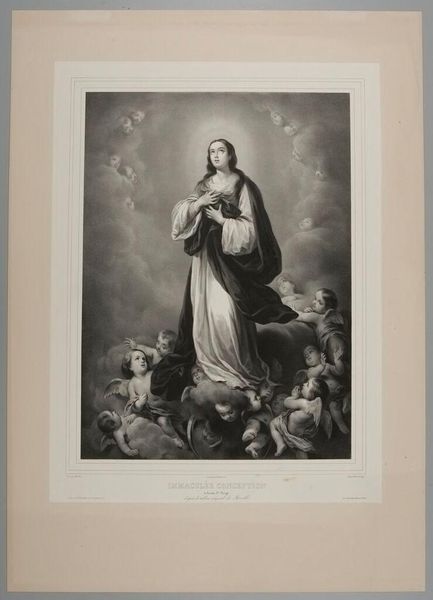
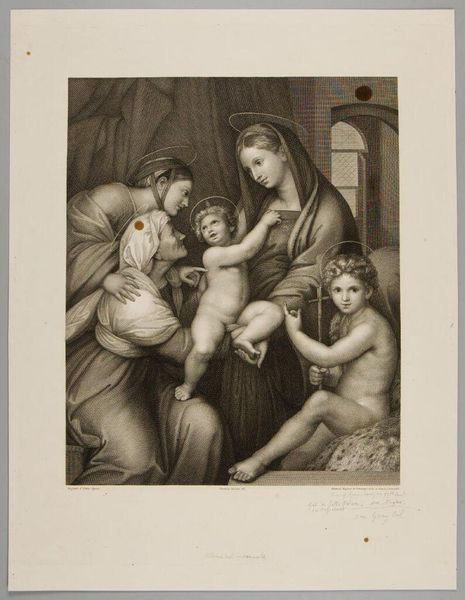
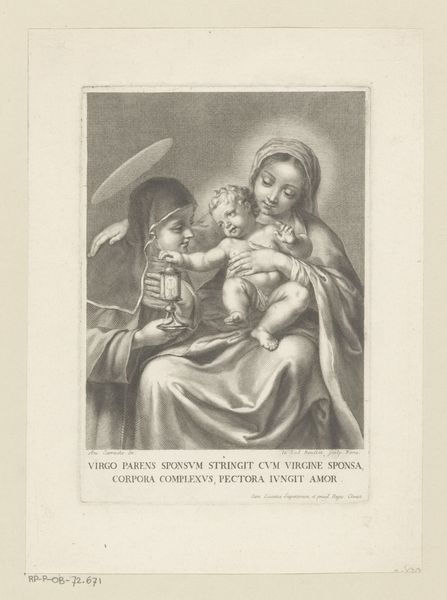
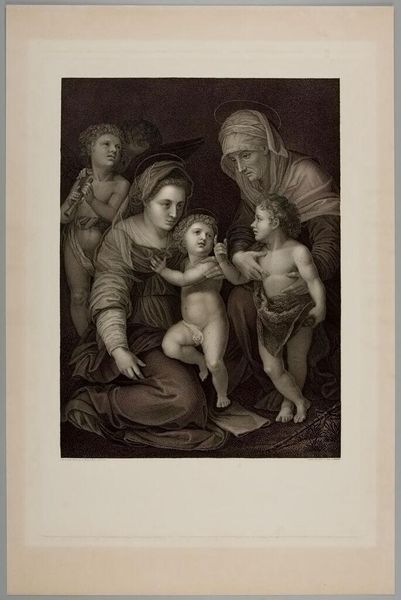
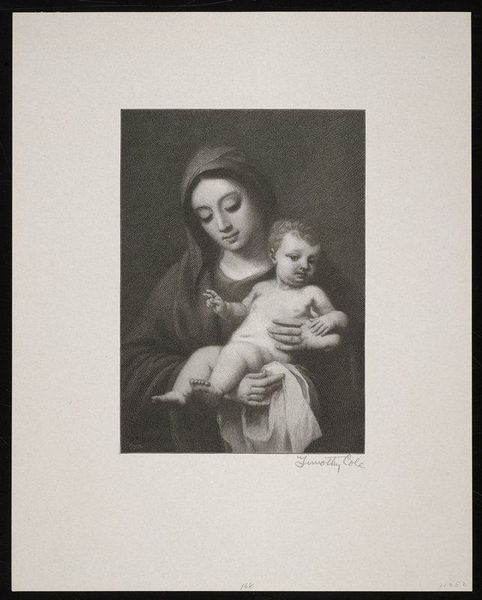
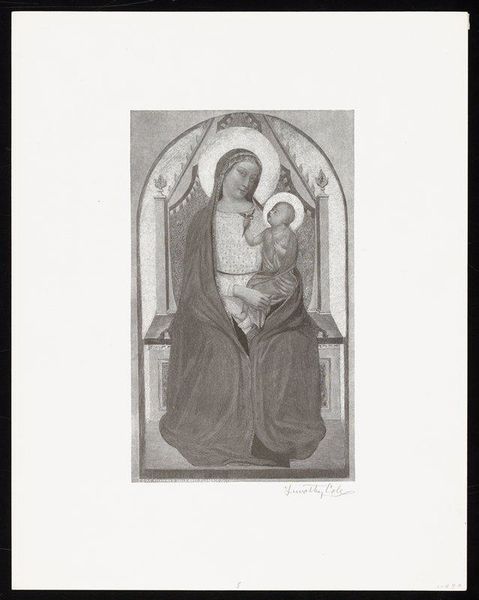
Timothy Cole made this small engraving, Madonna and Child in Glory, sometime before his death in 1931. This is a print, meaning that the image was not drawn directly on the page, but transferred to it by way of an intermediary surface – in this case, a metal plate. Engraving is an intaglio process, meaning that the lines you see were cut into the plate, then filled with ink. This is then pressed onto paper, leaving a raised texture. Look closely at the velvety blacks and the crisp, clear lines. These are the marks of a highly skilled engraver. Cole was one of the best of his day. He made a living by reproducing paintings for popular consumption. Notice the phrase, “Correggio-Uffizi, Florence” at the lower left: Cole made this after a painting by the Italian Renaissance artist Correggio, which he saw at the Uffizi Gallery. This print brought that image to a wider public. While he was clearly a master in his own right, it's interesting to consider that Cole made his name by re-producing the work of other artists.