Dimensions: 214 × 460 mm (image); 481 × 651 mm (sheet)
Copyright: Public Domain
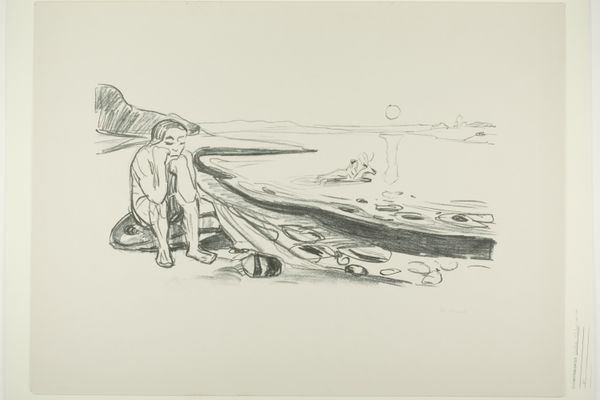
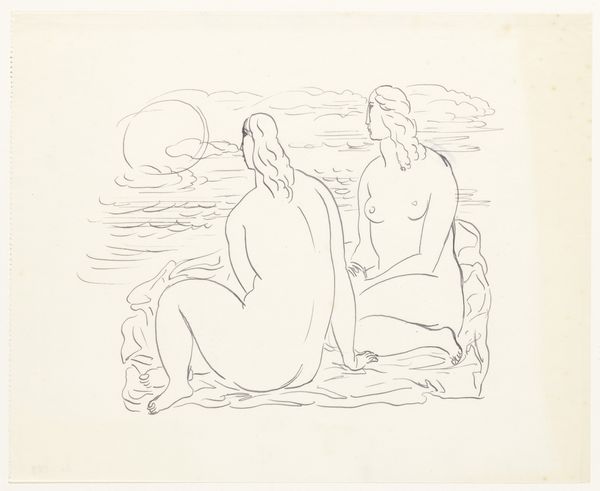
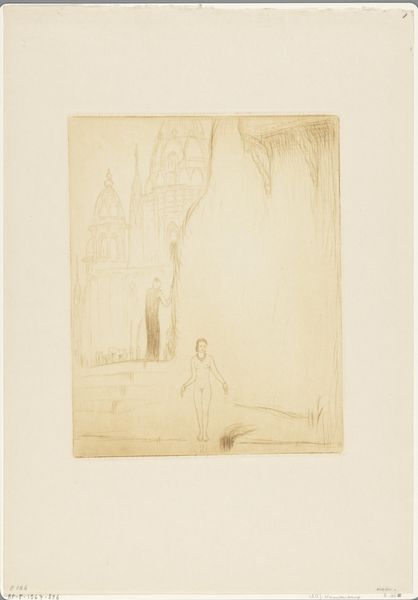
Curator: As you observe Edvard Munch’s "Moonrise," crafted between 1908 and 1909, consider how a lithograph can convey such intimate emotion. Editor: There's a rawness here, a deliberate sketchiness. The heavy pencil strokes describing the foreground almost fight against the ethereal quality of the moon and sky. What's your interpretation? Curator: This piece resonates deeply with archetypal themes. The figures are shown nude by the water, recalling primal, mythic moments—an artistic trope for purity and beginnings. Editor: Visually, I notice how Munch segments the composition into distinct zones. The weighty horizontal mass at the bottom anchors the ephemeral sky, creating a dynamic tension between the material and the spiritual. This opposition drives the overall composition, but also its inherent feeling of disquiet. Curator: I think you've grasped something significant about the historical moment reflected here. Emerging from a period of intense mental health challenges, this scene might illustrate Munch's quest to reconstruct a harmonious connection to life itself. The water, a symbol for unconscious emotion, plays a pivotal part here. Editor: And that reflected moonlight acting almost like a beacon… Do you think he intends this landscape and these figures as something personally redemptive or for his greater artistic legacy? Curator: It might be both! Art for Munch was often autobiographical, as he poured feelings of isolation and desire into works throughout his life. To consider Munch's "Moonrise" as a symbolic representation is very moving. Editor: On a formal note, seeing how simple tools and compositions become complex explorations of emotion—that's exactly where visual arts challenge our ways of thinking about form. Curator: Absolutely. With just a few lines on paper, Munch prompts us to explore humanity's yearning for stability and self-understanding through symbols. Editor: Well, it's a beautifully understated meditation on self and world, done with impressive directness and clarity. Curator: Precisely. Perhaps art serves us best when revealing such deeply human and universally symbolic aspirations through individual experiences.
Comments
No comments
Be the first to comment and join the conversation on the ultimate creative platform.
 Collect
 React
React Comment
More like this