painting, plein-air, oil-paint, watercolor
painting
plein-air
oil-paint
landscape
watercolor
orientalism
cityscape
regionalism
watercolor
realism
Dimensions: height 100 mm, width 150 mm
Copyright: Rijks Museum: Open Domain
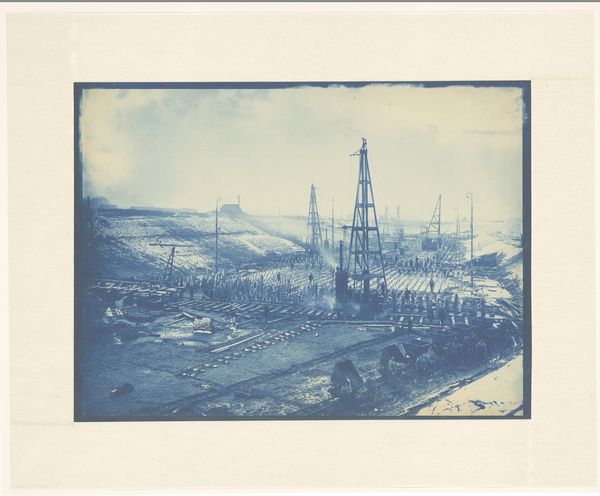
Curator: Here we have a painting titled "Olieveld in Signal Hill, Californië met boortorens", placing it roughly between 1914 and 1934. The visual documentation of this industrial landscape offers a fascinating glimpse into early 20th-century California. Editor: My initial response is one of unease. The density of those oil derricks on the horizon feels almost apocalyptic. There’s an assault on what I would assume was once a natural vista. Curator: Precisely. The artwork depicts Signal Hill, which became a booming oil town. What's crucial to note here is that the painting isn't merely a depiction, but an active participant in shaping the narrative of the region. The portrayal of the landscape shifts to incorporate an acceptance of this relentless industrialization. Editor: Do we know who made this work? It's anonymous. I would be interested to see from what position this artist situates their own political narrative given the exploitative impact that this vista implies on the local community. I feel so concerned with issues around extraction that the formal elements – the slightly washed-out tones, the plein-air approach, and the subtle nods to realism – almost fade into the background. Curator: The artist's anonymity opens a window to explore these themes more broadly. If the artist was known and from Signal Hill, the painting becomes a case study in tensions and compromises within Regionalism as a movement. Without this insight into the authorial intention, we need to turn the attention towards these wider implications to discuss its context. Editor: I think what the piece offers us is a stark representation of resource extraction. The oil derricks aren't simply objects within the landscape. Instead, these represent tangible implications on societal and political relationships in California. Curator: Indeed. And the stylistic choices—the embrace of realism, for instance—create a compelling tension. While the landscape is rendered faithfully, the scene is far from pastoral or idyllic. Editor: It’s a cautionary landscape—and one that resonates deeply with our present concerns about environmental impact and sustainability. This piece presents a reminder of the lasting impacts our pursuit of progress may have and the cultural frameworks which dictate our vision for resources. Curator: This has given me much to consider. I came ready to discuss painting's role in memorializing industry but you're right to push for a deeper assessment of its ethical dimensions and implications.
Comments
No comments
Be the first to comment and join the conversation on the ultimate creative platform.
 React
React Comment