About this artwork
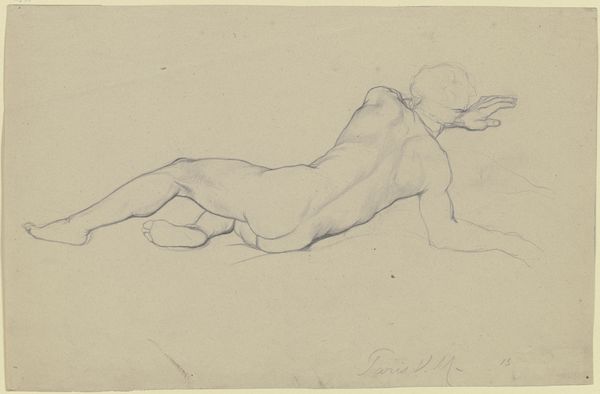
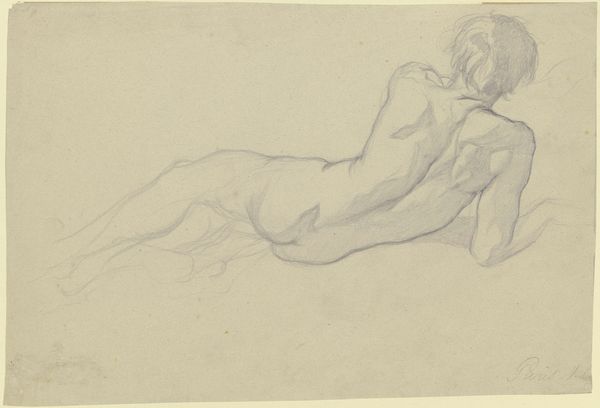
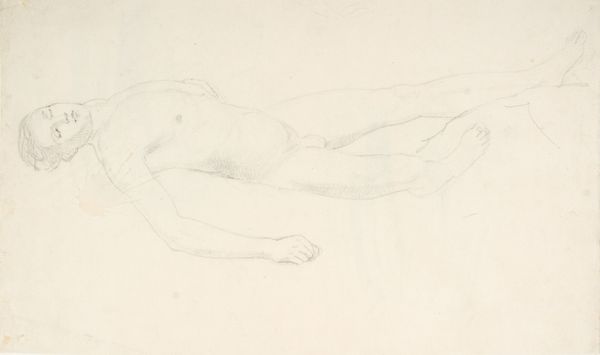
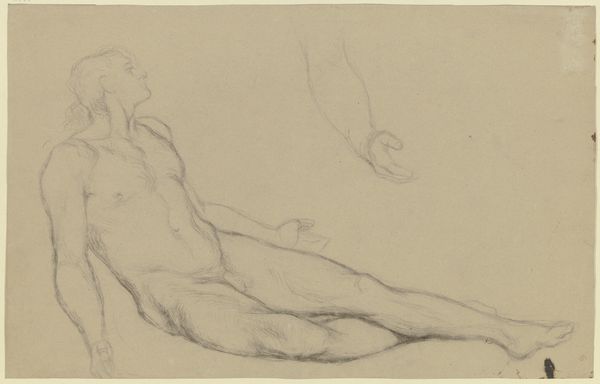
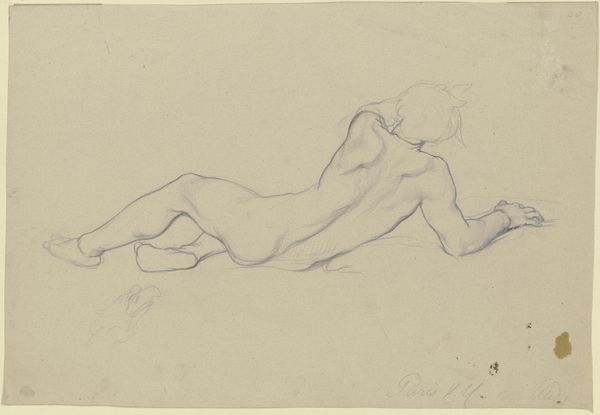
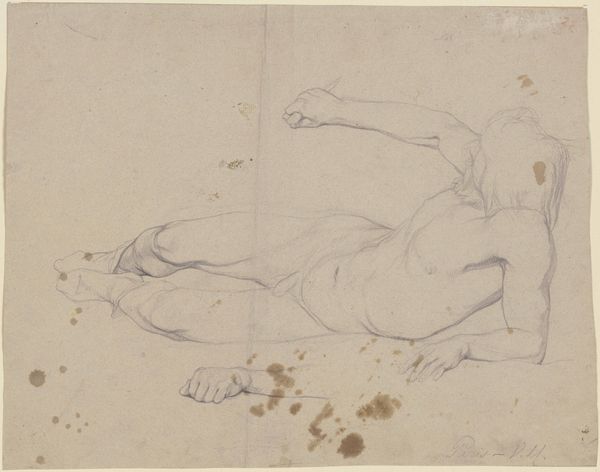
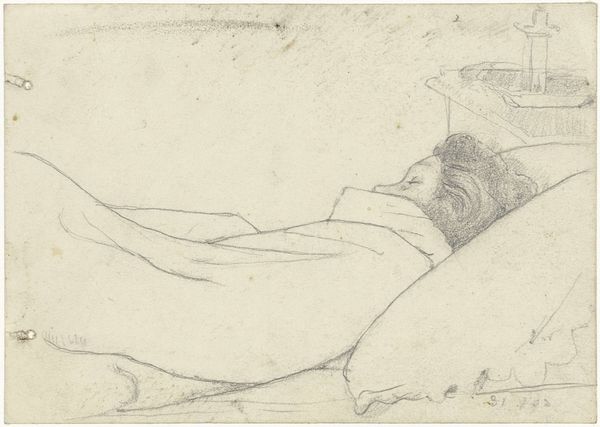
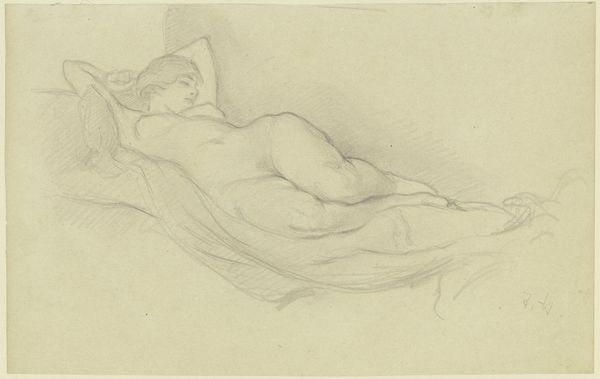
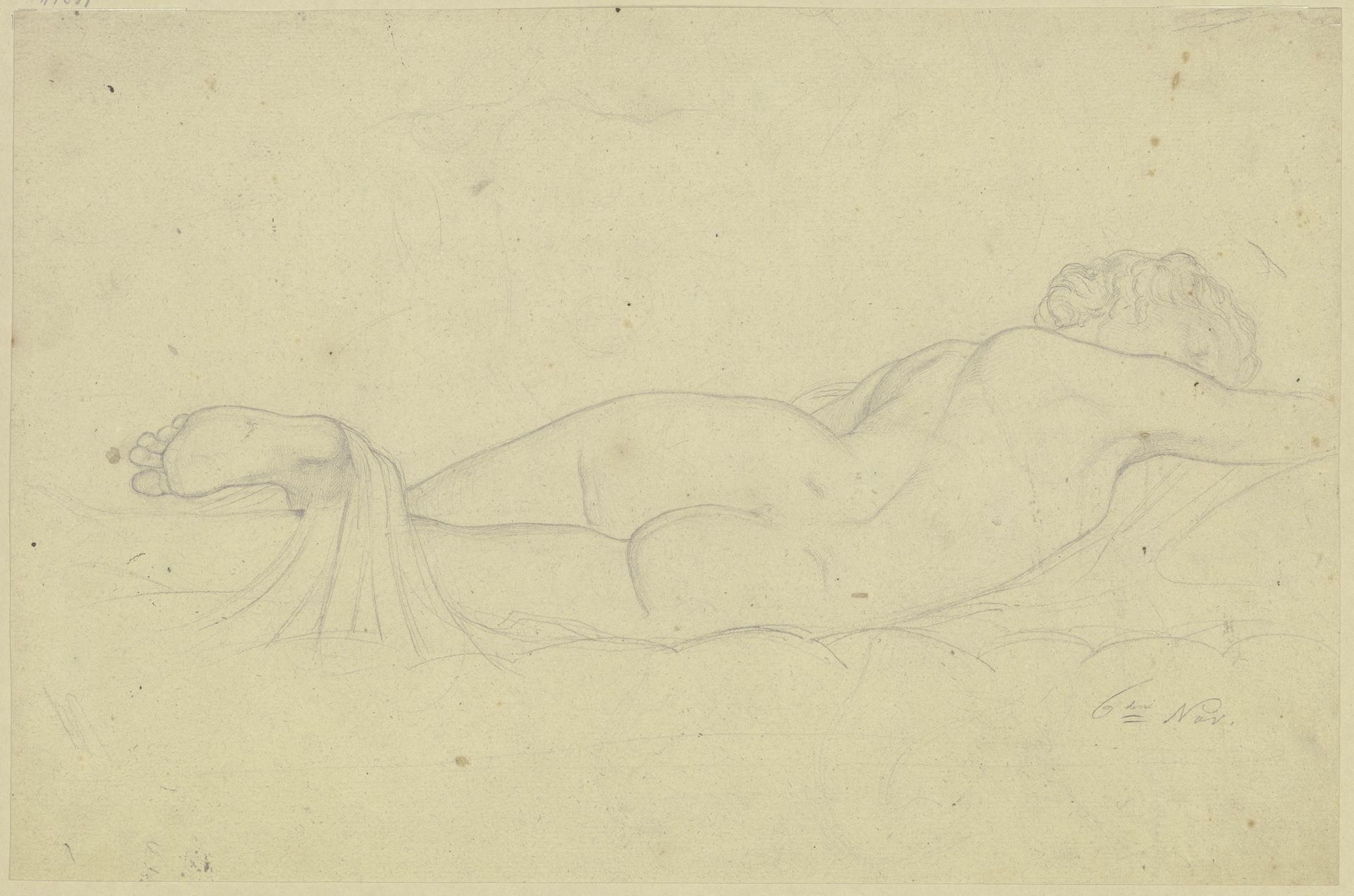
Editor: This pencil drawing, “Schlafender Hermaphrodit”, or “Sleeping Hermaphrodite”, presents a reclining nude figure. The soft lines give it a very dreamlike quality. How do you interpret this work? Curator: It's crucial to situate this drawing within the 19th-century's evolving understanding of gender and sexuality. The figure of the hermaphrodite, drawn from classical antiquity, became a site for exploring anxieties around binary categories. Von Schwind’s piece isn’t simply a nude; it engages with a history of representing bodies that challenge conventional norms. What social power structures do you think such a representation might subvert or reinforce? Editor: I suppose it challenges rigid definitions by visualizing an 'in-between' state, yet its aestheticization might also neutralize any real disruptive potential? Curator: Exactly. The "Sleeping Hermaphrodite," especially within the Romanticism movement, allowed for a kind of detached contemplation of difference. Think about who was viewing and creating such images: often a privileged, male gaze. It raises questions about appropriation and the objectification of non-normative identities, doesn’t it? Also, considering Von Schwind was working within a largely patriarchal art world, how does that influence our understanding of his intent and the work's reception? Editor: That adds a layer of complexity I hadn't considered. The artist's position inevitably shapes the artwork's meaning. Curator: Indeed. Examining art through an intersectional lens requires us to analyze not just the subject depicted, but also the historical, social, and political contexts that both inform and are informed by the artwork. Editor: I'll definitely be thinking about this in the future, approaching art from multiple angles to grasp its multifaceted nature. Curator: Excellent! The dialogue itself can reveal how norms were made, remade, and resisted throughout history.
Schlafender Hermaphrodit (_Hermaphroditus Borghese_)


Artwork details
- Medium
- drawing, pencil
- Location
- Städel Museum
- Copyright
- Public Domain
Tags
portrait
pencil drawn
drawing
16_19th-century
figuration
romanticism
pencil
academic-art
nude
Comments
No comments
About this artwork
Editor: This pencil drawing, “Schlafender Hermaphrodit”, or “Sleeping Hermaphrodite”, presents a reclining nude figure. The soft lines give it a very dreamlike quality. How do you interpret this work? Curator: It's crucial to situate this drawing within the 19th-century's evolving understanding of gender and sexuality. The figure of the hermaphrodite, drawn from classical antiquity, became a site for exploring anxieties around binary categories. Von Schwind’s piece isn’t simply a nude; it engages with a history of representing bodies that challenge conventional norms. What social power structures do you think such a representation might subvert or reinforce? Editor: I suppose it challenges rigid definitions by visualizing an 'in-between' state, yet its aestheticization might also neutralize any real disruptive potential? Curator: Exactly. The "Sleeping Hermaphrodite," especially within the Romanticism movement, allowed for a kind of detached contemplation of difference. Think about who was viewing and creating such images: often a privileged, male gaze. It raises questions about appropriation and the objectification of non-normative identities, doesn’t it? Also, considering Von Schwind was working within a largely patriarchal art world, how does that influence our understanding of his intent and the work's reception? Editor: That adds a layer of complexity I hadn't considered. The artist's position inevitably shapes the artwork's meaning. Curator: Indeed. Examining art through an intersectional lens requires us to analyze not just the subject depicted, but also the historical, social, and political contexts that both inform and are informed by the artwork. Editor: I'll definitely be thinking about this in the future, approaching art from multiple angles to grasp its multifaceted nature. Curator: Excellent! The dialogue itself can reveal how norms were made, remade, and resisted throughout history.
Comments
No comments