1886
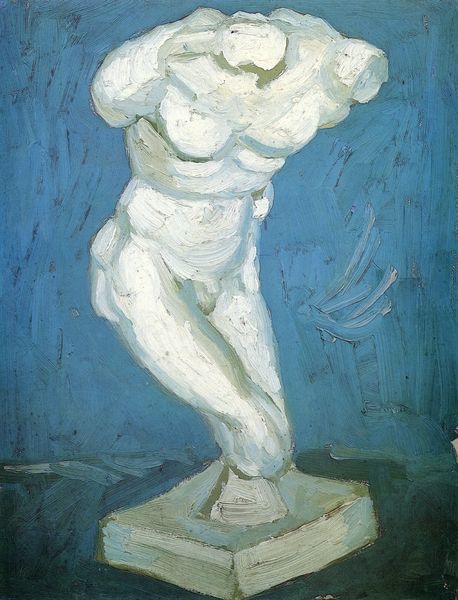
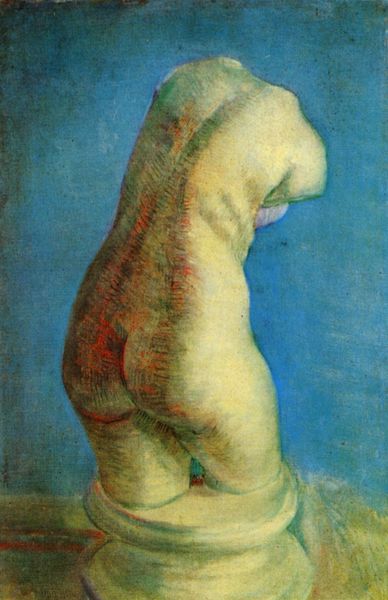
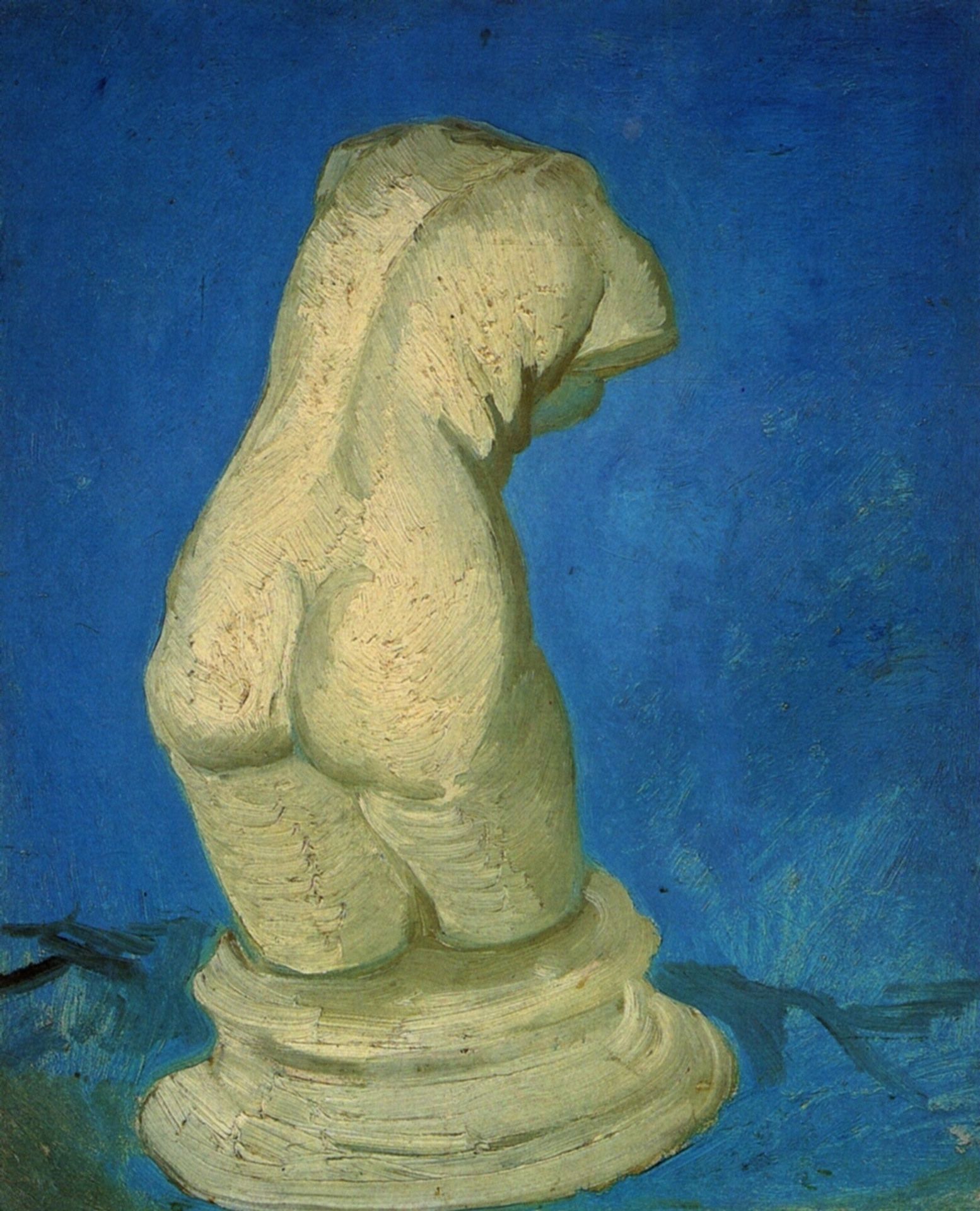
Plaster Statuette of a Female Torso


Listen to curator's interpretation
Curatorial notes
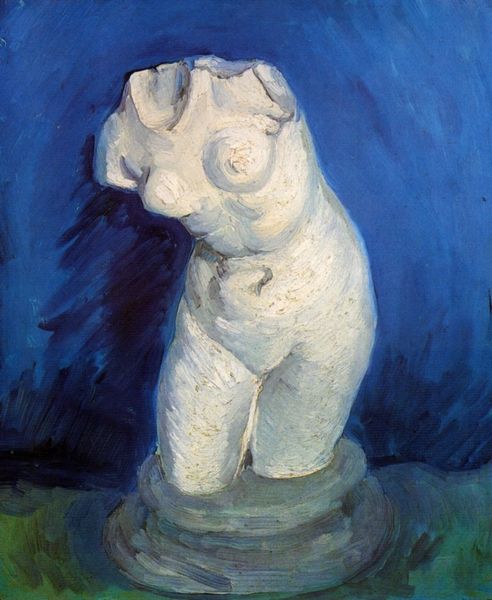
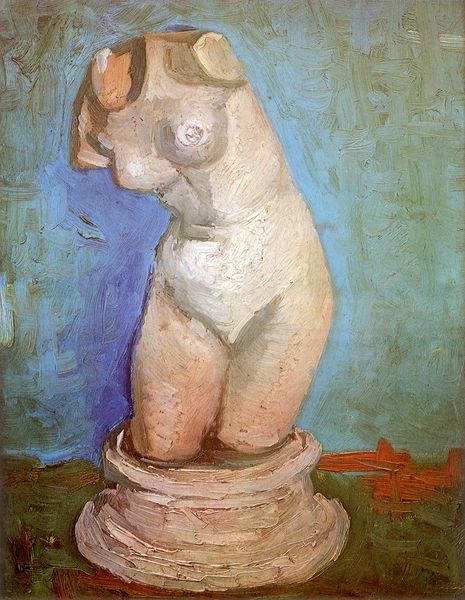
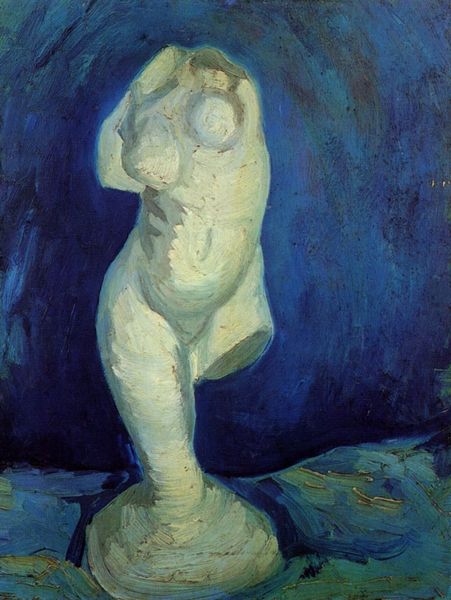
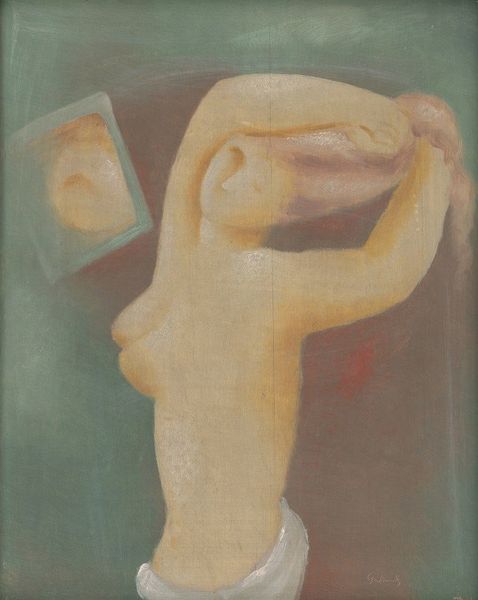
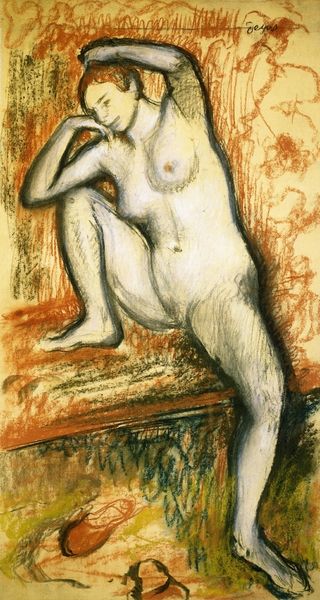
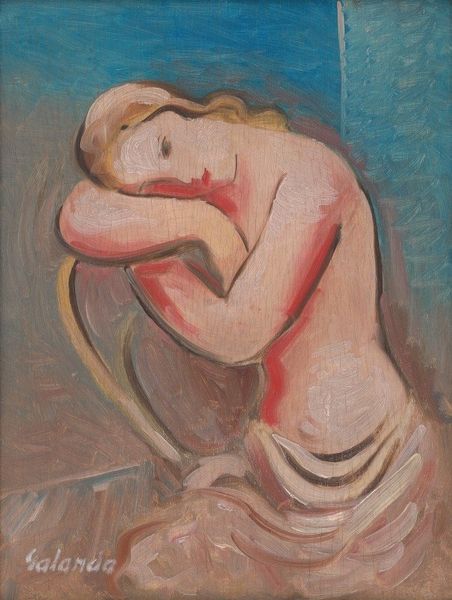
This Plaster Statuette of a Female Torso was painted by Vincent van Gogh sometime before 1890. Van Gogh captures the torso, a fragment of classical antiquity, with striking intensity. The incomplete statue, a body without a head or limbs, speaks of loss and survival, echoing ancient Greek ideals of beauty. Consider how the torso motif transcends time. We find similar forms in the Renaissance, imbued with a renewed appreciation for classical ideals. The Venus de Milo, headless yet iconic, embodies this enduring fascination. This fragment is not merely stone; it carries a cultural memory, a yearning for an idealized past. The statue is psychologically charged; it represents not just form, but also the fragility and enduring power of memory and beauty. The blue background heightens the statue, evoking a sense of melancholy and timelessness. The cyclical reappearance of classical forms throughout history underscores how past and present continually inform each other, each era reinterpreting and reimagining these ancient motifs.