drawing, paper, pencil
#
drawing
#
paper
#
form
#
geometric
#
pencil
#
abstraction
#
line
Copyright: Rijks Museum: Open Domain
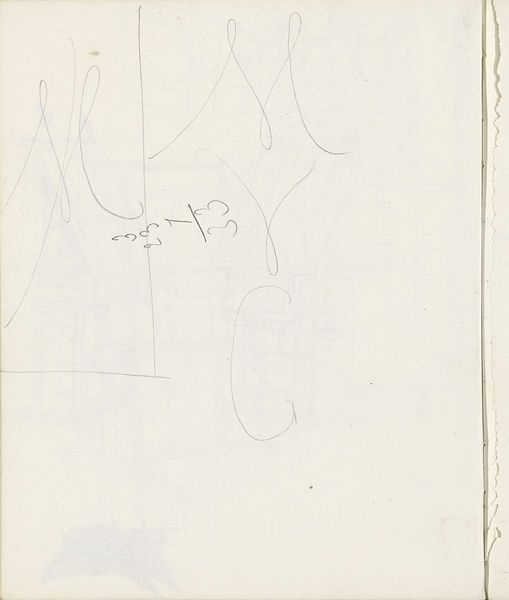
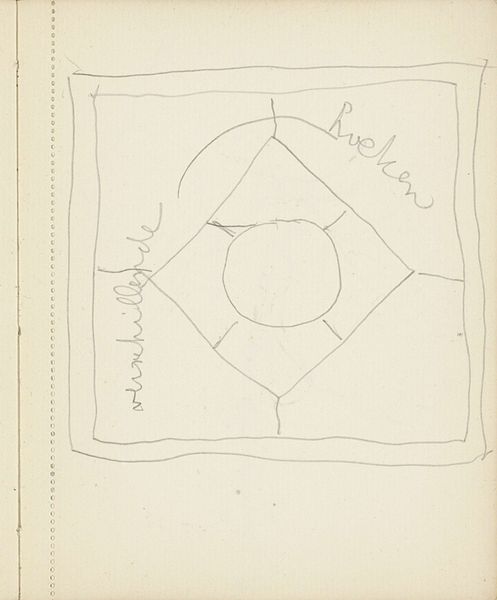
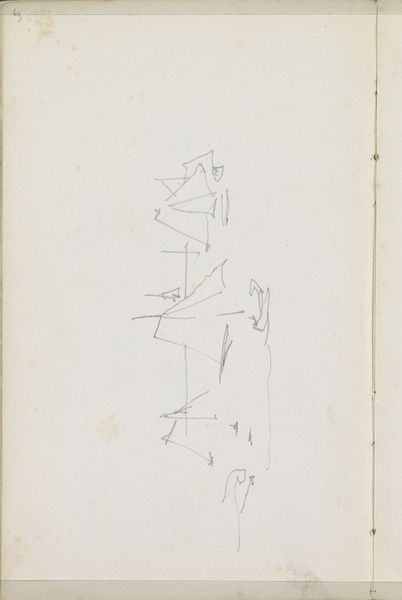
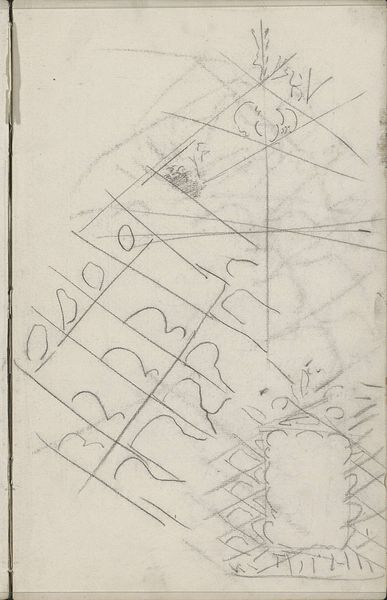
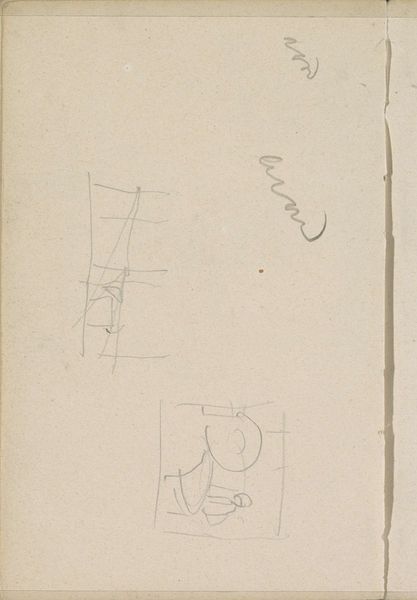
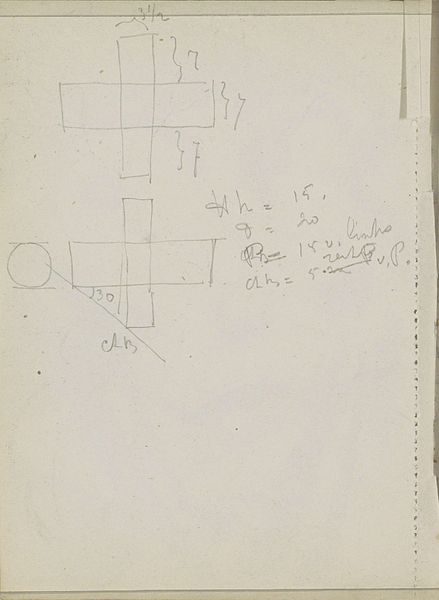
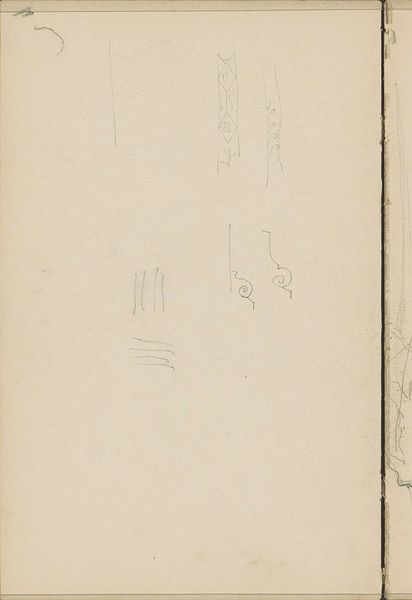
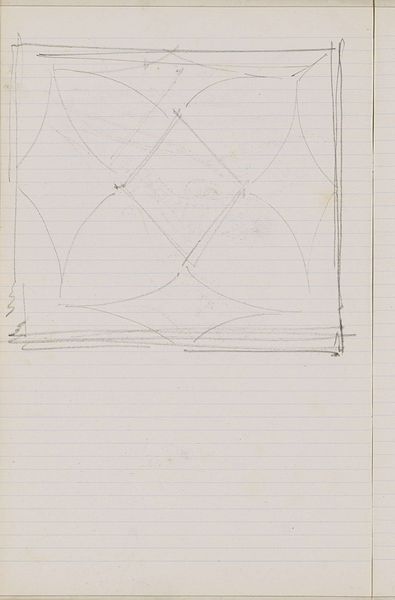
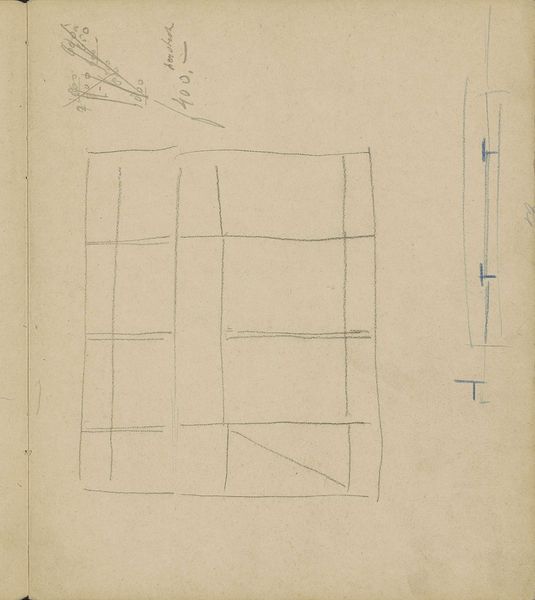
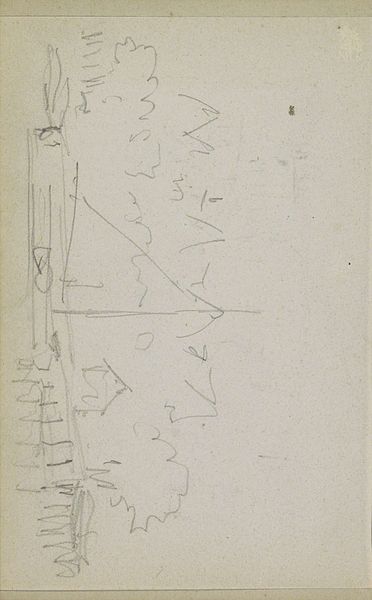
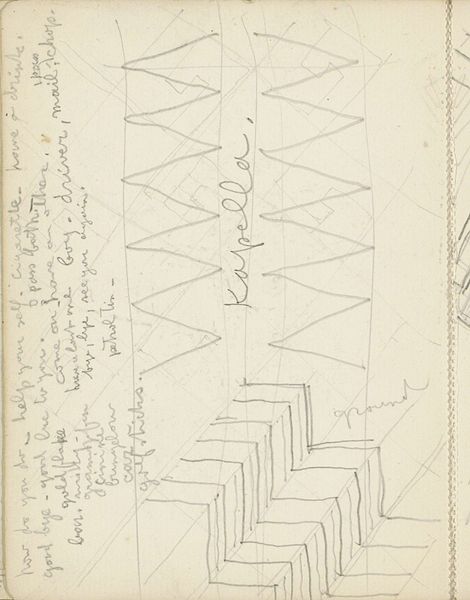
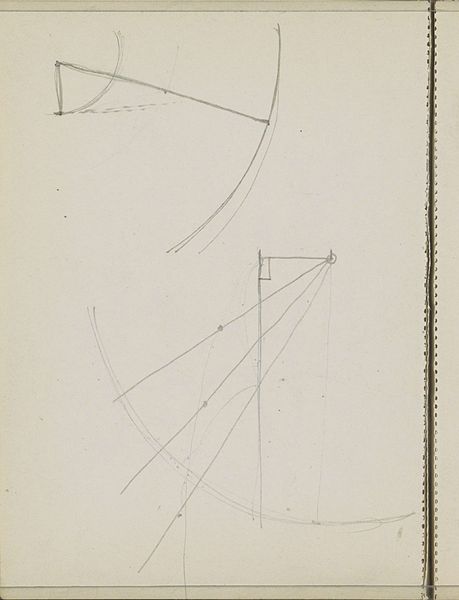
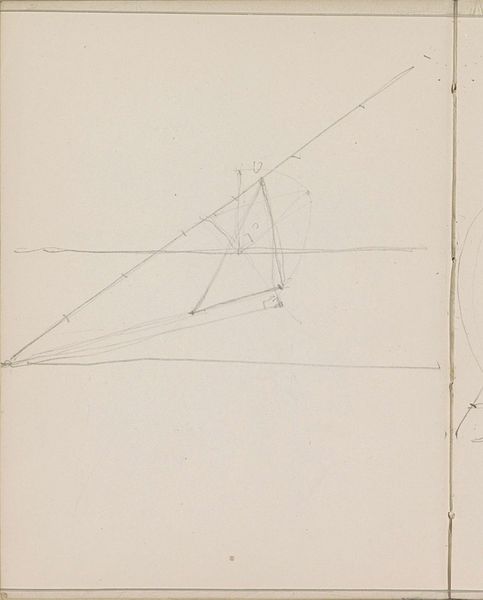
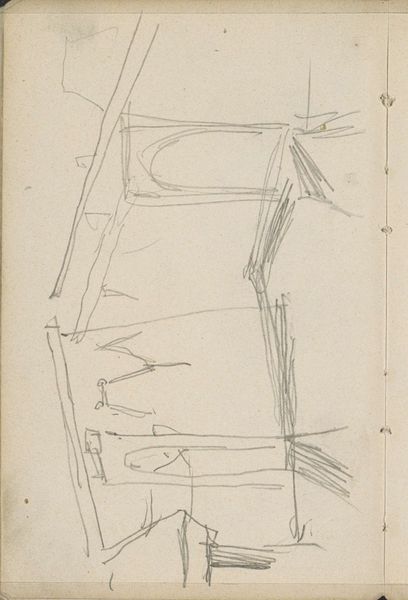
Curator: Here we have "Decoratief patroon met driehoeken," or "Decorative Pattern with Triangles," a pencil drawing on paper made sometime between 1916 and 1945, now residing at the Rijksmuseum. Editor: Ah, yes. It's so light, so airy...almost like a preliminary sketch of some forgotten architectural detail. The pencil lines are so delicate; I feel as though a gust of wind could erase them. Curator: Indeed. The work feels provisional, as if the artist, Reijer Stolk, was experimenting. I see a horizon line above and below a repeating motif of triangles. There also seem to be little doodles inside. Editor: I'm especially drawn to the marks *inside* the triangles – X’s and O’s playfully interrupt the clean lines, introducing a human element that contrasts with the rigidity of geometric shapes. Is there writing, too? It almost looks like shorthand… Curator: Yes! Some cursive text. My understanding is these were notes on various textile colours. One can only imagine how these experiments served a purpose to the artist when considering new pattern applications. The "Decorative Pattern" reads now more like a record, in the tradition of the sketchbook rather than high modern abstraction. Editor: So, a bridge between pure geometric form and practical application in decorative design? It speaks to how the "fine arts" constantly borrow from and elevate the so-called "applied arts," blurring the lines of high and low culture. Makes me wonder who might be considering pattern application from architecture today. Curator: Absolutely! The Rijksmuseum holding onto this object speaks to its importance as more than a draft, its an indexical record and source document for what we come to understand is good design in its historical context. Editor: In closing, what began as a simple sketch becomes a gateway to considering art and society, then. I’ll definitely walk away considering the context and the conditions when viewing abstract art. Curator: For me it signals an invitation to reconsider the potential locked away in even the most ephemeral drawings—reminding us to value all works as expressions of lived life.
Comments
No comments
Be the first to comment and join the conversation on the ultimate creative platform.
 Collect
 React
React Comment
More like this