painting, oil-paint
#
portrait
#
character pose
#
venetian-painting
#
character portrait
#
allegory
#
portrait image
#
painting
#
oil-paint
#
figuration
#
portrait reference
#
portrait head and shoulder
#
mythology
#
portrait drawing
#
facial portrait
#
italian-renaissance
#
nude
#
fine art portrait
#
celebrity portrait
#
digital portrait
Copyright: Public Domain: Artvee
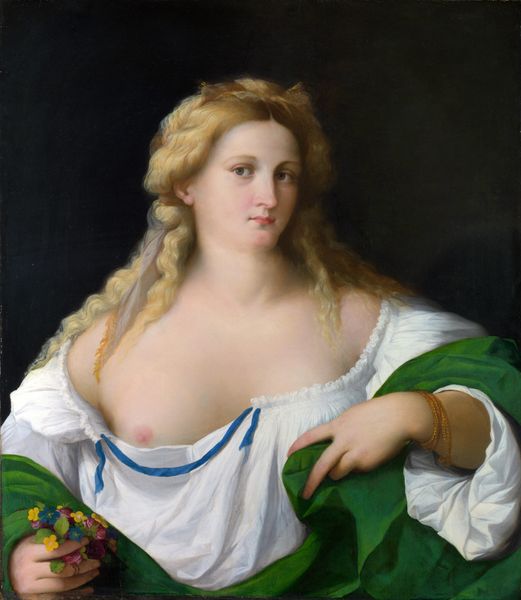
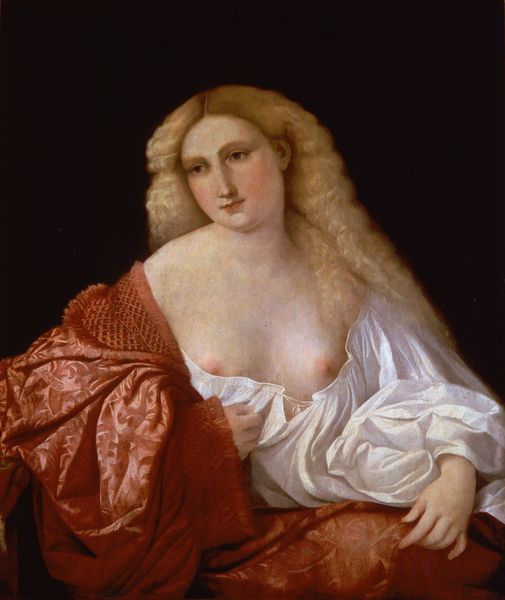
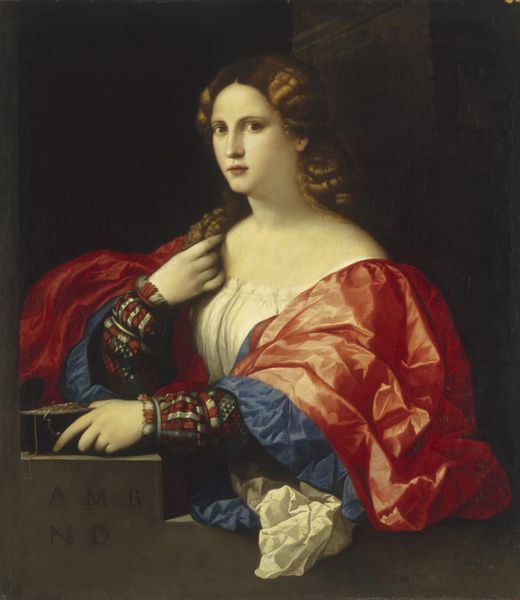
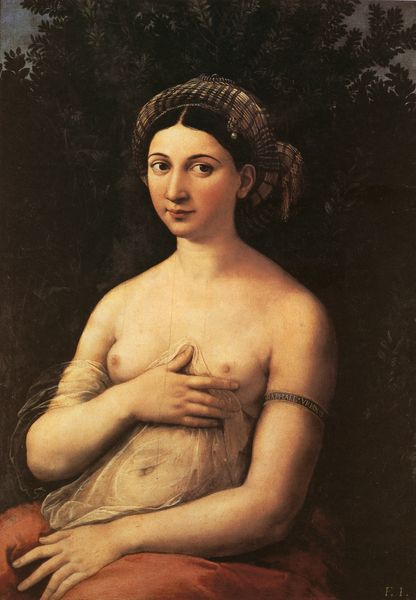
Editor: This is Titian's "Flora," painted around 1517, oil on canvas. There's a really soft, romantic quality to her. What’s striking to me is the way she simultaneously embodies both vulnerability and power. What do you see in this piece? Curator: I see a powerful statement about the role of women, particularly within the Venetian Renaissance. This isn't simply a beautiful woman; it's a representation of female agency intertwined with ideals of beauty and fertility. Consider the gaze—downcast, yes, but also knowing, self-possessed. Do you think it’s relevant how female beauty was often framed during this period within patriarchal structures? Editor: That’s interesting! So you're suggesting the softness is perhaps deceptive, obscuring a deeper meaning about societal constraints? I guess the flowers in her hand could be symbols related to marriage, so is the painting about expectations of women at the time? Curator: Exactly! But let's push further. How might we connect the artist’s depiction of Flora, a mythological figure associated with spring and fecundity, with the lived experiences of women in 16th-century Venice? Were there limited paths available to women at the time? And what possibilities are implied in the knowing glance? Editor: Okay, so not just an allegorical painting but a commentary, even if subtle, on gender roles… Curator: Precisely. Seeing the work in this way reframes it. It prompts us to consider how representations of women both reflected and potentially challenged societal norms. Editor: Wow, that completely changed how I see the artwork! Now I notice new layers. Thanks so much! Curator: It’s by engaging with art through different lenses, especially those shaped by feminist and cultural studies, that we enrich our understanding, isn't it?
Comments
No comments
Be the first to comment and join the conversation on the ultimate creative platform.
 Collect
 React
React Comment
More like this