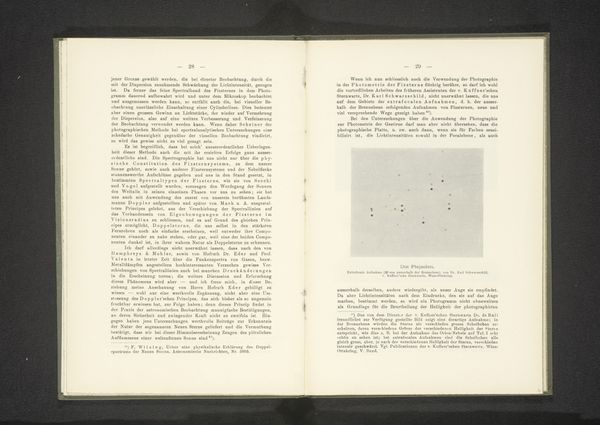
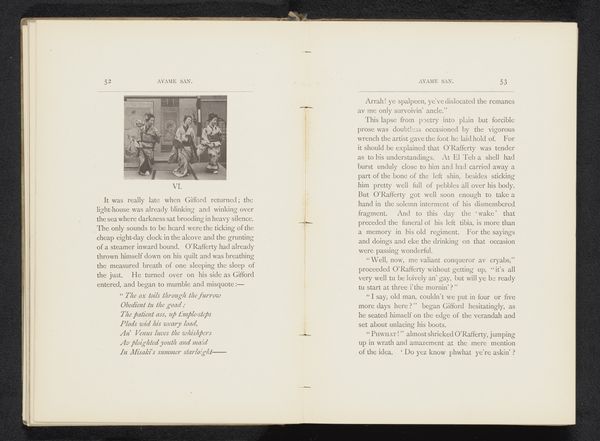
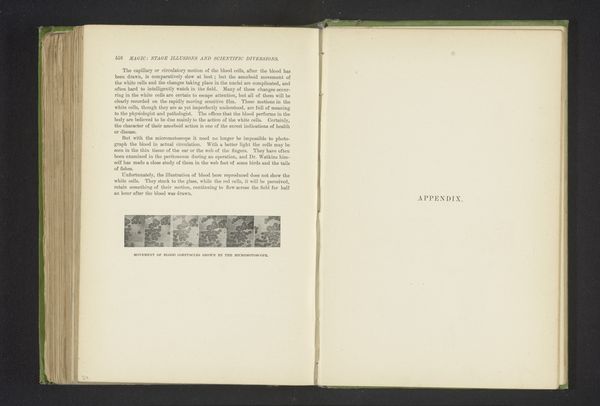
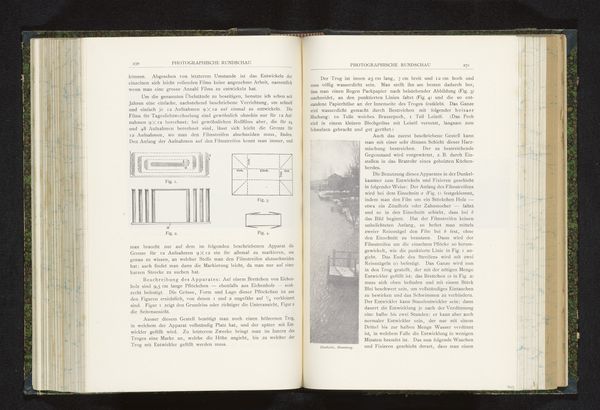
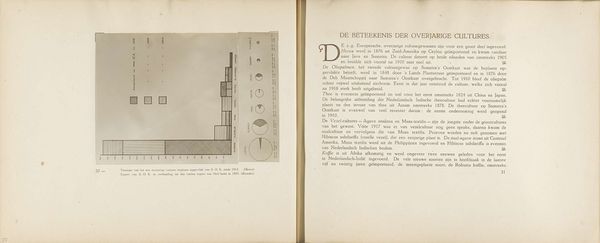
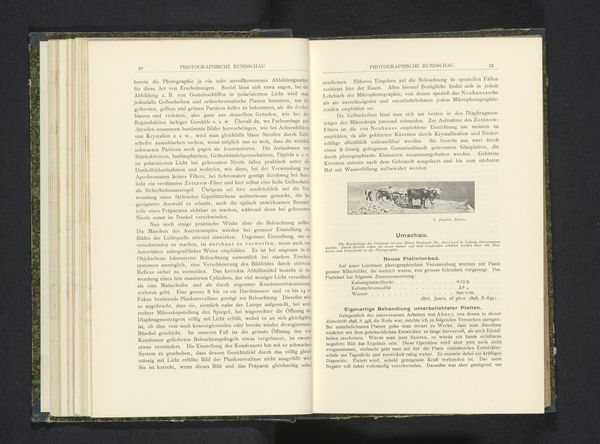
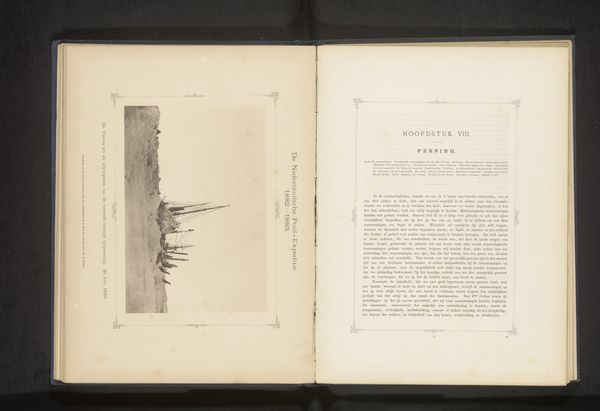
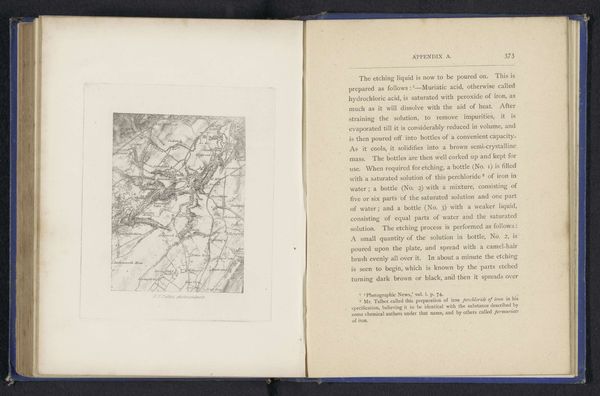
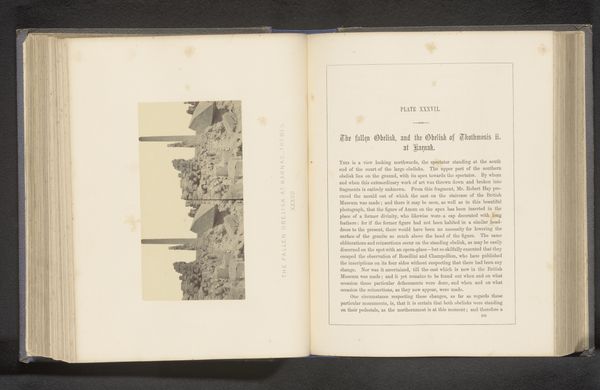
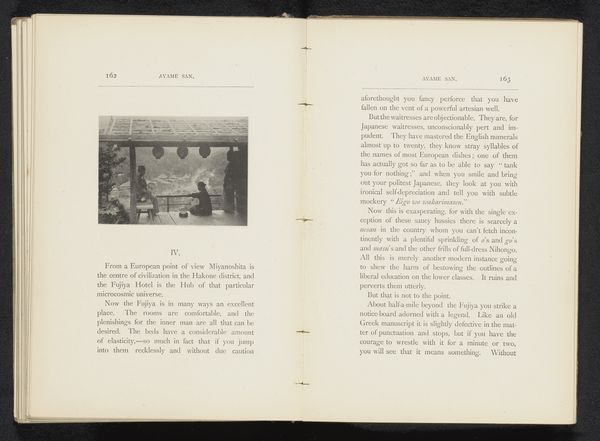
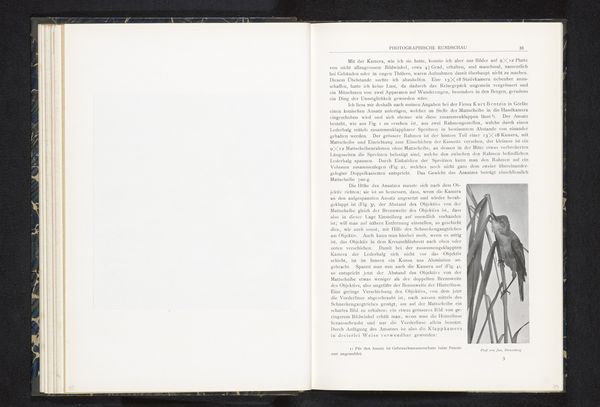
Pagina 32 en 33 van fotoboek van de Algemeene Vereeniging van Rubberplanters ter Oostkust van Sumatra (A.V.R.O.S.) c. 1924 - 1925
0:00
0:00

jwmeyster
Rijksmuseum
graphic-art, print, paper, photography
#
graphic-art
#
ink paper printed
# print
#
landscape
#
paper
#
photography
Dimensions: height 240 mm, width 310 mm
Copyright: Rijks Museum: Open Domain
Editor: This is a page from a photo book by J.W. Meyster, dating back to the mid-1920s, showcasing the Algemeene Vereeniging van Rubberplanters on the East Coast of Sumatra. What jumps out to me is how directly informative it is; one page shows a printed graph while the other holds a block of dense text. What strikes you when you look at this, something of a document of its time? Curator: The dryness is fascinating, isn't it? At first glance, the graph feels sterile, devoid of emotion. Yet, think about rubber at that time: tires, machinery, progress… and for whom? This statistical ascent, presented in such an unemotional way, belies a history drenched in exploitation, obscured from view. This almost scientific depiction normalizes that history. What do you think the intention behind its inclusion would have been? Editor: To showcase the success of the rubber plantations, obviously! To impress shareholders, maybe entice investment, all conveyed with what seems to be objective data? Curator: Precisely. And perhaps reassure themselves. Creating a sense of order and progress could be a form of denial of the true human cost. It’s almost like the data itself is acting as a kind of… shield. You know, when I look at it now, I wonder about the person tasked with compiling these figures, completely unaware of the complicated layers of meaning they were creating. Did they ever imagine future audiences considering it not as a triumph, but as an indicator of profound, uncomfortable truths? Editor: I never considered it that way! So, it's not just a factual account, but a piece that indirectly shows a dark side of industry and colonialism. I will certainly consider printed matter in a completely new way. Thank you. Curator: You are welcome! History and numbers rarely tell the full story, that's for certain.
Comments
No comments
Be the first to comment and join the conversation on the ultimate creative platform.
 Collect
 React
React Comment
More like this