1928
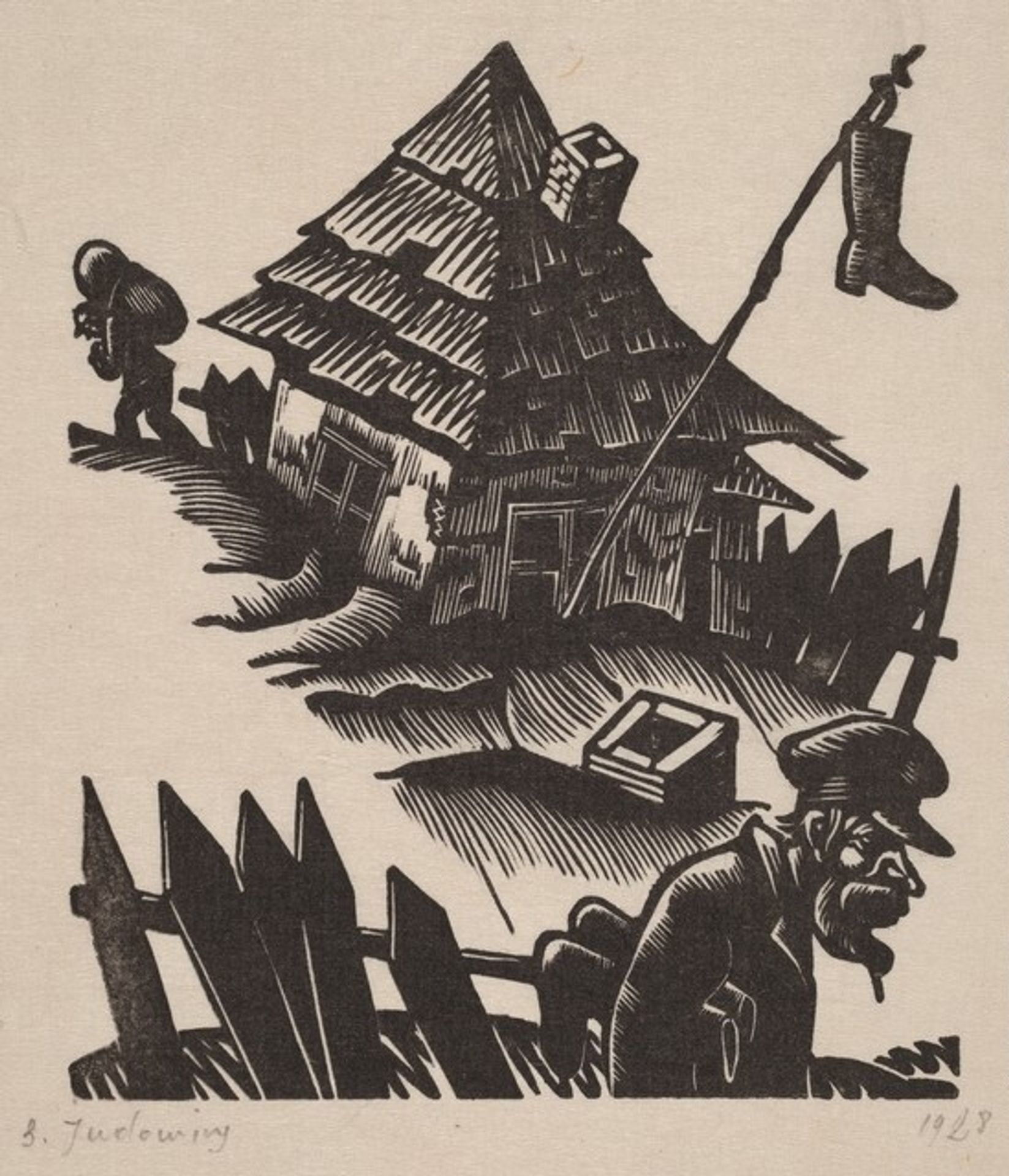
Bootmaker's Cottage


Listen to curator's interpretation
Curatorial notes
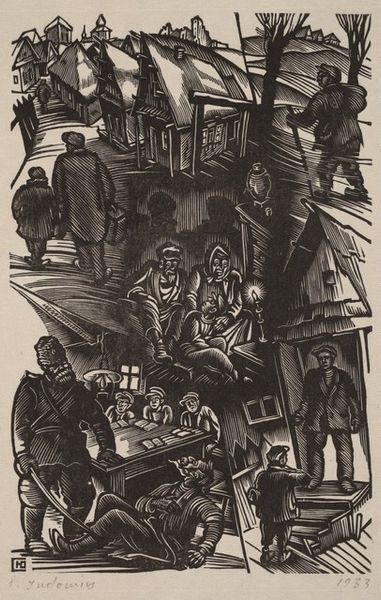
Curator: This woodcut print from 1928 is titled "Bootmaker's Cottage" by Solomon Borisovich Judovin. At first glance, what stands out to you? Editor: There is a strong, unsettling atmosphere here. The tilted architecture and somewhat menacing figure near the fence feel heavy with meaning, even before understanding the subject matter. Curator: Judovin worked during a period of immense social upheaval. Images like this provided powerful commentary on Jewish life and work, often capturing displacement and hardship. The figure’s exaggerated features, the dilapidated house with a boot oddly displayed, point to this harsh reality. Editor: The boot atop a pole is quite an interesting emblem, a very unusual sign! Is it announcing his profession, declaring “Here lies the bootmaker”? Or something more mournful, like a symbol of someone deceased, someone missing a boot? Is it a symbol or is it something else? Curator: It's quite complex. On one level, the boot serves a practical purpose, indicating the trade practiced within. However, placing it so prominently elevates it to a symbol. Consider the era, the challenges faced by Jewish artisans like bootmakers—this seemingly simple image becomes a poignant representation of economic vulnerability. Editor: And notice the figure walking away from the cottage in the background, with something large carried upon his back! This adds to the feeling of disruption and change. A lone figure, with a boot upon a pole… it could speak to wandering, searching for someplace new to exist in the world. Curator: Judovin's stark monochrome palette and raw carving technique amplify these emotions. He was committed to social change, documenting everyday existence with authenticity. His subjects weren't idealized; they reflected genuine lived experiences. Editor: Understanding the historical context, particularly the artist's commitment to bearing witness, it's almost impossible to view this artwork as purely a simple landscape. The boot, the cottage, the fleeing figure... all seem part of something lost, and perhaps something hoped for. Curator: Absolutely. The weight of history permeates Judovin's images, making the artwork intensely compelling and ultimately prompting thoughtful reflection.