Dimensions: height 221 mm, width 177 mm
Copyright: Rijks Museum: Open Domain
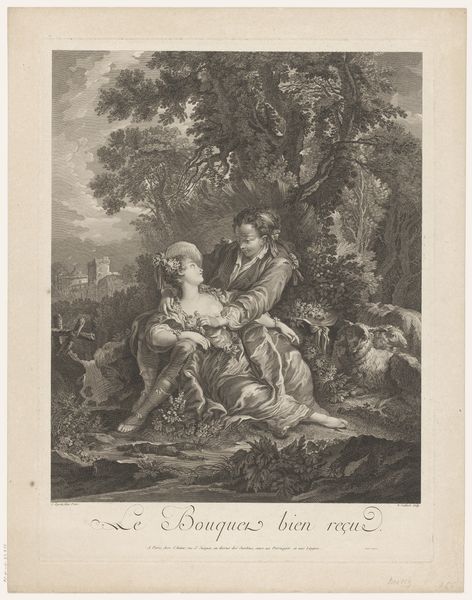
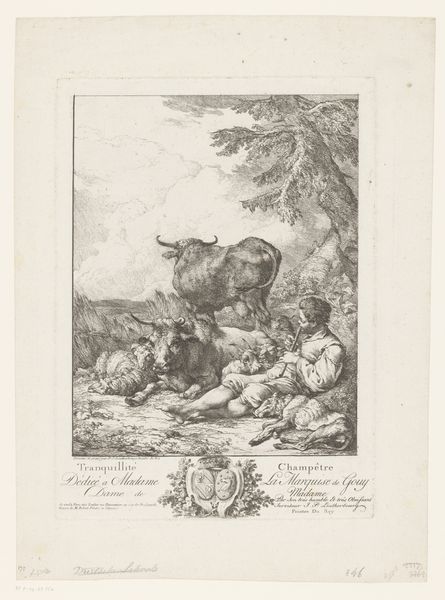
Curator: What a charming scene! This engraving, titled "Zittende herderin onder een boom," or "Seated Shepherdess under a Tree", dates back to 1765. It’s by Jean-Baptiste Leprince and currently resides in the Rijksmuseum collection. Editor: My first impression is one of pastoral ease, even if the landscape itself feels slightly fabricated, wouldn't you say? The shepherdess, with her oddly sophisticated dress and repose, seems more decorative than functional. Curator: Exactly. It's part of a larger fascination with pastoral themes in the 18th century, a nostalgic look back at a supposedly simpler life. But, as you point out, these depictions were often far removed from the realities of rural life. These artworks often served as idealized escapism for the urban elite. Editor: Yes, there's an element of theatre. I'm drawn to the almost melancholic symbols Leprince employs. The sheep are quiet, and that heavy tree could easily be interpreted as symbolic of protection and vulnerability at once, a motif of something hidden and internal in many depictions of nature and womanhood in art. Curator: It’s interesting how he uses the genre of "genre-painting" to negotiate social ideals. By focusing on a seemingly simple subject, Leprince opens up space to discuss the values assigned to labor and leisure, even perhaps gender roles. Notice that she is both working but clearly elevated. Editor: Visually, Leprince balances the light and dark skillfully. The shading around her figure highlights the roundness of her cheek and arms but contrasts with the shadowed tree trunk, inviting the viewer into the heart of the composition. Curator: And remember, as a print, it would have been widely distributed, influencing visual culture far beyond the confines of the court. Prints were crucial in shaping perceptions of class, landscape, and even virtue during this period. Editor: This idealized vision clearly resonated! Reflecting, this single image highlights how something created from nostalgia continues to project symbolic associations that continue to reflect and distort long into the present. Curator: Agreed. It serves as a fascinating reminder of the power of art to both reflect and construct social realities. A reminder to always interrogate whose “reality” is being depicted and for what purpose.
Comments
No comments
Be the first to comment and join the conversation on the ultimate creative platform.
 Collect
 React
React Comment
More like this