1713
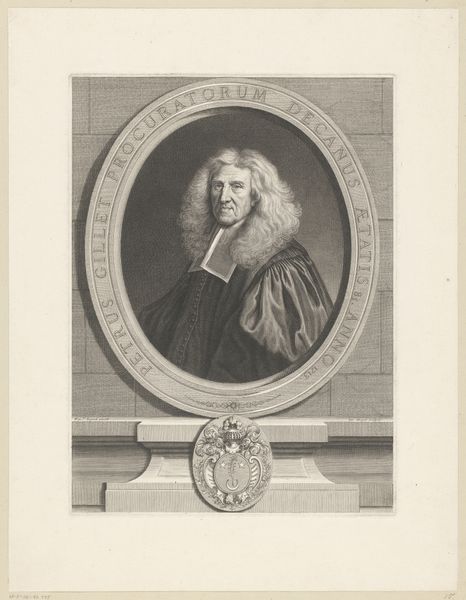
Pierre Gillet


Listen to curator's interpretation
Curatorial notes
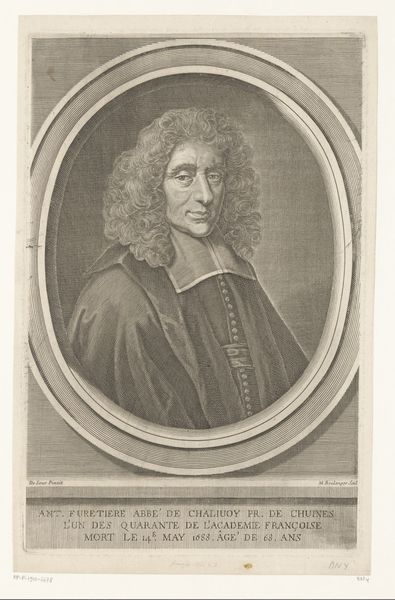
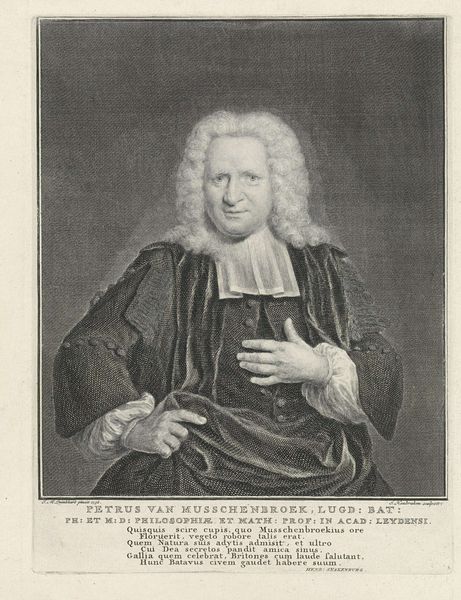
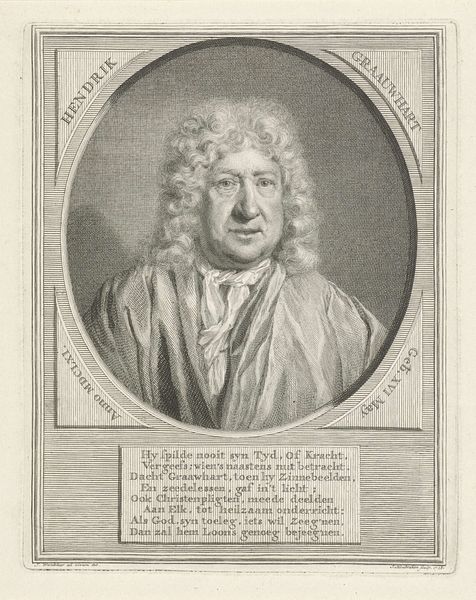
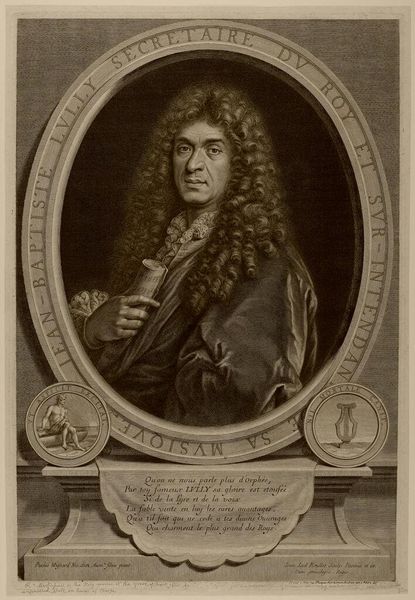
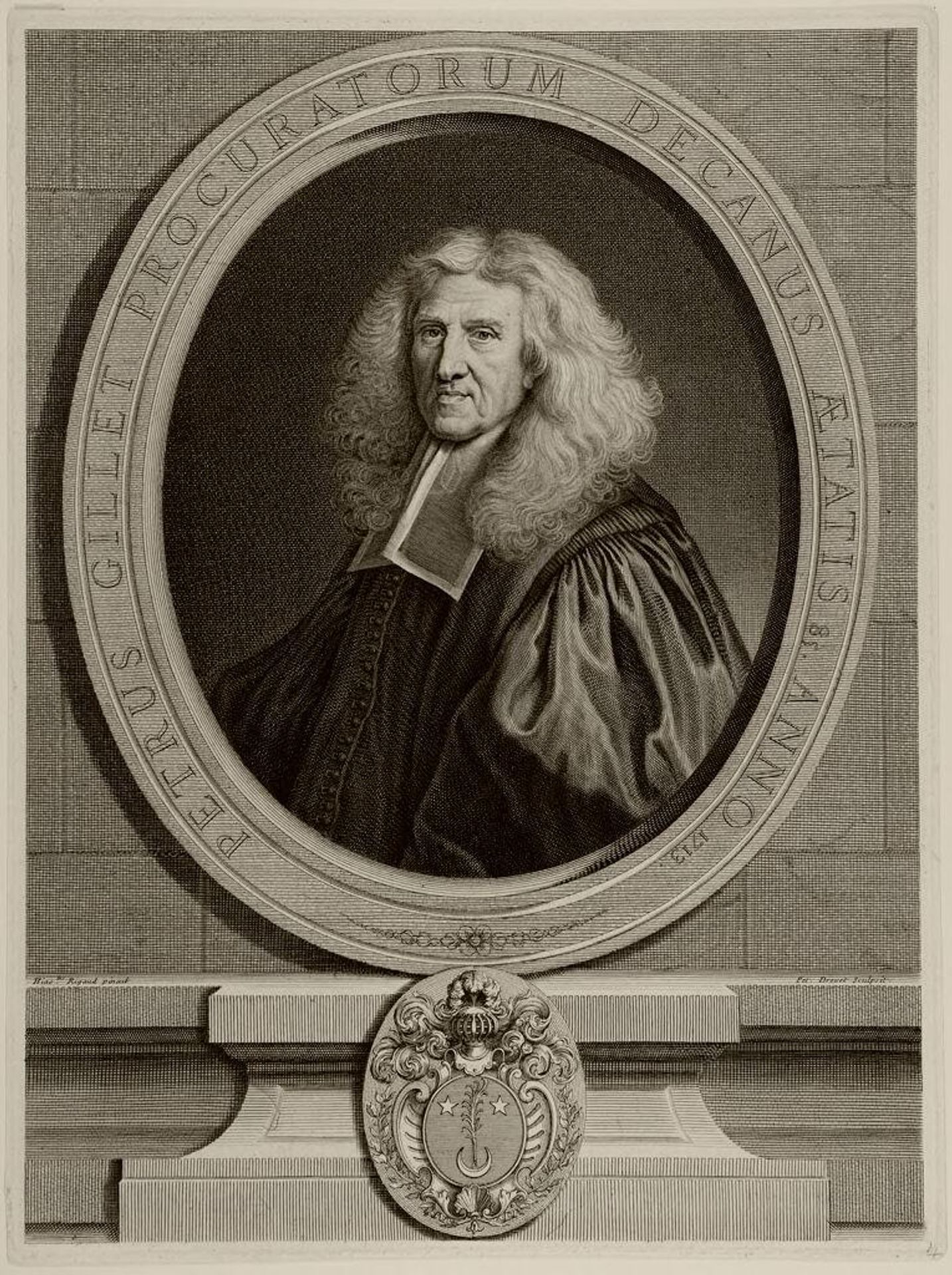
Curator: Pierre Drevet created this engraving, titled "Pierre Gillet," sometime around 1712. Editor: There's a certain solemnity to it, don't you think? The stark contrasts, the formality of the pose... Curator: Precisely. The oval frame, the meticulous hatching—these elements underscore a very controlled and deliberate composition. The textures of the hair and robe are wonderful. Editor: Speaking of control, what does Gillet's role as a procurator and dean tell us about the power structures of the time, and the kind of person who had access to have their portrait made? Curator: That's where the symbolic language becomes so crucial. The inscription within the frame, the heraldic crest below—they all signify status, authority, and belonging to a specific elite. Editor: Right. So, while the engraving is a beautiful example of Drevet’s technique, it’s also a potent symbol of social hierarchy. Curator: Yes, it's a fascinating interplay between artistic skill and social commentary. Editor: It’s also a clear message about how portraits historically functioned as endorsements of the status quo. Curator: Indeed, and analyzing these visual signifiers opens up conversations about the past and present.