drawing, dry-media, pencil
#
portrait
#
drawing
#
pencil sketch
#
figuration
#
dry-media
#
pencil
#
nude
#
realism
Copyright: Rijks Museum: Open Domain
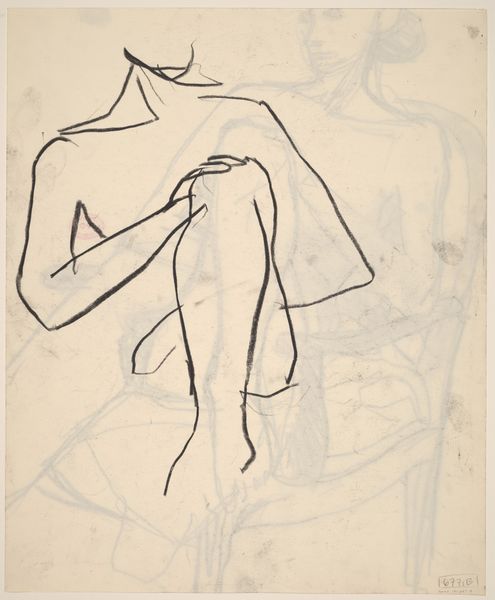
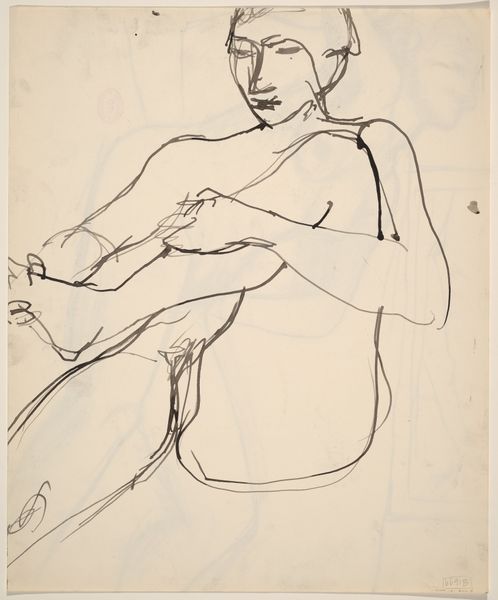
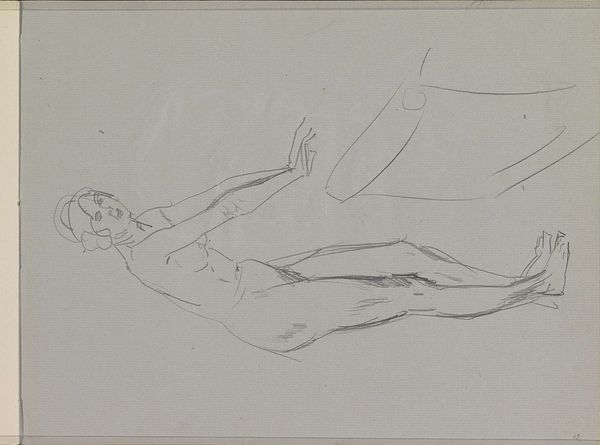
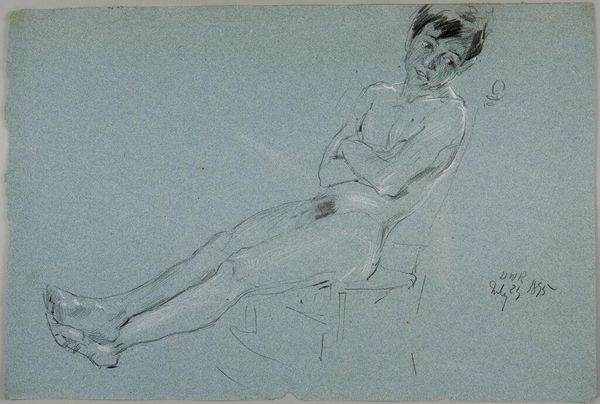
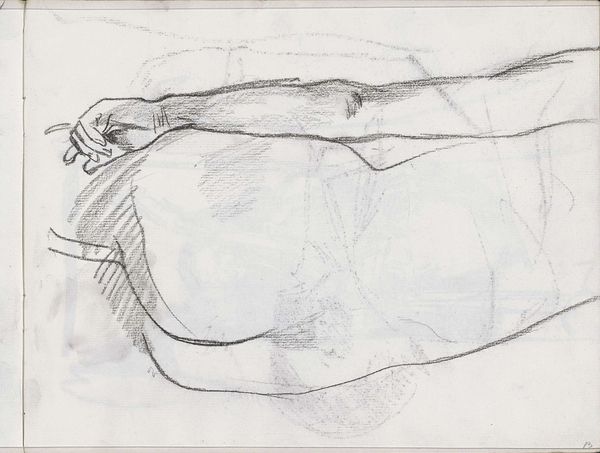
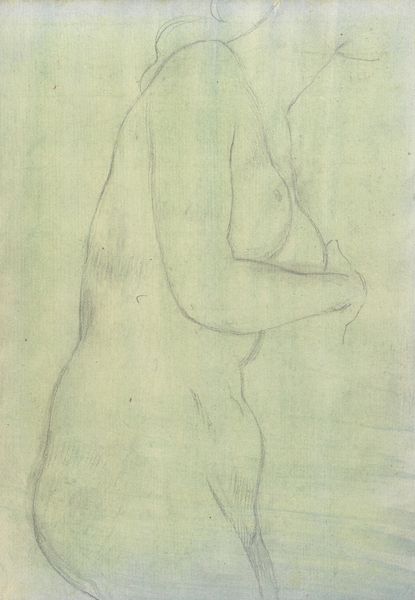
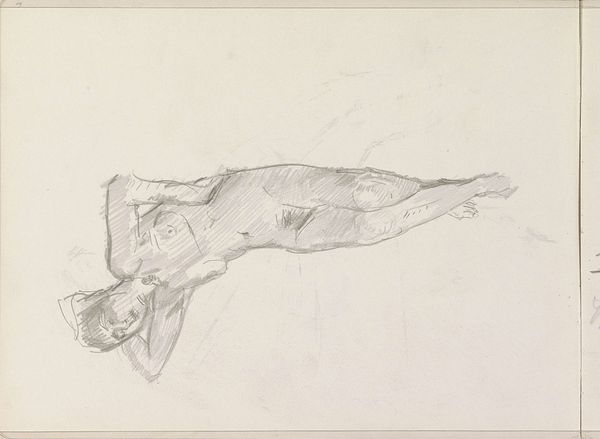
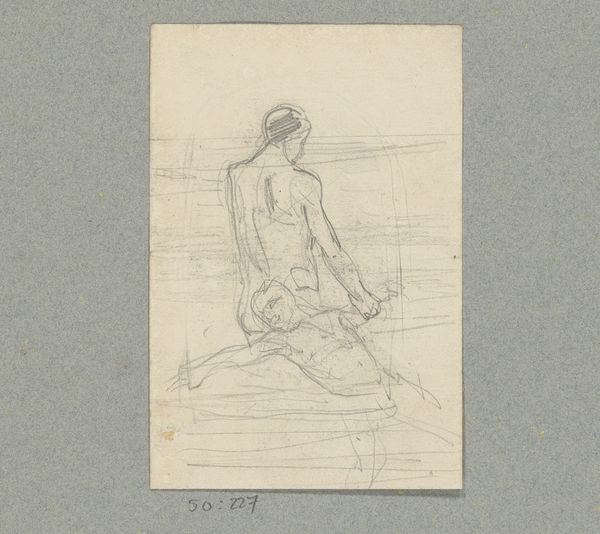
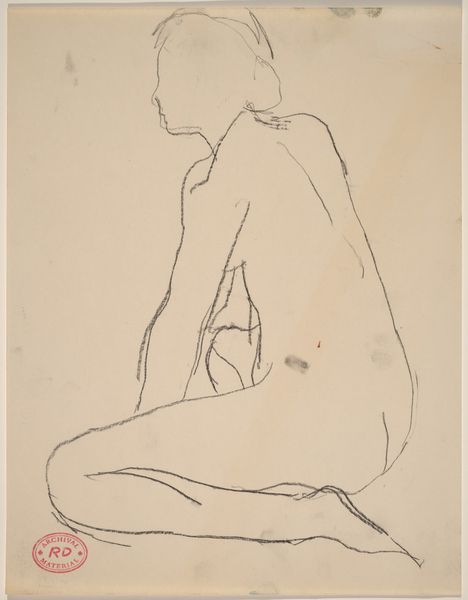
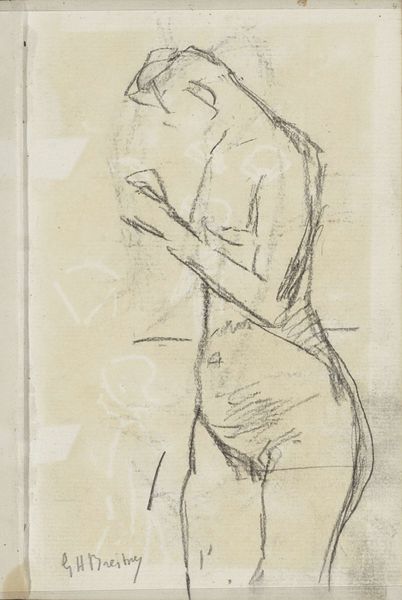
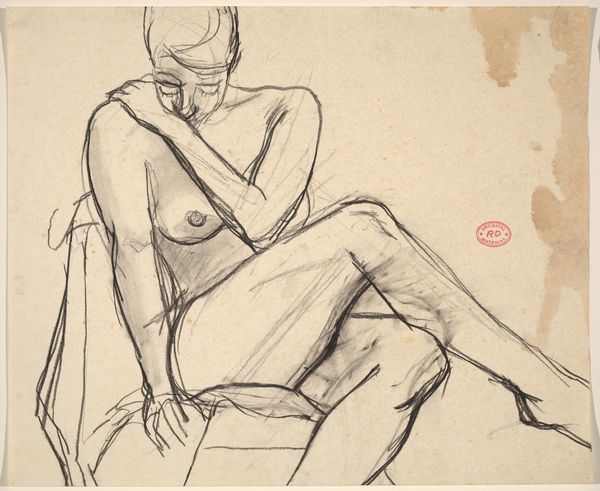
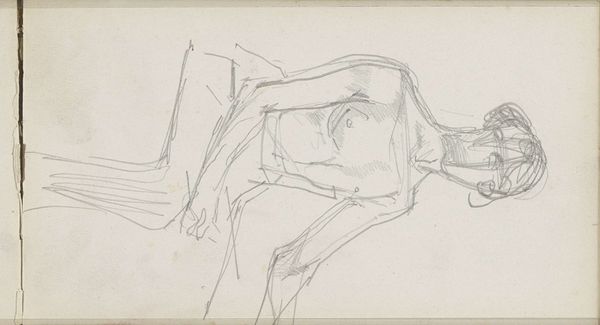
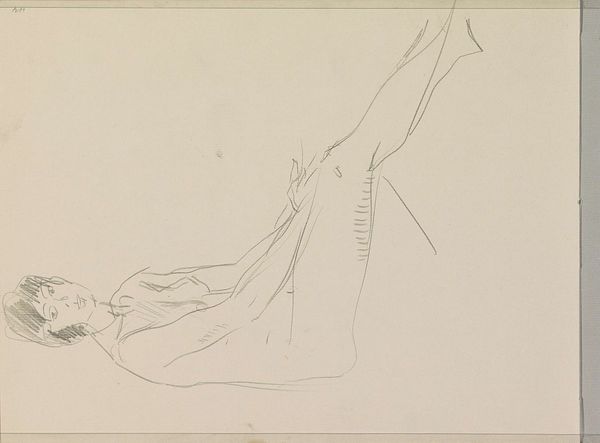
Editor: So this is "Seated Female Nude" by Isaac Israels, sometime between 1875 and 1934. It's a pencil sketch, and there's something really intimate about its simplicity. What do you see in this piece, especially given its historical context? Curator: What strikes me is the tension inherent in representing the female nude. Whose gaze are we seeing through? Is this an empowering representation of female form, or does it perpetuate a history of objectification? Consider the era; these were times of shifting social norms and burgeoning feminist thought. Does Israels challenge or reinforce prevailing power dynamics? Editor: That’s a really interesting point about the gaze. I hadn't really considered how the artist's intentions, or even the societal expectations of the time, play into it. Curator: Exactly! Think about how the ‘male gaze,’ a concept theorized within feminist film theory, often dictates the way women are represented in art. The figure’s posture, her expression... Do these suggest vulnerability, defiance, or something else entirely? And how does the sketch medium, with its inherent suggestion of the incomplete or the fleeting, affect our perception? Editor: It’s making me reconsider my initial reading. The sketch-like quality does almost give it a feeling of being unburdened, as if it resists being fully captured, fully possessed by the viewer. Curator: Precisely. And Israels' positioning within the art world matters too. How might his artistic and social circles have informed his perspective, and, subsequently, his representation of women? These visual representations contribute, often subconsciously, to larger cultural conversations. Editor: This has completely changed how I see the drawing! I was focused on the aesthetic, but now I see layers of social and political context. Curator: That's the power of art history – it allows us to critically engage with these dialogues and complexities. It isn't just about what is seen but also about the social implications of that seeing.
Comments
No comments
Be the first to comment and join the conversation on the ultimate creative platform.
 Collect
 React
React Comment
More like this