1832 - 1852
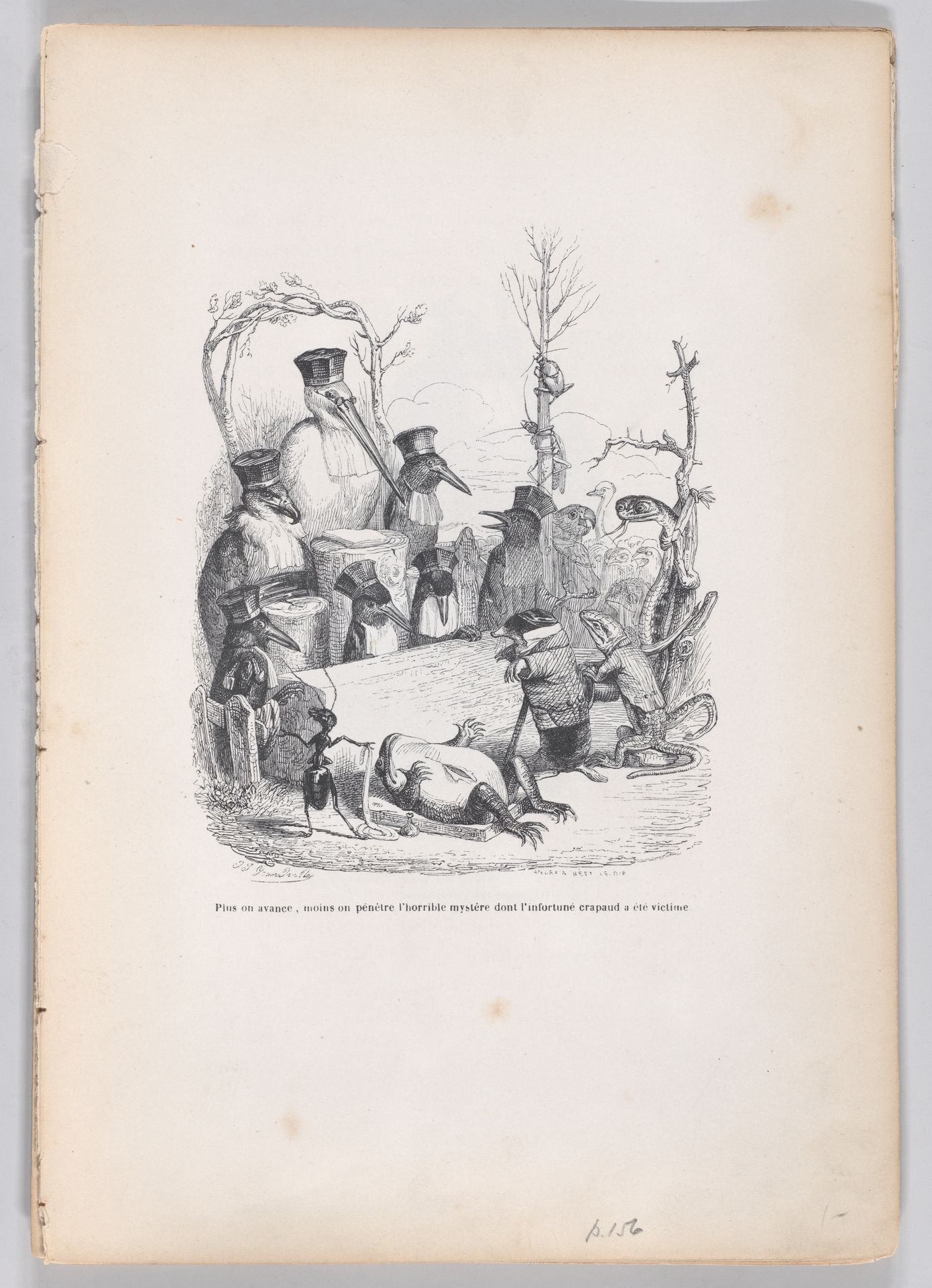
"The further we go, the less we penetrate the horrible mystery of which the unfortunate toad was a victim" from Scenes from the Private and Public Life of Animals


Listen to curator's interpretation
Curatorial notes
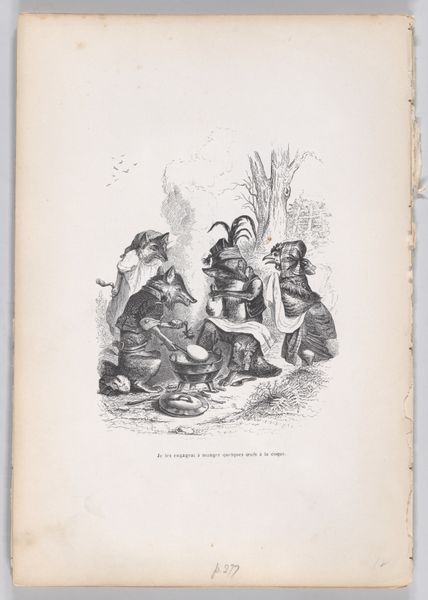
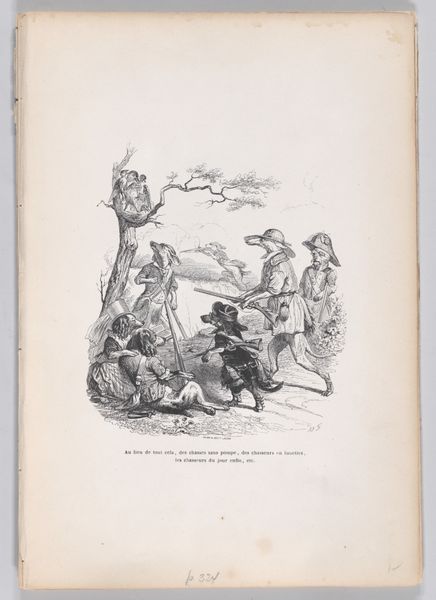
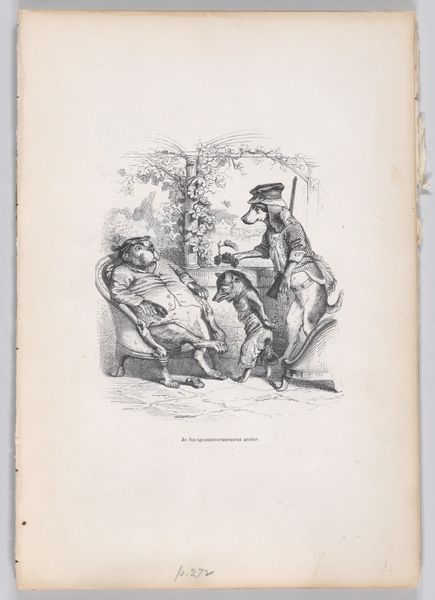
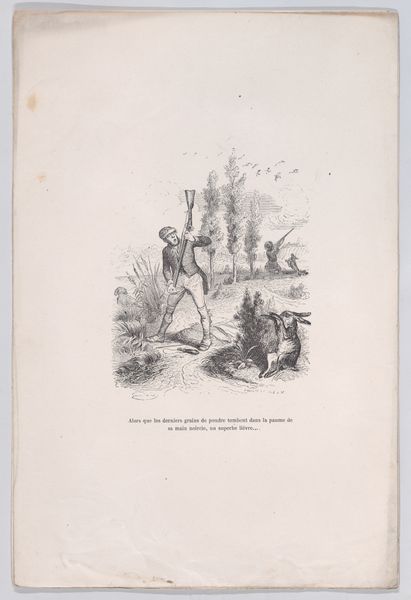
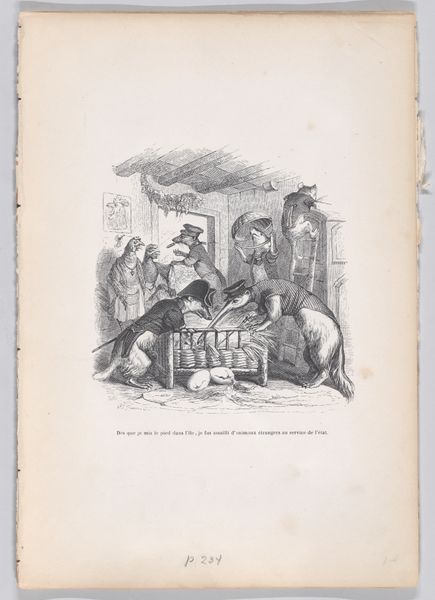
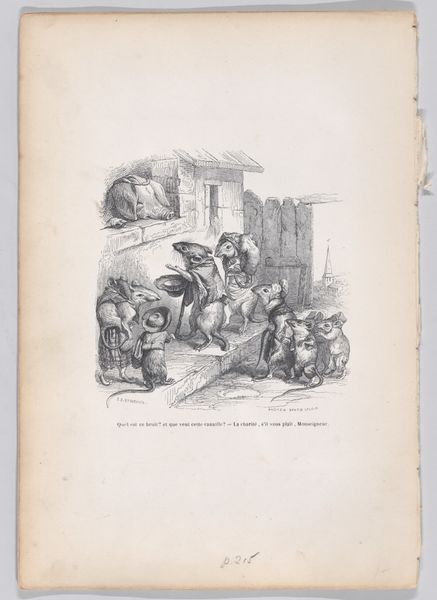
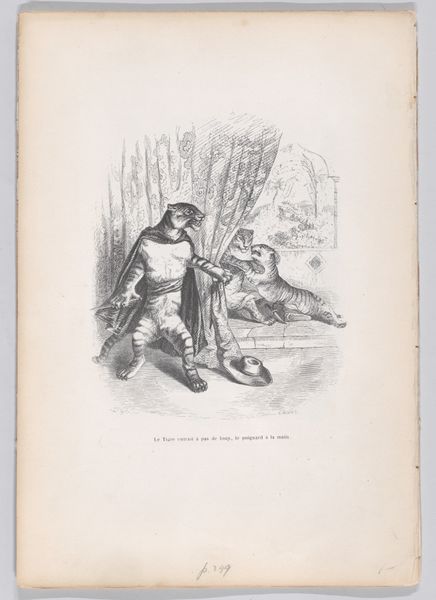
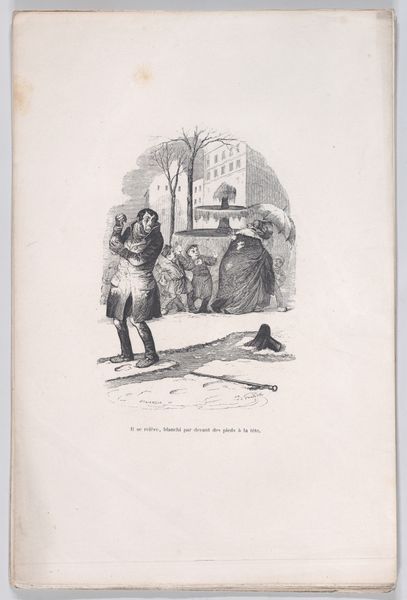
Editor: We’re looking at a print by J. J. Grandville, dating from between 1832 and 1852. It's titled "The further we go, the less we penetrate the horrible mystery of which the unfortunate toad was a victim,” from *Scenes from the Private and Public Life of Animals.* It's made with lithography and etching. The scene is filled with animal-human hybrids acting out some sort of judicial ceremony with a toad at the center of it. It feels allegorical, but I'm not entirely sure what it’s getting at. What do you see in this piece? Curator: Well, beyond the surface of the image itself, I am drawn to examine the social context in which such anthropomorphic satires were produced and consumed. Consider the means of production – lithography and etching allowed for relatively widespread reproduction and distribution. This speaks to a growing middle class and a market for printed materials critiquing social and political norms. How do you think the availability of these materials affected social discourse at the time? Editor: That's interesting. I guess having images like these circulating could definitely shape public opinion, making criticism more accessible. Are you suggesting that Grandville's choice of materials and printmaking techniques was inherently political? Curator: Absolutely! The very act of mass-producing such imagery is a form of democratizing dissent. And look closer – how does Grandville use the specific materiality of lithography and etching, the lines and tones he achieves, to emphasize certain power dynamics or to highlight the absurdity of the animal-human court? Editor: Now that I look more closely, I see how the detailed etching really emphasizes the texture of the animals' clothing, especially in contrast to the limp body of the toad. I never would have considered the printing method as being part of the statement itself! Curator: Exactly. The materiality, the method, it all feeds into the meaning and impact of the artwork. By understanding how these images were made, circulated, and consumed, we get a richer understanding of its function and resonance. Editor: I see that now. Considering the context of the materials and labor involved really opens up a new way to understand the piece. Curator: Indeed. The consumption of such imagery served as a release valve. Hopefully you now see it's essential not just to what is being represented but how.