Copyright: Public domain
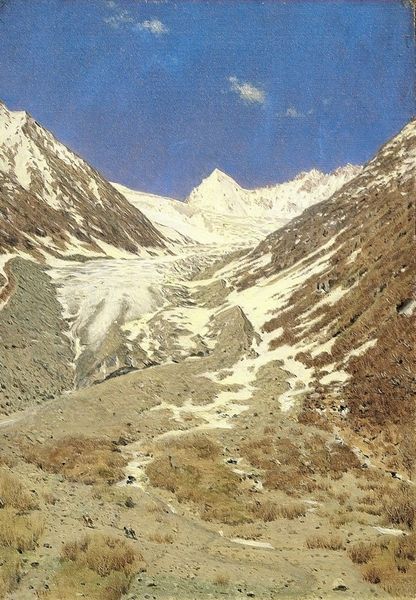
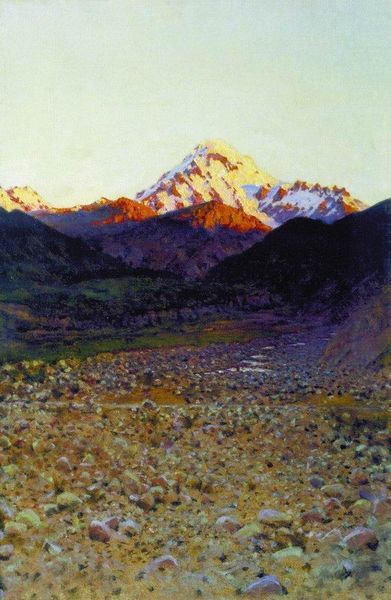
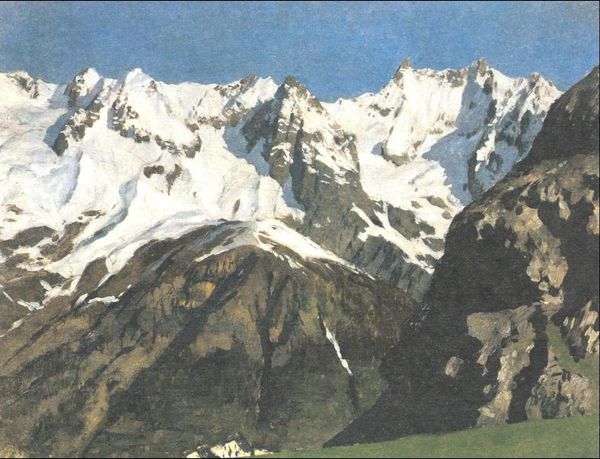
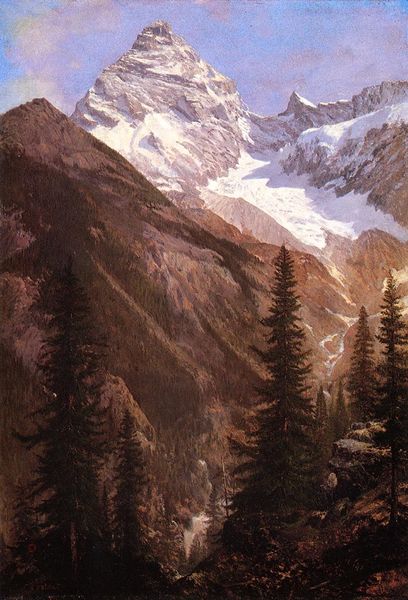
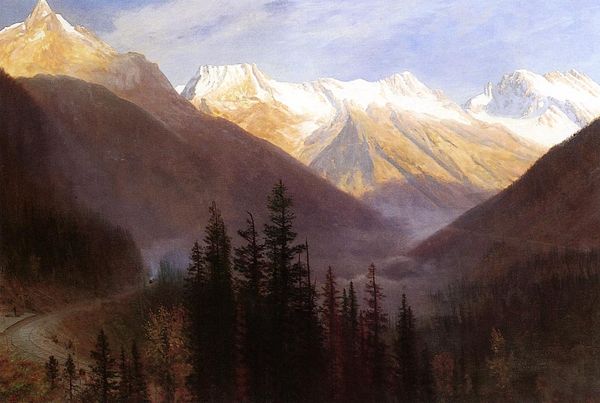
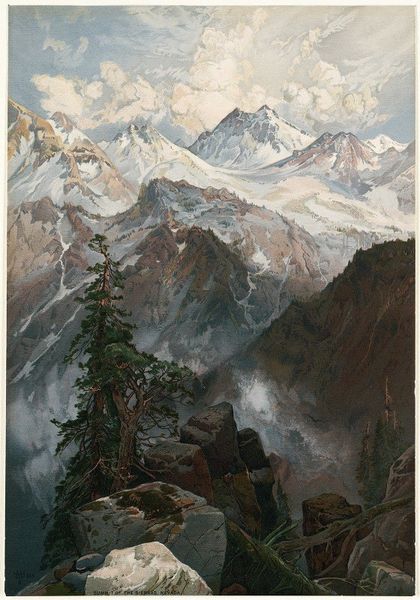
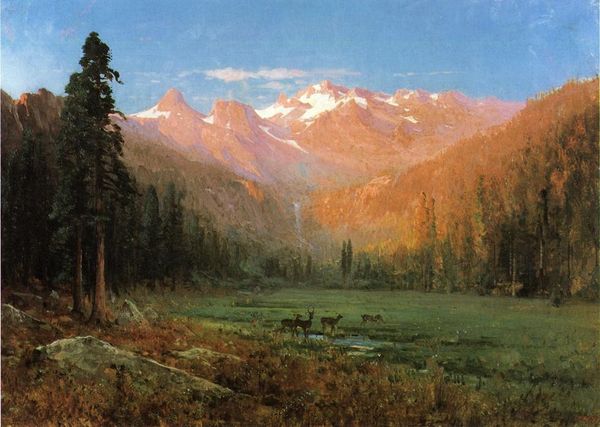
Albert Bierstadt's painting, "Sierra Nevada," employs the traditional medium of oil paint to capture a majestic mountain landscape. Bierstadt masterfully uses the materiality of oil paint to convey the texture, weight, and form of the mountains. The layers of paint build up the ruggedness of the peaks, while thin washes create a sense of atmospheric perspective. The artist's meticulous brushwork captures the play of light on snow and rock, creating a convincing illusion of depth. While the painting itself doesn't directly depict labor or class, it's worth noting the context in which it was produced. As a work of art, this landscape was part of a booming art market in the late 19th century, fueled by industrial capitalism and a growing class of wealthy patrons. Bierstadt's paintings were luxury goods, symbols of wealth and status. By understanding the materials, processes, and social context of Bierstadt's "Sierra Nevada," we can appreciate how it challenges traditional distinctions between fine art and craft, revealing its complex relationship to the wider world of labor, politics, and consumption.
Comments
No comments
Be the first to comment and join the conversation on the ultimate creative platform.
 React
React Comment