1864
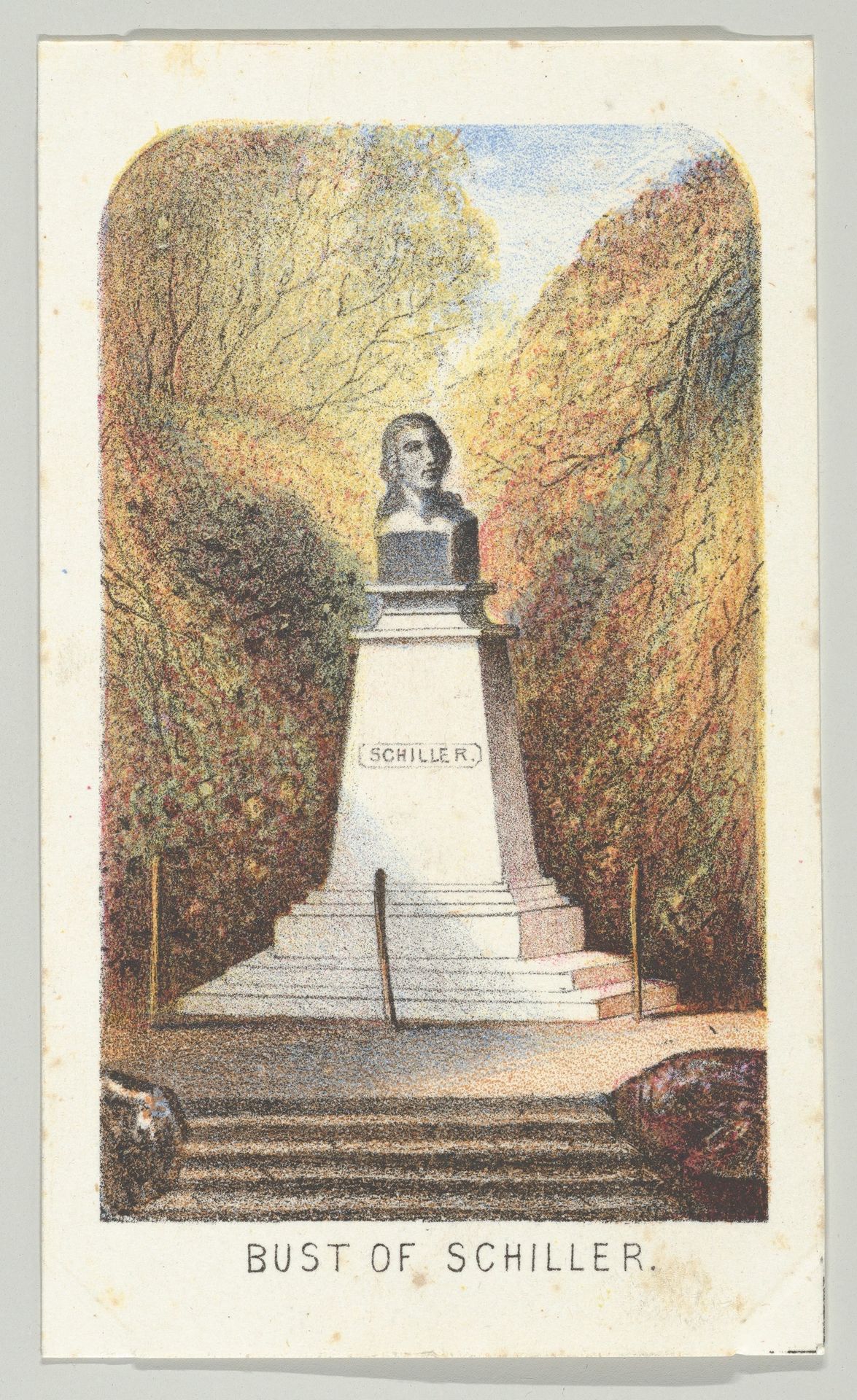
Bust of Schiller, from the series, Views in Central Park, New York, Part 3


Listen to curator's interpretation
Curatorial notes
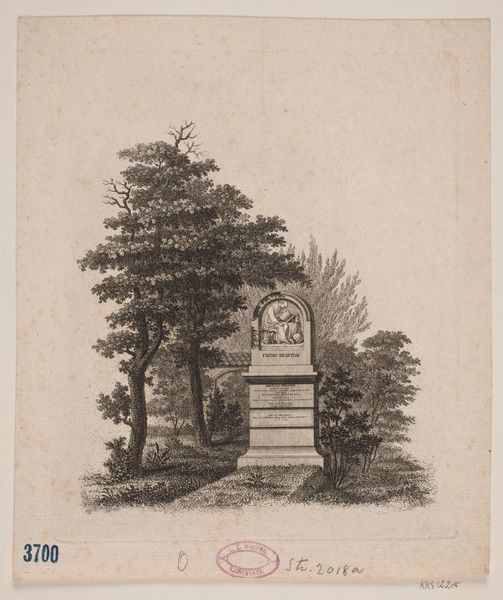
Editor: This is "Bust of Schiller, from the series, Views in Central Park, New York, Part 3," a lithograph from 1864 by Louis Prang & Co. It's a rather romantic, picturesque scene of a bust nestled amongst trees in Central Park. What strikes you about it? Curator: I'm drawn to how this image intersects with notions of public space, commemoration, and cultural identity in 19th-century America. Schiller, a German poet and philosopher, was revered, particularly within German-American communities. Why place his bust in Central Park? What did it mean to imbue this new urban landscape with European cultural figures? Editor: So, it’s more than just a pretty picture then! I guess I assumed it was just celebrating art. Curator: The visual representation here creates a powerful statement. Think about the politics embedded in such choices: Which figures are deemed worthy of memorialization, and by whom? How does this choice reflect or perhaps obscure the realities of a diverse and often marginalized populace within New York City? Editor: That’s a fascinating point. I hadn't considered the choices behind who gets remembered in public spaces. It seems like a very deliberate statement about cultural values. Was there any resistance to this sort of commemoration at the time? Curator: Certainly, and often along class and ethnic lines. Understanding the nuances of such social dynamics helps to excavate richer and more complicated meanings within what appears at first glance a simple commemorative scene. It speaks volumes about whose stories are told and whose are left in the shadows. Editor: This has completely shifted my understanding. I’m now thinking about how this artwork invites questions of identity, representation, and social power in ways I never imagined. Curator: Precisely. Art offers an incredible lens for examining and questioning the dominant narratives that shape our understanding of history and ourselves.