drawing, paper, ink
#
portrait
#
drawing
#
figuration
#
paper
#
ink
#
modernism
Copyright: Rijks Museum: Open Domain
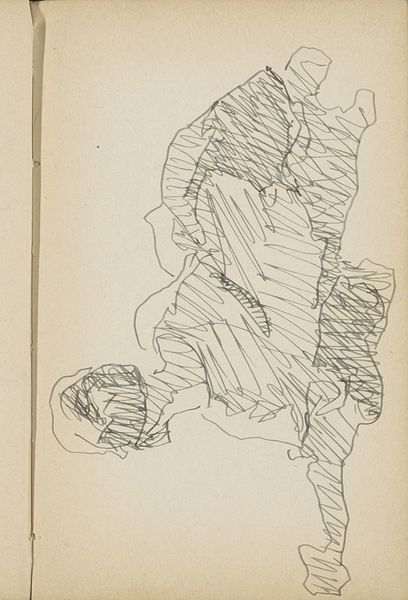
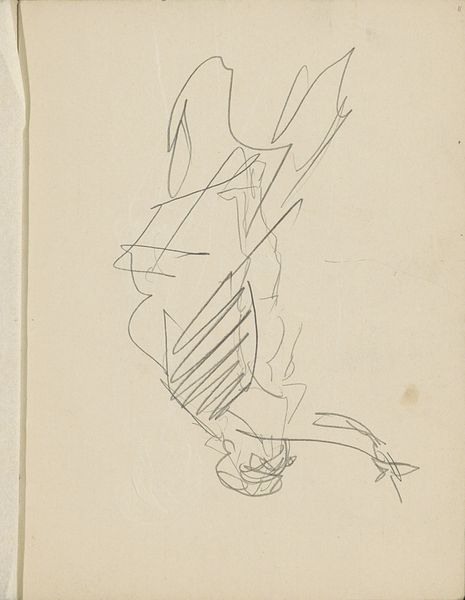
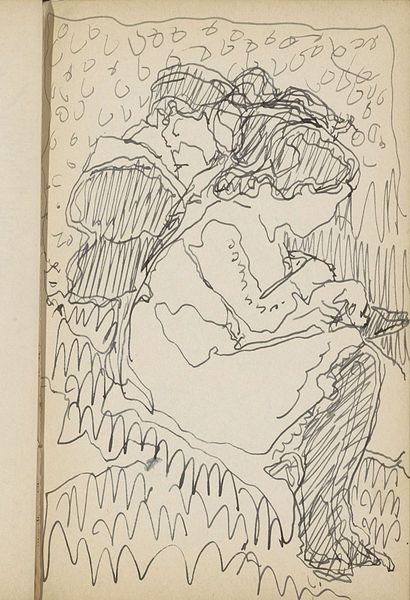
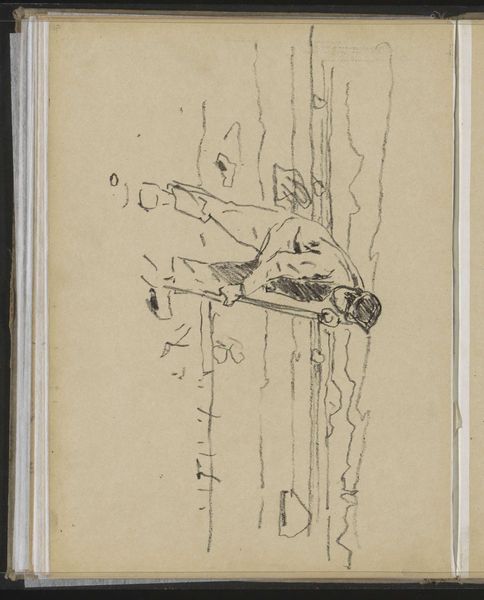
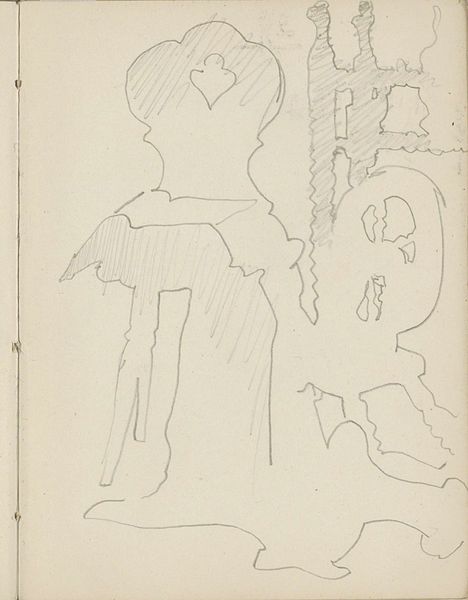
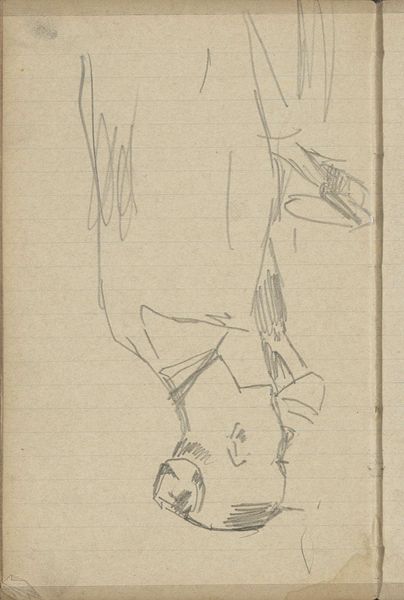
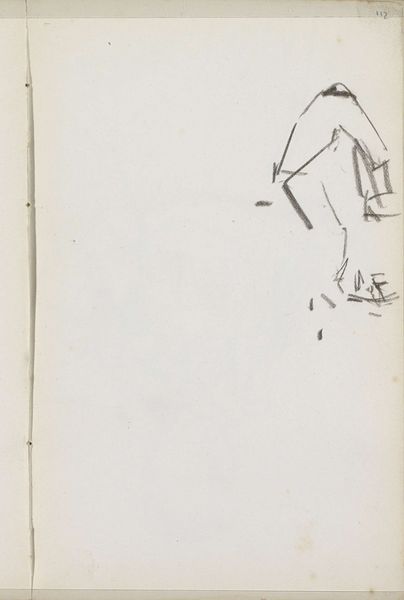
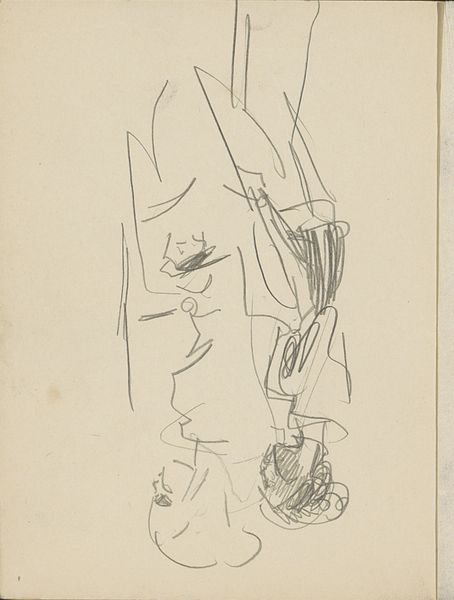
Curator: This spare 1919 drawing, held here at the Rijksmuseum, is titled "Vrouw zittend in het gras" - "Woman Sitting in the Grass" – and was made by Reijer Stolk, using ink on paper. Editor: Immediately, the expressive economy of line jumps out. There's something starkly modernist in the reduction to near-abstraction, but still legible. The woman's form is almost caged by those crossed lines of her dress or shawl. Curator: That cage-like effect might be part of its symbolic power. Consider the period. The Great War had just ended. There's a palpable sense of constraint and recovery… even fragility… represented here. The seated figure suggests stillness, perhaps weariness. Editor: The figure is quite angular, with an emphasis on geometric shapes—triangles and parallelograms especially—which speaks to the visual vocabulary of modernism emerging in reaction to the war. There are few soft curves; the softness only being applied in the indication of foliage on the bottom. Curator: Absolutely. But notice how those softer strokes representing the "gras" serve more as a textural grounding. Her downcast head and folded posture reinforce that sense of inward focus, almost grief. The grass itself mirrors that grief – perhaps an acknowledgement of lives affected during conflict. Editor: I agree. And it highlights the shift away from traditional portraiture which celebrated idealized beauty towards a raw, internalized representation. Stolk emphasizes feeling over form. Also it's really important that these kind of drawings existed. Paper was cheap after all, and one could argue Stolk uses readily accessible art tools in reaction to a more institutional approach of painting on canvas. Curator: The rapid execution reinforces a notion of ephemerality. Like a passing moment or fading memory captured in ink. As a portrait, its power resides less in its fidelity to external appearance than to the emotional interior. A representation of memory. Editor: The artwork is fascinating precisely because of its ambiguity. The setting feels sparse and bleak yet allows the figure’s emotion to resonate. One has to read between the strokes of the artist. Curator: An exercise of careful and thoughtful observation for us all. Editor: Definitely.
Comments
No comments
Be the first to comment and join the conversation on the ultimate creative platform.
 Collect
 React
React Comment
More like this