About this artwork
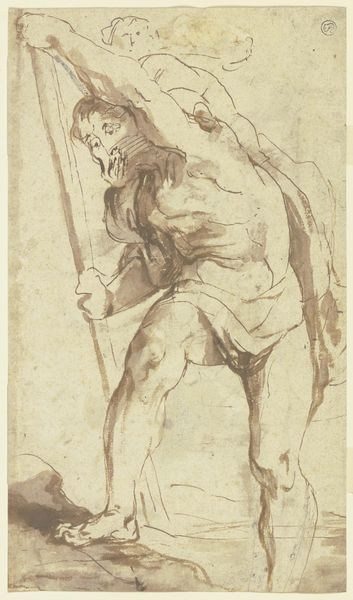
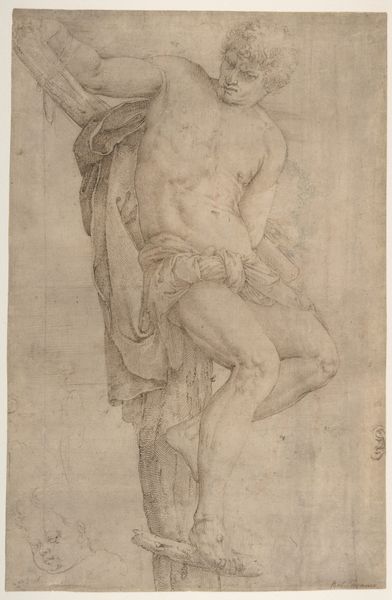
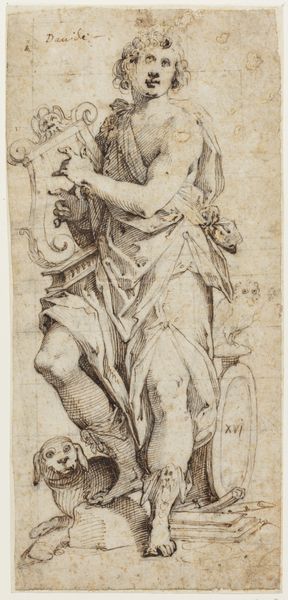
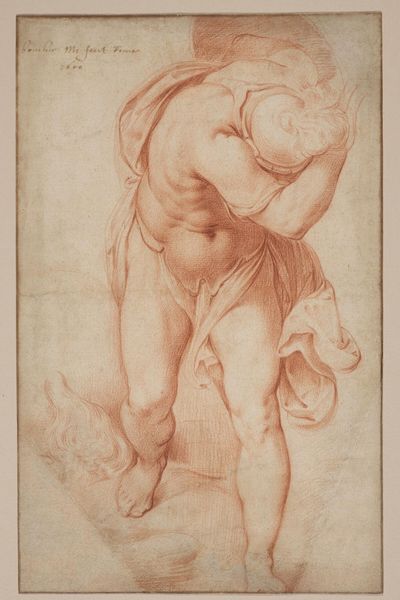
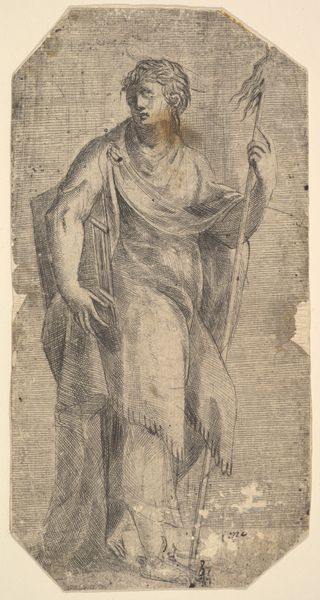
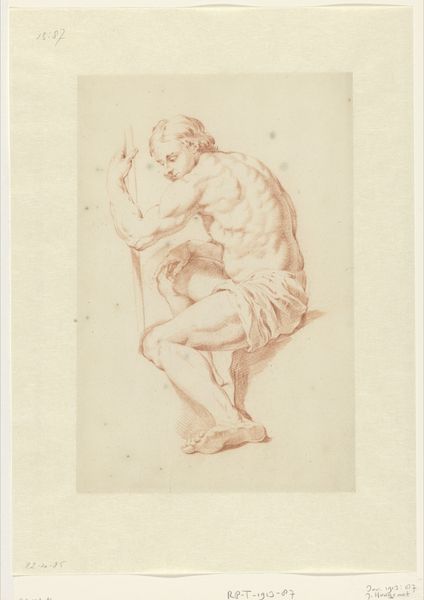
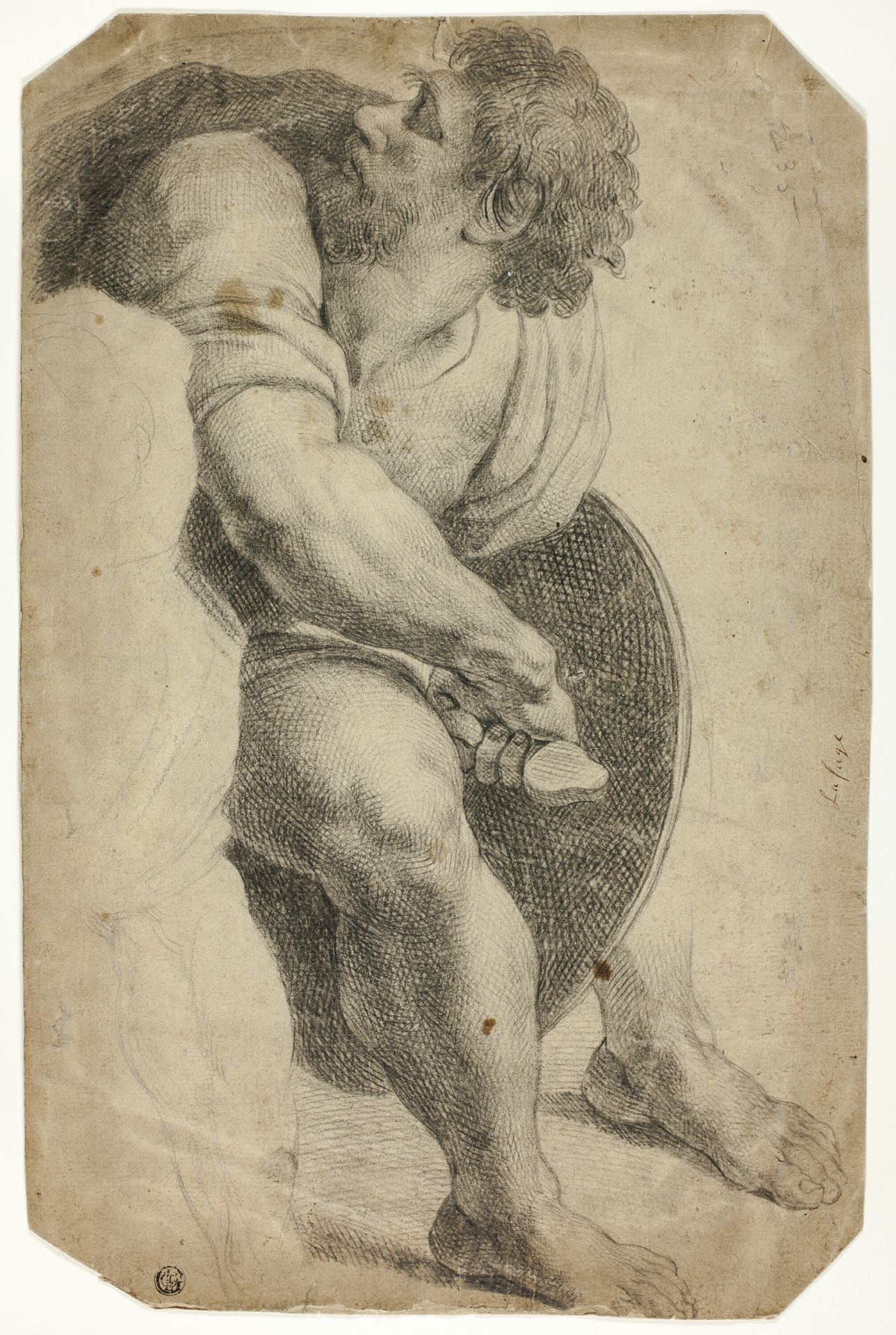
Here at The Art Institute of Chicago is Raphael’s drawing, Guard Drawing His Sword, made with pen and brown ink. The figure dominates the space, his body rendered with dense cross-hatching that gives a sculptural form to his muscular physique. Raphael’s strategic use of light and shadow accentuates the tension in the figure's pose, poised as he is to draw his sword. The texture created by the ink on paper lends a tactile quality to the drawing, almost inviting you to reach out and touch the guard’s arm. This drawing exemplifies Renaissance ideals, reflecting a structural emphasis on human anatomy and classical form. The guard, caught in a moment of action, embodies a sense of potential and controlled power. His gaze is directed upwards, perhaps suggesting a higher calling or an external threat, thereby inviting viewers to ponder the narrative context surrounding this figure. Consider how Raphael's formal choices—the dynamic lines, the balance of light and shadow, and the composition—converge to evoke a timeless and universal statement about human strength and vigilance.
Guard Drawing His Sword
n.d.


Artwork details
- Medium
- drawing, paper, pencil, chalk, charcoal, black-chalk
- Dimensions
- 432 × 280 mm
- Location
- The Art Institute of Chicago
- Copyright
- Public Domain
Tags
Comments
Share your thoughts
About this artwork
Here at The Art Institute of Chicago is Raphael’s drawing, Guard Drawing His Sword, made with pen and brown ink. The figure dominates the space, his body rendered with dense cross-hatching that gives a sculptural form to his muscular physique. Raphael’s strategic use of light and shadow accentuates the tension in the figure's pose, poised as he is to draw his sword. The texture created by the ink on paper lends a tactile quality to the drawing, almost inviting you to reach out and touch the guard’s arm. This drawing exemplifies Renaissance ideals, reflecting a structural emphasis on human anatomy and classical form. The guard, caught in a moment of action, embodies a sense of potential and controlled power. His gaze is directed upwards, perhaps suggesting a higher calling or an external threat, thereby inviting viewers to ponder the narrative context surrounding this figure. Consider how Raphael's formal choices—the dynamic lines, the balance of light and shadow, and the composition—converge to evoke a timeless and universal statement about human strength and vigilance.
Comments
Share your thoughts