acrylic-paint
acrylic-paint
acrylic on canvas
cityscape
digital-art
futurism
Copyright: Modern Artists: Artvee
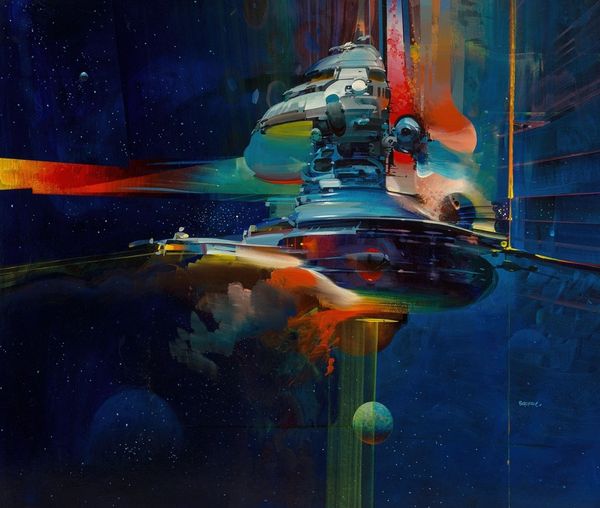
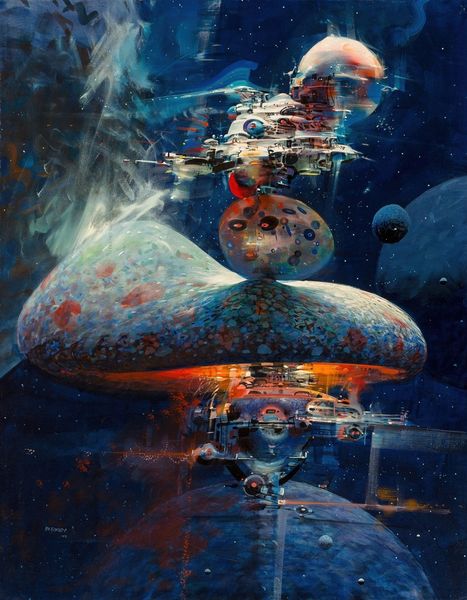
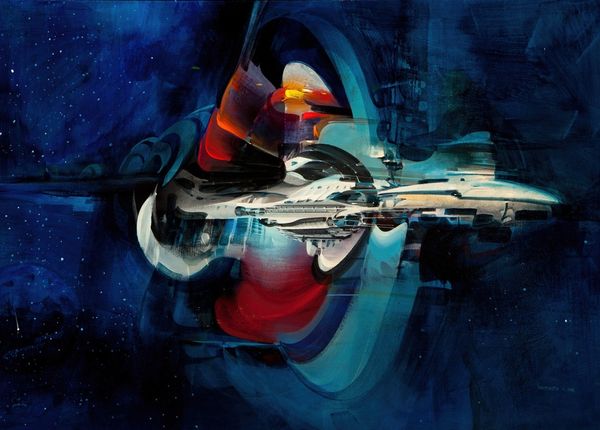
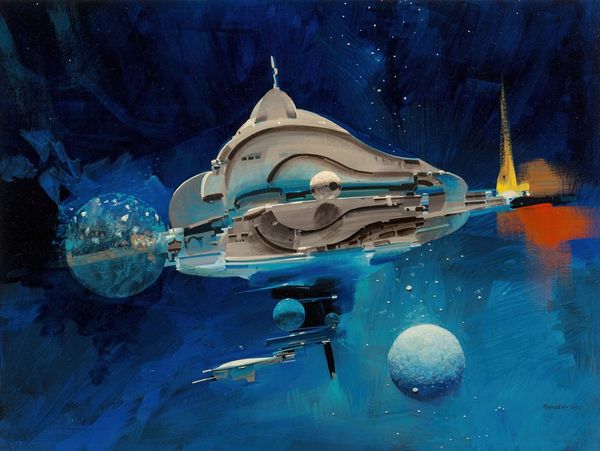
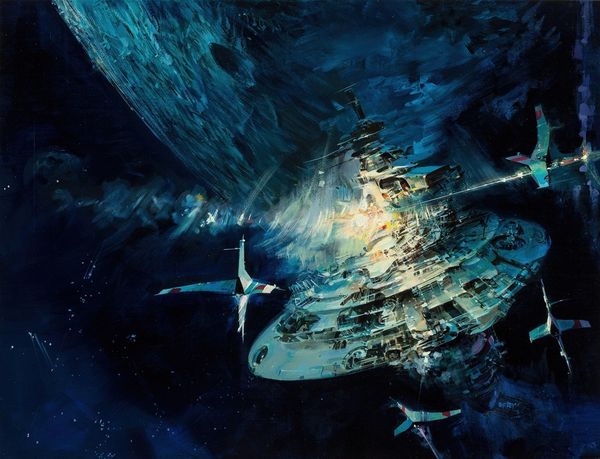
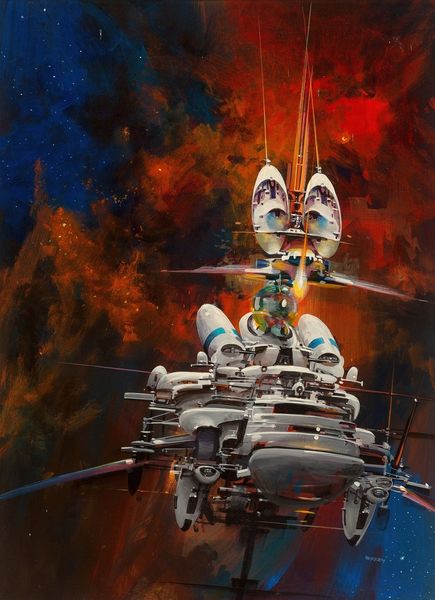
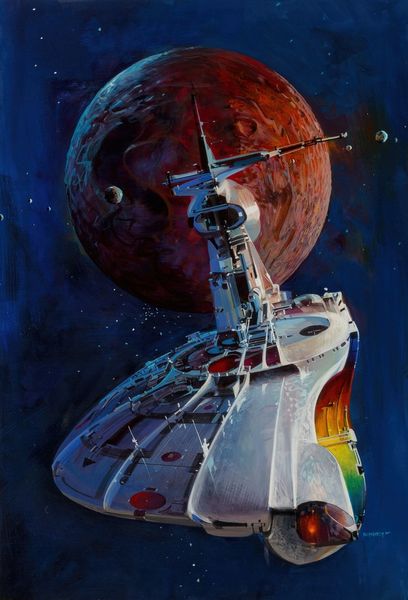
Editor: Here we have what's titled "Space Station," crafted using acrylics, attributed to John Conrad Berkey. The immediate feel is overwhelming—a grand, almost chaotic burst of metallic hues against a cosmic backdrop. How do you interpret this piece, particularly in the context of art history? Curator: I see this work deeply entrenched in a socio-political yearning for technological advancement that took hold of the West from the mid to late twentieth century. Looking at this today, doesn’t it seem a bit nostalgic for an imagined future, rather than prescient? Editor: I see what you mean, there’s something very retro about its futurism. It almost seems ripped from the cover of a pulp sci-fi novel! Curator: Precisely. Consider the social role of these kinds of images. Mass media images depicting triumphant machines did significant ideological work, they reassured a population wary of global conflict, for example, that their future would be bigger, faster, shinier. Does this portrayal seem critical or celebratory of those industrial aspirations? Editor: Celebratory, definitely. The artist’s gaze feels admiring, almost romantic. Do you think it says anything about the social position of science or engineering at the time? Curator: I do. It suggests a powerful faith in technology, portraying progress as almost divine. By framing industrialism in a near-religious light, we need to ask what or who such depictions implicitly silenced or excluded. The image's circulation helps write and promote such narratives. Editor: That's a really fascinating perspective. I hadn’t considered the political implications inherent in such outwardly optimistic imagery. Curator: It reveals how deeply enmeshed art is within power structures and belief systems. Editor: Absolutely. It changes how I look at so-called “futuristic” art; there's more than meets the eye. Curator: Exactly. By studying an artwork's social role, its presence, production, and popularity become important data to assess broader contexts.
Comments
No comments
Be the first to comment and join the conversation on the ultimate creative platform.
 React
React Comment